




GKN's New Two-Speed EAxle Powers BMW I8
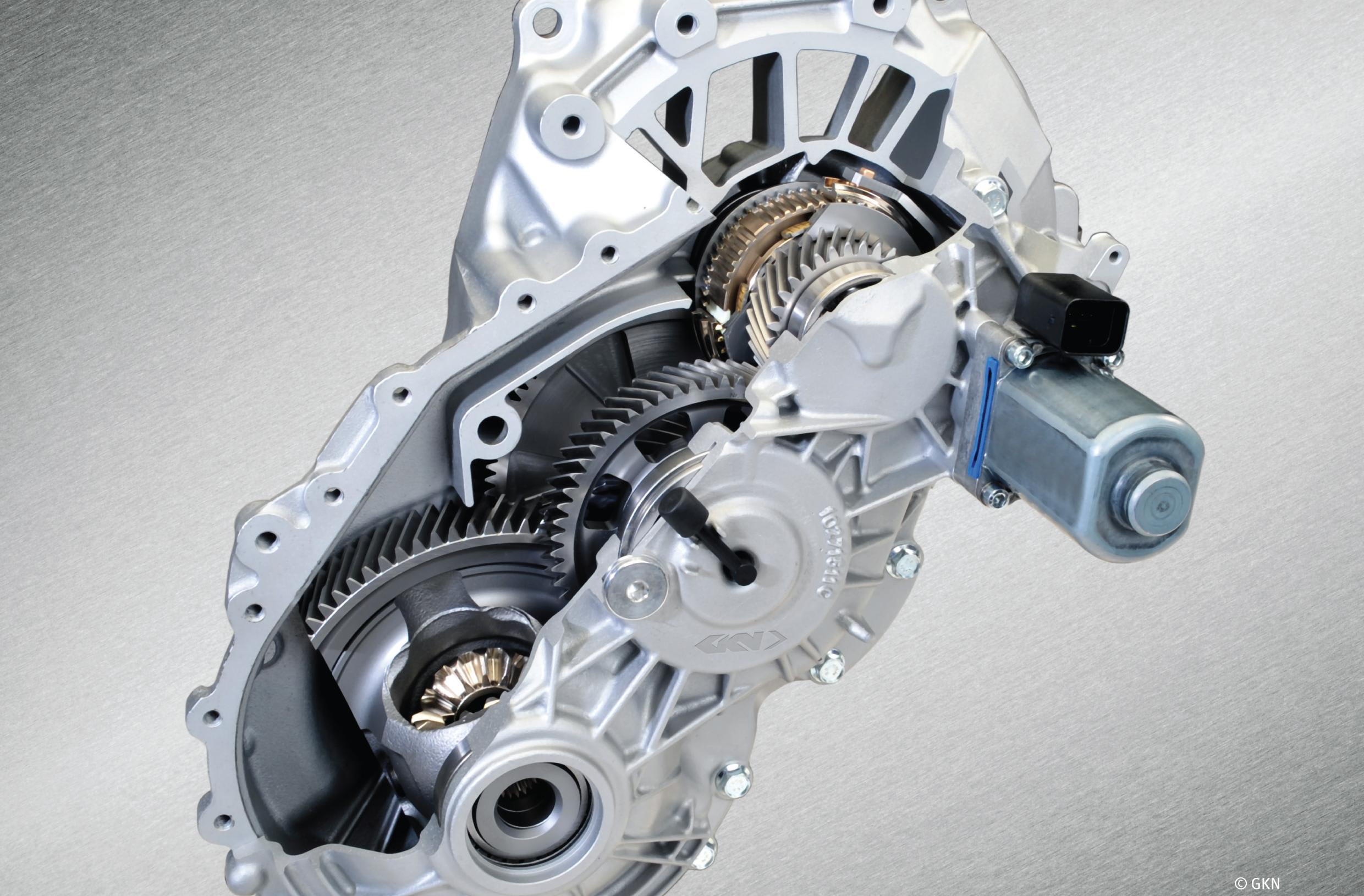
The BMW i8 is the first production application of GKN’s new two-speed eAxle, which is used to drive the front wheels of the plug-in-hybrid sports car. The AWD i8, launched earlier this year, also uses a conventional 6-speed automatic to power the rear axle in what is known as an "axle-split" configuration.

Giving the electric motor an additional gear ratio improves acceleration and pure electric range, benefiting both driving dynamics and CO2 emissions, according to GKN. The two gear ratios—claimed to be a production-first for an electrified-vehicle driveline—also enable the motor and all its associated systems to be downsized, reducing mass and further increasing efficiency. The technology responds intelligently to deliver instant all-wheel drive, a useful pure electric range, or a parallel-hybrid mode.
Until now electric and axle-split hybrid vehicles have used single-speed transmissions, which limit electric drives in terms of either acceleration or top speed because they must disconnect at certain speeds to prevent motor overspinning. GKN claims its two-speed eAxle is the first to enable the electric drive to boost the vehicle's performance across its entire speed range.
Designing a two-speed unit for BMW's high-performance hybrid sports car application posed a packaging challenge for GKN engineers. To achieve high torque density in a package that weighs just 27 kg (60 lb) and measures less than 325 x 562 x 313 mm (12.8 x 22.1 x 12.3 in), some interesting design decisions were made.
For example, to make the system narrower, the shift mechanism sits on the input shaft instead of the intermediate shaft in the middle of the transmission. Even with the input shaft spinning at up to 11,400 rpm, GKN's software control of the eMotor and the synchro-actuation achieves a smooth gear shift in all conditions.
"Gear shifts are completely transparent to the driver," noted Theodor Gassmann, GKN Driveline Vice President, Product Technology, eDrive Systems. "The smooth electromechanically actuated shift between the synchronized ratios has enabled our eAxle to set new benchmarks for comfort and NVH. The eAxle combines superior efficiency of 97% with high gear shift comfort and low gear noise."
The eAxle's shift mechanism is a proven technology with components already in series production, providing BMW's powertrain team a robust and cost-effective solution.
By drawing on all the expertise and knowledge within GKN's global engineering network, the development team was able to take the eAxle from concept to production in 24 months, Gassmann claimed. He said going forward, the industry trend of pairing electrified powertrains with multi-speed transmissions is enabling GKN to supply downsized eAxle modules for future hybrid and electric vehicles.
"The technology also enables more radical future eMotor downsizing strategies," he added.
More From SAE Media Group
Automotive Engineering
Positioning for Hybrid Growth
Automotive Engineering
Punch Powertrain Pushes Its Flywheel-CVT Hybrid Technology
Automotive Engineering
BorgWarner Prepares Manual Gearchange for ADAS Vehicles
Automotive Engineering
Chrysler 200 Sport Mode Balances Performance with Safety
Automotive Engineering
2015 VW Golf GTE Plug-In Hybrid Is a Smooth Operator
Automotive Engineering
Continental’s First Production 48-V System on 2017 Renault Scenic
Automotive Engineering
U.K. Hipercar Project Delivers High Performance with Low Emissions
Off-Highway Engineering
Mercedes-Benz Bills 3rd-Gen Sprinter as First Holistic Mobility Solution
Automotive Engineering
Jaguar Unveils Twin-Motor I-Pace Battery-Electric Crossover
Automotive Engineering
Williams Presents Lightweight EV Platform
Automotive Engineering
Nissan Debuts New Series-Type Hybrid for 2017 Note
Automotive Engineering
Researching the Green Zone of Plug-In Hybrid Electric Driving
Automotive Engineering
Subaru Uses ANSYS Tools to Accelerate Hybrid Vehicle Design
Automotive Engineering
Voltage Spike at 2017 Frankfurt Auto Show
Automotive Engineering
ZF and Hella Launch Sensor-Systems Development Partnership
Automotive Engineering
High-Voltage Developments
Automotive Engineering
Ford Accelerates Research on 48-V Mild Hybrid Systems
Automotive Engineering
2017 Chrysler Pacifica Plug-In Is Industry-First
Automotive Engineering
Continental Demonstrates New Sensing Technologies for SAE Level 4 Capability
Automotive Engineering
Renault Reveals Zoe EV Racecar Concept with 340-KW Output.
Automotive Engineering
Shifting to an E-Mobility Product Portfolio
Automotive Engineering
Elevate: Hyundai’s New Four-Wheel Drive, Four-Legged Off-Road Vehicle
Automotive Engineering
GKN Using Modular Control Algorithms for Added Systems’ Integration
Automotive Engineering
Nissan's ProPILOT Assist Is More Than Lane-Keeping
Automotive Engineering
Automakers Expanding 48-V Production Plans, Says AVL Electrification Chief
Automotive Engineering
Drive Me, Paint Me: Volvo Accelerates Its Tech Trajectory
Automotive Engineering
Controlling GM’s Electrified Herd
Automotive Engineering
Autonomous Vehicle Challenge Ramps up Competition at Convergence
Autonomous Vehicle Engineering
Why Car Washes Threaten Automated Vehicles
Off-Highway Engineering
Making the Revolution--Driver Assistance Systems
Top Stories
INSIDERManufacturing & Prototyping
 How Airbus is Using w-DED to 3D Print Larger Titanium Airplane Parts
INSIDERManned Systems
 FAA to Replace Aging Network of Ground-Based Radars
NewsTransportation
 CES 2026: Bosch is Ready to Bring AI to Your (Likely ICE-powered) Vehicle
NewsSoftware
 Accelerating Down the Road to Autonomy
EditorialDesign
 DarkSky One Wants to Make the World a Darker Place
INSIDERMaterials
 Can This Self-Healing Composite Make Airplane and Spacecraft Components Last...
Webcasts
Defense
 How Sift's Unified Observability Platform Accelerates Drone Innovation
Automotive
 E/E Architecture Redefined: Building Smarter, Safer, and Scalable...
Power
 Hydrogen Engines Are Heating Up for Heavy Duty
Electronics & Computers
 Advantages of Smart Power Distribution Unit Design for Automotive...
Unmanned Systems
 Quiet, Please: NVH Improvement Opportunities in the Early Design...
