




Making UAVs Self-Sufficient

Army researchers developed an approach that allows a rotary wing unmanned air vehicle (UAV) to land on a moving unmanned ground vehicle (UGV) without the aid of GPS and recharge before moving on. Teams of autonomous air and ground agents will enable operations in search and rescue environments that are too remote or dangerous for humans but often require extensive positioning and communication infrastructure.
Researchers performed all of the computations onboard the vehicle using low-cost sensors and computers. No communications occurred between the UAV and UGV.
More From SAE Media Group
Tech Briefs
Approach Makes Unmanned Agents Self-Sufficient

Aerospace INSIDER
GA-ASI Announces Gray Eagle 25M for Multi-Domain Operations
Aerospace & Defense Tech Briefs
MUSHER Demonstrates Manned-Unmanned Aircraft Teaming Applications

Tech Briefs
AUSA 2024: New Drones and Counter UAS Technology
Aerospace INSIDER
MQ-1C Completes First Air-Launched Effect Flight Demonstration
Aerospace & Defense Tech Briefs
Reconnaissance Vehicle Sensor Suite Upgrade
Aerospace & Defense Tech Briefs
The Role of Autonomous Unmanned Ground Vehicle Technologies in Defense Applications

Aerospace & Defense Tech Briefs
Effectiveness of Inter-Vehicle Communications and On-Board Processing for Close Unmanned Autonomous Vehicle Flight Formations
Aerospace INSIDER
BAE Systems Acquires Developer of Electric Heavy Lift Quadcopters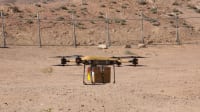
Aerospace INSIDER
Two Startups Partner to Expand Hydrogen-Powered Drone Production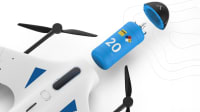
Tech Briefs
Charging Port for Autonomous Drone Swarms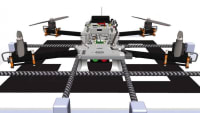


Aerospace & Defense Tech Briefs
Unmanned Ground Vehicle
Aerospace & Defense Tech Briefs
Drone-Mounted Search and Rescue Technology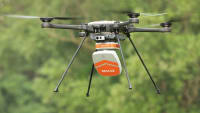

Aerospace INSIDER
VSR700 Unmanned Helicopter Performs Autonomous Flight Testing with DGA
Motion Design INSIDER
AI-Powered Vision System Helps Drones Navigate Safely



Aerospace INSIDER
AI-Based Platform Tests Drone Delivery System
Aerospace & Defense Tech Briefs
Foreign Counter-Unmanned Aerial Systems: Developments in the International Arms Markets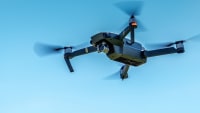
Top Stories
INSIDERDefense
 New Raytheon and Lockheed Martin Agreements Expand Missile Defense Production
NewsAutomotive
 Ford Announces 48-Volt Architecture for Future Electric Truck
INSIDERManufacturing & Prototyping
 Active Strake System Cuts Cruise Drag, Boosts Flight Efficiency
ArticlesTransportation
 Accelerating Down the Road to Autonomy
INSIDERMaterials
 How Airbus is Using w-DED to 3D Print Larger Titanium Airplane Parts
Road ReadyTransportation

Webcasts
Electronics & Computers
 Cooling a New Generation of Aerospace and Defense Embedded...
Power
 Battery Abuse Testing: Pushing to Failure
Connectivity
 A FREE Two-Day Event Dedicated to Connected Mobility
Automotive
 Quiet, Please: NVH Improvement Opportunities in the Early Design Cycle
Transportation
 Advantages of Smart Power Distribution Unit Design for Automotive &...
Aerospace
 Sesame Solar's Nanogrid Tech Promises Major Gains in Drone Endurance