




U.S. Army Orders Next-Generation Missile Warning Systems
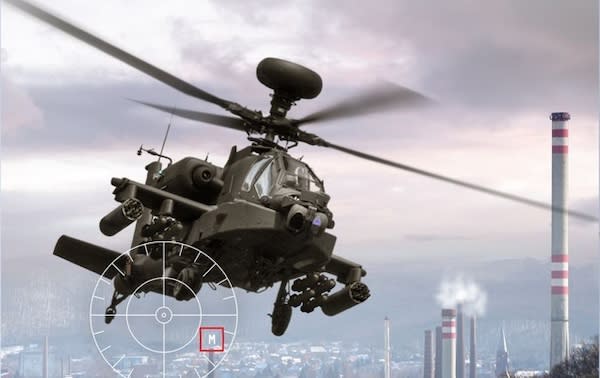
BAE Systems received $179 million in total awards from the U.S. Army as part of the Limited Interim Missile Warning System (LIMWS) Quick Reaction Capability (QRC) program. This award includes orders for the first two production lots and funding to enable fielding of the next-generation Missile Warning System (MWS). The MWS provides aircrews with advanced threat detection capabilities, improving survivability and mission effectiveness in contested environments.
The foundation of LIMWS is BAE Systems’ 2-Color Advanced Warning System (2CAWS) processor which will allow the Army to outpace the threat. 2CAWS builds upon BAE Systems’ experience in fielding systems for the complex rotary-wing environment. Optimized for size, weight, and power, 2CAWS features an open system processor, two-color infrared sensors for increased range, and a fiber optic A-kit for faster data transmission. The system processor serves as the high-bandwidth digital backbone of the system and houses advanced machine learning missile warning algorithms specifically designed for complex, high-clutter environments and rapid threat updates. LIMWS is compatible with existing U.S. Army aircraft survivability equipment, including pilot interfaces and countermeasure systems, allowing for accelerated installation and integration timelines.
The awards will continue the fielding of LIMWS systems in support of critical U.S. Army requirements. It follows a December 2017 development contract and an initial production order in May 2018. Work on the LIMWS program will be conducted in BAE Systems’ facilities in Merrimack, New Hampshire, and Huntsville, Alabama, where the company is building a new state-of-the-art facility.
2CAWS builds on the company’s experience delivering combat-proven aircraft survivability equipment to the U.S. and allied armed forces, and its experience executing critical QRC programs. The company’s Common Missile Warning System is currently fielded on thousands of U.S. Army platforms and has saved dozens of aircraft and their crews since it was first fielded in 2005.
More From SAE Media Group
Aerospace INSIDER
ATHENA Sensor Brings Generational Leap to Airborne MANPAD Protection
Aerospace & Defense Tech Briefs
Missile Protection System
Aerospace & Defense Tech Briefs
Five Missile-Tracking Satellites Launched

Defense INSIDER
USSF Awards Missile Track Custody Prototype Effort
Defense INSIDER
PAC-3 Missile Successfully Intercepts Cruise Missile Target

Aerospace & Defense Tech Briefs
Missile Defense Battle Manager
Aerospace INSIDER
Egypt’s Apache Helicopter Fleet to Get Upgraded Sensor Systems
Aerospace INSIDER
Millennium Space to Build Eight 'FOO Fighter' SDA Satellites
Aerospace & Defense Tech Briefs
Surface to Surface Missile
Aerospace & Defense Tech Briefs
Next Generation Air and Missile Defense Radar
Defense INSIDER
Patriot Missile Hits Target in Test of Upgraded ICBS Radar
Aerospace INSIDER
Air Force Expands Missile Signature Characterization Capabilities
Aerospace Manufacturing and Machining INSIDER
Army Launches $50 Million Advanced Manufacturing Initiative for Aviation and Weapon Systems
Aerospace & Defense Tech Briefs
Advanced Airborne Defensive Laser for Incorporation on Strike Fighter Aircraft
Aerospace INSIDER
GA-ASI Announces Gray Eagle 25M for Multi-Domain Operations
Aerospace & Defense Tech Briefs
S-Band Radar Systems
Aerospace & Defense Tech Briefs
Next Generation C-UAS Missile
Aerospace & Defense Tech Briefs
Integrated Electric Power Kits for Army Vehicles
Aerospace & Defense Tech Briefs
UAS Interceptor System
Defense INSIDER
Air And Missile Defense System To Get Smarter Software

Aerospace INSIDER
AI-Powered Radar Warning Receiver for Fourth Generation Aircraft
Aerospace & Defense Tech Briefs
Integrated Short-Range Air Defense
Aerospace & Defense Tech Briefs
High-Speed Data Cables for Fighter Aircraft
Aerospace Manufacturing and Machining INSIDER
Raytheon to Develop Counter UAS Sensors, Effectors for US Army
Aerospace & Defense Tech Briefs
Perimeter Security Sensor System


Top Stories
INSIDERRF & Microwave Electronics
 FAA to Replace Aging Network of Ground-Based Radars
NewsManufacturing & Prototyping
 Rewriting the Engineer’s Playbook: What OEMs Must Do to Spin the AI Flywheel
Road ReadyTransportation
 2026 Toyota RAV4 Review: All Hybrid, All the Time
NewsDesign
 CES 2026: Bosch is Ready to Bring AI to Your (Likely ICE-powered) Vehicle
INSIDERManned Systems
 F-22 Pilot Controls Drone With Tablet
EditorialLighting Technology

Webcasts
Energy
 Powering America’s EV Future: Connect, Collaborate, Innovate
Power
 E/E Architecture Redefined: Building Smarter, Safer, and Scalable...
Power
 Hydrogen Engines Are Heating Up for Heavy Duty
Electronics & Computers
 Advantages of Smart Power Distribution Unit Design for Automotive...
Transportation
 Quiet, Please: NVH Improvement Opportunities in the Early Design...
