




Multifunctional Shear Pressed CNT Sheets for Strain Sensing and Composite Joint Toughening
Investigating the critical fabrication aspects and potential applications of a novel carbon nanotube material named shear-pressed sheet.
The main goal of this work is to obtain a scientific understanding of the possibilities provided by, and the behavioral features of, a novel type high performance carbon nanotube (CNT) reinforced composite material incorporated in the interfaces of composite laminates and bonded joins with the following two purposes: (a) providing enhancement of the interlaminar fracture toughness and strength and (b) serving as a continuous strain monitoring sensor.
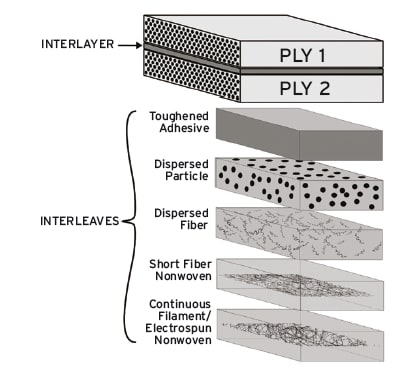
The material under investigation is a relatively thin (in the range of several hundred microns), high CNT volume fraction, shear-pressed sheet (SPS) fabricated from the vertically grown aligned CNT array (a.k.a. “CNT forest”). The intrinsic high fracture toughness of composites reinforced with such CNT SPS should provide significant increase in the interlaminar fracture toughness of composite laminates and bonded joints. Simultaneously, the piezoresistive nature of the aligned CNTs and their interconnected networks opens new opportunities for monitoring both the strain and progressive failure in the composite joints. The stated principal outcome of this research was to establish a starting point for the future development of field deployable multifunctional CNT SPS interface-enhancing materials enabling, at the same time, for strain sensing of composite laminates and bonded joints of aerospace structures.
The interleaf material is fabricated from CVD vertically grown CNT arrays by the shear pressing method. The shear pressing is realized here on a specialty automated device which allows one to delicately control the CNT array alignment, CNT volume fraction and the shear pressed sheet (SPS) thickness. The produced thin dry SPS can be strategically placed within some region between composite plies and, after conventional laminate fabrication it becomes its integral part. Under this scenario, the SPS can be partly or fully impregnated during the cure process with the resin which is already contained in the prepreg plies. An alternative manufacturing approach could be to first impregnate the SPS preform with some other, desirably lower viscosity, resin and partially cure it, then embed the “SPS prepreg” between the plies of composite and complete the manufacturing cycle.
Extensive experimental results show how the Double Cantilever Beam (DCB) testing methodology can be used to evaluate the effect of different CNT SPS interleaves on Mode I interlaminar fracture toughness of conventional carbon/epoxy laminated composites. The experimental studies also included traditional optical microscopy and SEM imaging of the fractured DCB samples. They showed that the delamination propagation path is dramatically altered in the presence of CNT SPS interleaves. It changes from a nearly straight one to highly tortuous; the latter one typically consists of a sequence of jagged or saw-tooth type microcracks often combined with even more subtle sub-micro scale cracks developing within the interleaf, and with microcracks propagating between the interleaf and adjacent composite ply. The overall delamination fracture mechanism shows highly variable from sample to sample and very sensitive to such factors as CNT functionalization, epoxy resin viscosity, cure cycle, the resin infusion technique into the SPS, to the presence of residual voids, and other fine manufacturing peculiarities.
Overall, results of this research in the part of enhancing fracture toughness of traditional laminates by embedding CNT SPS interleaves are very encouraging. They showed that both dry and pre-infused CNT SPS interleaves significantly, up to two times, increase the critical strain energy release rate of the baseline non-interleaved laminate. The non-functionalized, plasma treated and acid treated SPSs were used. Both functionalization methods maintained the high alignment and aspect ratio of the CNTs.
Although adding the CNT functionalization step does not result in further significant toughening versus the non-functionalized interleave case, the characteristics of the fracture surfaces appear to be dramatically different. As evidenced by the much “smoother” load vs. displacement curves, the pre-infused SPS interleaves show better ability than the non-interleaved and dry SPS interleaved laminates to resist catastrophic failure. Apart from the Mode I fracture toughness performance (which was in the focus of this study), the CNT SPS reinforcements provide high dimensional stability to the interleaves and structural joining elements. This feature may be especially beneficial for interfaces and joints in high-precision devices and structures (particularly, miniature ones) which require very thin preforms with well-defined dimensions - a requirement that may be difficult to satisfy with traditional adhesives and bonding methods.
This work was done by Dr. Alexander Bogdanovich and Dr. Philip Bradford of NC State University College of Textiles for the Air Force Research Laboratory. AFRL-0242
This Brief includes a Technical Support Package (TSP).
Multifunctional Shear Pressed CNT Sheets for Strain Sensing and Composite Joint Toughening
(reference AFRL-0242) is currently available for download from the TSP library.
Don't have an account?
More From SAE Media Group
Aerospace & Defense Tech Briefs
‘Nanostitches’ Enable Lighter and Tougher Composite Materials
Aerospace Manufacturing and Machining INSIDER
Can This Self-Healing Composite Make Airplane and Spacecraft Components Last for Centuries?
Tech Briefs
Fiber-Metal Laminate Manufacturing Technique
Tech Briefs
Automated Tow/Tape Placement System
Aerospace & Defense Tech Briefs
Fiber-Reinforced Thermoplastic Composites
Aerospace & Defense Tech Briefs
Quantitative Diagnostics of Multilayered Composite Structures with Ultrasonic Guided Waves
Aerospace & Defense Tech Briefs
Continuous Carbon Nanofibers for Structural Composites
Aerospace & Defense Tech Briefs
Evaluation of Peel Ply Surface Preparation of Composite Surfaces for Secondary Bonding
Aerospace Manufacturing and Machining INSIDER
Researchers Push Limits in High-Temp, Polymer Additive Manufacturing
Aerospace & Defense Tech Briefs
Designing Sensory and Adaptive Composite Materials
Tech Briefs
AERoBOND: Large-Scale Composite Manufacturing
Aerospace Manufacturing and Machining INSIDER
Thermoplastic Drive Shaft System Developed for Aerospace Applications
Aerospace & Defense Tech Briefs
Biobased Carbon Fibers and Thermosetting Resins for Use in DOD Composites Applications
Aerospace & Defense Tech Briefs
Designing With Plastics for Military Equipment
Aerospace & Defense Tech Briefs
Sensing Applied Load and Damage Effects in Composites with Nondestructive Techniques
Aerospace Manufacturing and Machining INSIDER
Cracking in Harsh Environments Needs Both Stress and Corrosion
Tech Briefs
Fiber Metal Laminates Made by the VARTM Process
Aerospace & Defense Tech Briefs
Advanced CT Inspection and Data Analysis
Tech Briefs
3D-Printed Composites for High-Temperature Uses
Aerospace & Defense Tech Briefs
Aerospace Production: Overcoming Challenges in Composite Machining

Aerospace & Defense Tech Briefs
Using Thermoplastic Composites for Aerospace Applications
Aerospace & Defense Tech Briefs
How Advanced Vacuum Bag Kits Streamline Composite Parts Manufacturing
Aerospace & Defense Tech Briefs
Plasma Surface Activation for Stronger, More Durable CFRP Bonds in Aerospace
Aerospace & Defense Tech Briefs
Biobased Carbon Fibers and Thermosetting Resins for Use in DOD Composites Applications
Tech Briefs
Continuous Fiber Composite for Use in Gears
Overview
The document is a final report titled "Multifunctional Shear Pressed CNT Sheets for Strain Sensing and Composite Joint Toughening," authored by Alexander E. Bogdanovich, Philip D. Bradford, James J. Stahl, and Ang Li, and produced by North Carolina State University. The report covers research conducted from April 1, 2012, to June 30, 2015, under contract number FA9550-12-1-0170.
The primary focus of the research is on the development and application of shear-pressed carbon nanotube (CNT) sheets. These materials are explored for their multifunctional capabilities, particularly in the fields of strain sensing and enhancing the toughness of composite joints. The report details the fabrication process of these CNT sheets, emphasizing the innovative shear pressing technique that allows for the alignment of carbon nanotubes, which is crucial for optimizing their mechanical and electrical properties.
The report includes a comprehensive overview of the experimental methods used to evaluate the performance of the CNT sheets. This includes mechanical testing to assess their strength and flexibility, as well as electrical testing to determine their sensitivity as strain sensors. The findings indicate that the shear-pressed CNT sheets exhibit significant piezoresistive properties, making them suitable for applications in structural health monitoring and smart materials.
Additionally, the report discusses the integration of these CNT sheets into composite materials, highlighting their potential to improve the toughness and durability of composite joints. This is particularly relevant for industries that rely on lightweight and strong materials, such as aerospace and automotive sectors.
The document also includes references to related publications, notably a paper co-authored by Ang Li, Alexander E. Bogdanovich, and Philip D. Bradford, titled "Aligned carbon nanotube sheet piezoresistive strain sensors," published in Smart Materials and Structures in 2015. This publication further validates the research findings and contributes to the body of knowledge on CNT applications.
Overall, the report provides valuable insights into the advancements in CNT technology and its practical applications, showcasing the potential for these materials to revolutionize strain sensing and composite material performance. The research underscores the importance of continued exploration in the field of nanomaterials to unlock new functionalities and improve existing technologies.
Top Stories
NewsRF & Microwave Electronics
 Microvision Aquires Luminar, Plans Relationship Restoration, Multi-industry Push
INSIDERAerospace
 A Next Generation Helmet System for Navy Pilots
INSIDERDesign
 New Raytheon and Lockheed Martin Agreements Expand Missile Defense Production
INSIDERMaterials
 How Airbus is Using w-DED to 3D Print Larger Titanium Airplane Parts
NewsPower
 Ford Announces 48-Volt Architecture for Future Electric Truck
ArticlesAR/AI

Webcasts
Electronics & Computers
 Cooling a New Generation of Aerospace and Defense Embedded...
Automotive
 Battery Abuse Testing: Pushing to Failure
Power
 A FREE Two-Day Event Dedicated to Connected Mobility
Unmanned Systems
 Quiet, Please: NVH Improvement Opportunities in the Early Design Cycle
Automotive
 Advantages of Smart Power Distribution Unit Design for Automotive &...
Energy
 Sesame Solar's Nanogrid Tech Promises Major Gains in Drone Endurance