




New Methods Detect and Predict Fatigue-Related Aircraft Cracks
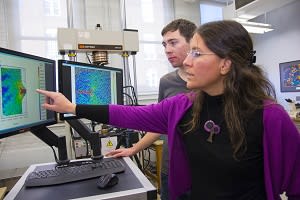
Researchers are developing tools and technology to detect the formation of cracks in aircraft components and monitor their progression. The team is conducting comprehensive testing and characterization studies to understand and monitor how tiny cracks are initiated and grow in metal components as they are subjected to repetitive strains and stresses similar to those that wings, fuselages, and other aircraft components experience in service.
Using a new imaging system, the team can view the initiation and propagation of cracks at the micro-scale while metal samples are stressed in a servo-hydraulic testing machine. These fatigue cracks can be detected both at the surface of metal samples, and also by using electromagnetic induction within the metal microstructure. With the knowledge gained, the team can develop new lightweight metal alloys that are more resistant to cracking, or in which small cracks are less likely to expand into larger fissures that would require a component to be repaired or replaced.
More From SAE Media Group
NASA Spinoff
Analytic Tool Simplifies Metal Fracture Assessments
Tech Briefs
Self-Healing Aluminum Metal Matrix Composite
Aerospace INSIDER
Tests Show How Plastic Parts Deform During Flight
Aerospace & Defense Tech Briefs
Peridynamic Modeling: An Alternative Approach to Analyzing Material Failure

Tech Briefs
Crack Image Quality Indicator

Tech Briefs
Compact, Lightweight, CMC-Based Acoustic Liner
Tech Briefs
Cord Tension Measurement Device
Tech Briefs
Nanoprecipitates Toughen Structural Alloys
Aerospace & Defense Tech Briefs
Sensing Applied Load and Damage Effects in Composites with Nondestructive Techniques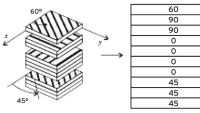
Photonics & Imaging Technology
Deformation Fingerprints Will Help Researchers Identify, Design Better Metallic Materials

Motion Design
Calculating the Estimated Fatigue Life of a Disc Spring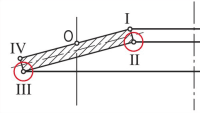
Aerospace & Defense Tech Briefs
Burner Rig Testing of A500® C/SiC
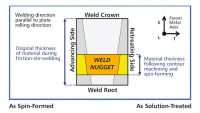
Aerospace & Defense Tech Briefs
Hydraulic Testing of Polymer Matrix Composite 102mm Tube Section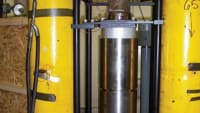
Air Force Research Laboratory Technology Horizons
Strain-Induced Porosity Model
Tech Briefs
Virtual Test Laboratory
Aerospace & Defense Tech Briefs
Advanced CT Inspection and Data Analysis
Tech Briefs
Method Pinpoints Microscale Damage in Metal
Aerospace & Defense Tech Briefs
Spectrum Fatigue of 7075-T651 Aluminum Alloy Under Overloading and Underloading

Aerospace & Defense Tech Briefs
Testing Military-Grade Adhesive in Extreme Loading Conditions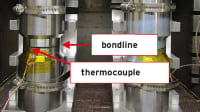
Aerospace & Defense Tech Briefs
Evaluation of Additively Manufactured Ultrahard Steels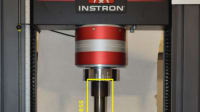
Tech Briefs
Sensor Film for Aerospace
Aerospace & Defense Tech Briefs
Thermoplastic Composites to Play Enhanced Role in Next-Generation Aerospace Applications
Tech Briefs
Microtesting Rig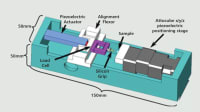
Top Stories
NewsRF & Microwave Electronics
 Microvision Aquires Luminar, Plans Relationship Restoration, Multi-industry Push
INSIDERAerospace
 A Next Generation Helmet System for Navy Pilots
INSIDERDesign
 New Raytheon and Lockheed Martin Agreements Expand Missile Defense Production
INSIDERMaterials
 How Airbus is Using w-DED to 3D Print Larger Titanium Airplane Parts
NewsPower
 Ford Announces 48-Volt Architecture for Future Electric Truck
ArticlesAR/AI

Webcasts
Electronics & Computers
 Cooling a New Generation of Aerospace and Defense Embedded...
Automotive
 Battery Abuse Testing: Pushing to Failure
Power
 A FREE Two-Day Event Dedicated to Connected Mobility
Unmanned Systems
 Quiet, Please: NVH Improvement Opportunities in the Early Design Cycle
Automotive
 Advantages of Smart Power Distribution Unit Design for Automotive &...
Energy
 Sesame Solar's Nanogrid Tech Promises Major Gains in Drone Endurance