




Tomographic Electrical Resistance-Based Damage Sensing in Nano-Engineered Composite Structures
Aligned carbon nanotubes provide a means of enhancing structural performance of composite structures.
Advanced composite materials are increasingly replacing metals in the aerospace industry as they offer weight-saving improvements such as high specific strength and stiffness, while providing resistance to fatigue and corrosion. Traditional advanced composites, however, exhibit significantly reduced electrical and thermal conductivity relative to metals, and matrix-rich regions at ply interfaces result in relatively poor interlaminar properties. Additionally, composites that have sustained damage often have non-visible or barely visible damage, complicating damage assessment. Recent efforts to address the limitations of advanced composites include the incorporation of carbon nanotubes (CNTs) to take advantage of intrinsic and scale-dependent properties of these nanostructures.
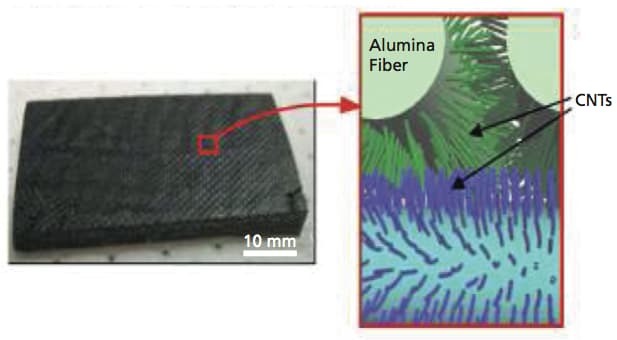
This sensing system can potentially be integrated into an overall integrated vehicle health management (IVHM) approach as in situ structural health monitoring (SHM). Such a concept is investigated in this work and the basic principles demonstrated, including both in-plane and through-thickness damage sensing, giving a non-destructive tomographic view of the three-dimensional damage state.
The present investigation built on prior work to instrument nano-engineered laminates with a non-invasive silver-ink electrode grid and multiplexing micro-switches connected to compact hardware for through-thickness resistance measurement. The painted electrode grid, inspired by flat-panel liquid crystal display (LCD) technology, uses an “active” layer of electrode columns on one surface of the laminate as positive electrode, and on the other surface, another layer of electrode rows will act as “passive” ground. Thus, by selecting a particular row and column, local through-thickness resistance measurements can be obtained for a grid of points over the structure. Furthermore, in-plane surface resistivity changes at a grid point can be obtained by probing resistance between two adjacent trace pairs closest to the point on either surface. As one would intuitively expect, damage in the form of delaminations or cracks will affect the CNT conductive network around the affected zone in the structure, and correspondingly, the local through-thickness (and in-plane) resistivity. Using the electrode grid and interpolating from the measurements at distinct grid points, high-resolution resistance maps over large structural areas can be obtained, allowing accurate localization of damage.
Both in-plane and through-thickness electrical resistance measurements were collected. Clear changes were observed in both sets of data for grid lines close to the impacted zone of the specimen, demonstrating that these parameters were sensitive to damage in the structure. The peak resistance changes were close to the center of the specimen near the impact site, and little to no change was observed in values at points away from the damage zone. Overall, the subsurface impact damage caused significant electrical resistance changes, allowing for a full-field representation of the damage locations by interpolating the collected data.
This work was done by Sunny S. Wicks, Roberto Guzman deVilloria, and Brian L. Wardle of the Massachusetts Institute of Technology; and Ajay Raghava and Seth Kessler of the Metis Design Corporation. For more information, download the Technical Support Package (free white paper) at www.defensetechbriefs.com/tsp under the Materials category. MIT-0002
This Brief includes a Technical Support Package (TSP).
Tomographic Electrical Resistance-Based Damage Sensing in Nano-Engineered Composite Structures
(reference MIT-0002) is currently available for download from the TSP library.
Don't have an account?
More From SAE Media Group
Tech Briefs
Conductive Carbon Fiber Polymer Composite
Tech Briefs
Fiber-Metal Laminate Manufacturing Technique
Aerospace & Defense Tech Briefs
‘Nanostitches’ Enable Lighter and Tougher Composite Materials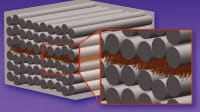
Tech Briefs
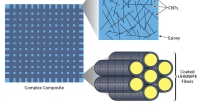
Precision CNT Cutting Mechanism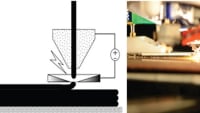


Aerospace & Defense Tech Briefs
Polymer Matrix Composite Materials for a Structural Multifunctional Fuel Cell


Medical Design Briefs
3D Printable Polymer Nanocomposite Ink
Medical Design Briefs
Conductive, Cotton-Based Fiber for Smart Textiles

Aerospace & Defense Tech Briefs
Sensing Applied Load and Damage Effects in Composites with Nondestructive Techniques
Tech Briefs
Multifunctional, High-Temperature Nanocomposites
Tech Briefs
Automated Tow/Tape Placement System

Tech Briefs
Foldable Solar Cells
Aerospace & Defense Tech Briefs
Aligned MWCNTs as Thermal Conductors in Adhesive Joints
Tech Briefs
Thermally Conductive Polymer Films
Aerospace & Defense Tech Briefs
Solving Signal Interference Challenges in Aerospace and Defense Electronics
Tech Briefs
Woven Nanotube Fibers Turn Heat into Power
Aerospace & Defense Tech Briefs
Thermal Conductivities of Some Polymers and Composites
Aerospace & Defense Tech Briefs
Carbon Nanotube Thermal Interfaces Enhanced with Sprayed-On Nanoscale Polymer Coatings
Tech Briefs
Carbon-Nanotube-Carpet Heat-Transfer Pads
Tech Briefs
Healable Carbon Fiber Composite
Aerospace & Defense Tech Briefs
Enhanced Contacts for Inverted Metamorphic Multi-Junction Solar Cells Using Carbon Nanotube Metal Matrix Composites
Overview
The document presents research on "Tomographic Electrical Resistance-based Damage Sensing in Nano-Engineered Composite Structures," focusing on the integration of carbon nanotubes (CNTs) into composite materials to enhance their structural integrity and damage detection capabilities. Conducted by Metis Design Corporation in collaboration with the Department of Aeronautics and Astronautics at MIT, the research was sponsored by the Air Force Office of Scientific Research.
The study highlights the development of a procedure to bond thick gauge wires to traces using silver epoxy, achieving minimal resistance change across multiple trials. This method was tested by subjecting specimens to impact damage using a steel ball, with post-damage resistance measurements taken to assess the effectiveness of the sensing technique. The research emphasizes the potential of CNT networks for sensing distributed strain and damage, which is crucial for life prediction and self-healing in composite structures.
The document references several key studies that explore the fabrication and multifunctional properties of hybrid laminates with aligned CNTs, as well as the testing of long CNTs grown on fiber surfaces for hybrid composites. These references underscore the innovative approaches taken to enhance the performance of composite materials through nanotechnology.
The research findings indicate that the integration of CNTs not only improves the mechanical properties of composites but also enables real-time monitoring of structural health. This capability is particularly valuable in aerospace applications, where safety and reliability are paramount. The use of tomographic electrical resistance measurements allows for a non-invasive method to detect damage, providing a significant advancement in the field of structural health monitoring.
Overall, the document outlines a promising direction for future research and development in nano-engineered composites, emphasizing the collaboration between academia and industry to push the boundaries of material science. The work contributes to the growing body of knowledge on multifunctional materials and their applications in critical sectors, paving the way for safer and more efficient aerospace structures.
Top Stories
INSIDERDefense
 New Raytheon and Lockheed Martin Agreements Expand Missile Defense Production
NewsAutomotive
 Ford Announces 48-Volt Architecture for Future Electric Truck
INSIDERManufacturing & Prototyping
 Active Strake System Cuts Cruise Drag, Boosts Flight Efficiency
ArticlesTransportation
 Accelerating Down the Road to Autonomy
INSIDERMaterials
 How Airbus is Using w-DED to 3D Print Larger Titanium Airplane Parts
Road ReadyTransportation

Webcasts
Electronics & Computers
 Cooling a New Generation of Aerospace and Defense Embedded...
Power
 Battery Abuse Testing: Pushing to Failure
Connectivity
 A FREE Two-Day Event Dedicated to Connected Mobility
Automotive
 Quiet, Please: NVH Improvement Opportunities in the Early Design Cycle
Transportation
 Advantages of Smart Power Distribution Unit Design for Automotive &...
Aerospace
 Sesame Solar's Nanogrid Tech Promises Major Gains in Drone Endurance