




Hydraulics Remain Relevant in Software-defined Future
Machine learning and AI are already influencing, and will continue to influence, the design and capabilities of smart mobile hydraulics, according to Bosch Rexroth’s Rafael Cardoso.
The advanced construction equipment packing the convention center halls and surrounding lots will understandably be the stars of the triennial CONEXPO trade show, taking place March 3-7 in Las Vegas. But the latest technologies in fluid power and motion control that help those machines operate efficiently will also command attention from showgoers.

The Bosch Rexroth mobile hydraulics team will be on-site in a joint booth with partner HydraForce (Booth S80245), showcasing their current product portfolio. Rafael Cardoso, Bosch Rexroth engineering manager, mobile systems and software, expects to have conversations about advanced control and automation, “focused on the demand for smarter, software-driven control strategies that enhance precision, productivity, downtime reduction and operator assistance features.”
Customization and modularity will also be top of mind, Cardoso said, “as customers seek tailored solutions that allow flexibility for different applications and markets, supported by modular/configurable hardware and software.” He believes that energy efficiency and hybrid systems will be a strong focus as well. “Specifically, around reducing emissions and improving energy efficiency through hybrid architectures, optimized hydraulic circuits and electrification. This includes technologies like load-sensing systems and regenerative solutions.”
Cardoso responded to a range of topical questions posed by SAE Media ahead of CONEXPO.
With off-highway vehicles becoming more automated and increasingly progressing toward software-defined vehicles, what will be the role of hydraulics in these vehicles?
Hydraulics will continue to play a central role in off-highway vehicles as they become more automated and evolve toward software-defined architectures. Hydraulics remains the most effective technology for delivering high force density, especially for heavy work functions such as digging, lifting and pushing capabilities that electric actuation still cannot match efficiently at scale.
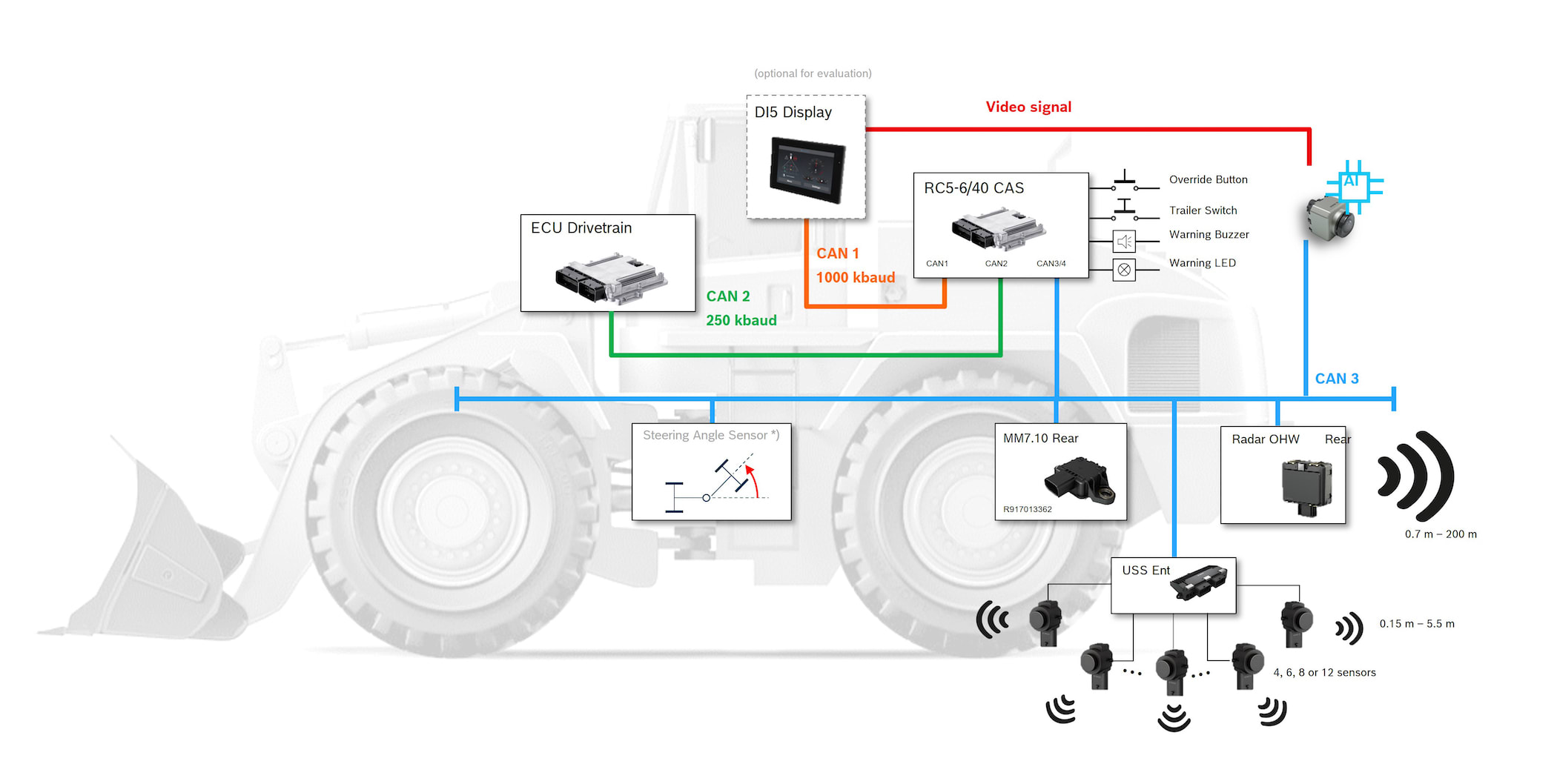
What does change is how hydraulics is controlled. The systems transition from traditional hydraulics to electro-hydraulics, where electronics command and monitor hydraulic behavior over CAN and, increasingly, Ethernet-based networks. More sensing and feedback enable closed-loop control for improved precision, repeatability and productivity. And software becomes the orchestrator, coordinating pumps, valves and actuators as part of a unified machine control strategy.
While standardized hardware platforms will continue to grow, the diversity of real-world applications means machine- and market-specific variants will remain necessary. Software will absorb more of the customization, but hydraulics will stay essential to delivering the raw mechanical power required in off-highway equipment.
Any system-engineering challenges that need to be overcome to accommodate such connected off-highway vehicles?
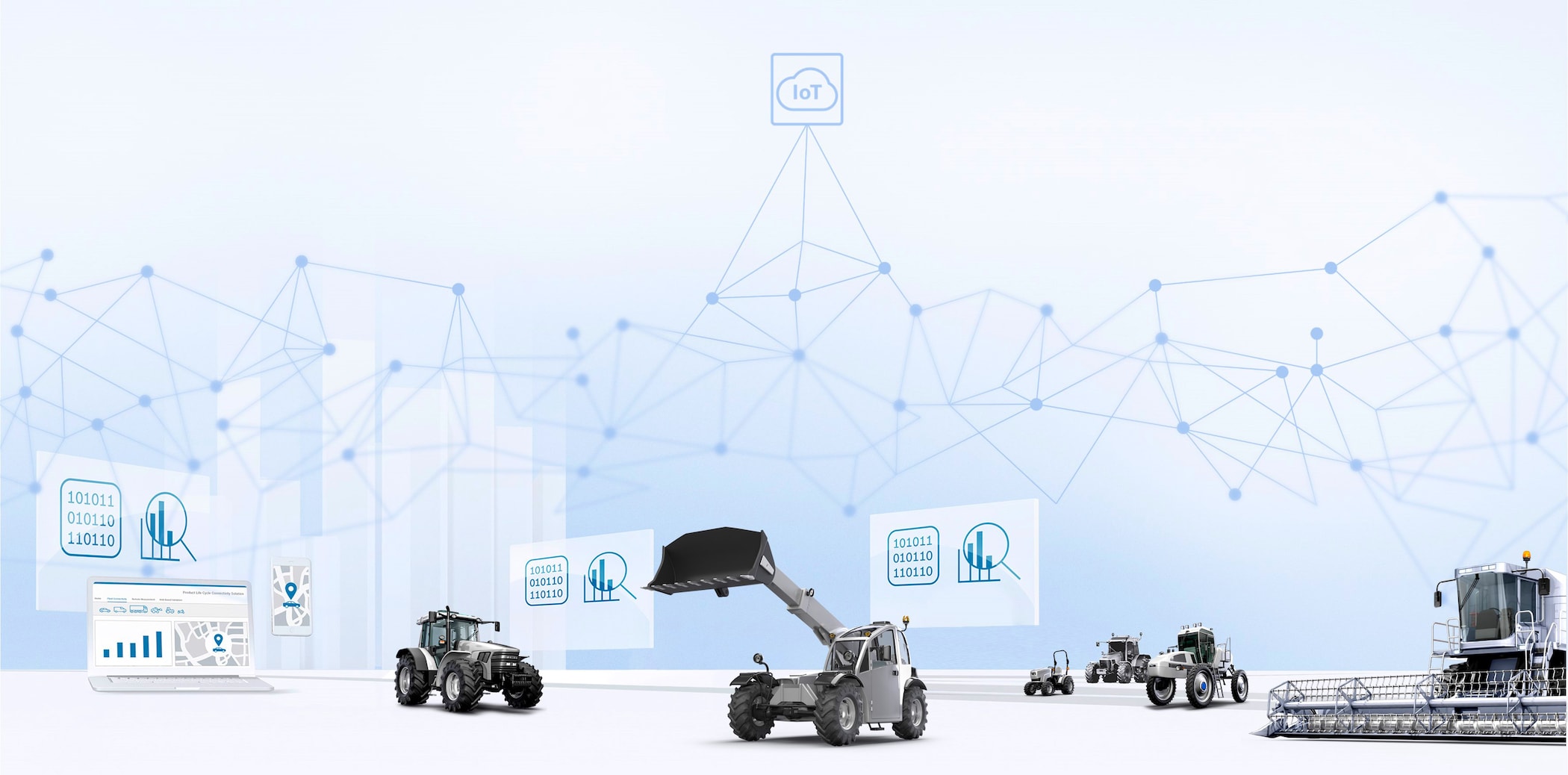
There are several system-engineering challenges that must be addressed as off-highway machines become more connected, automated and software-defined. Connectivity limitations in real-world environments is one of them. Off-highway machines often operate in remote, harsh or obstructed locations, where cellular or WiFi coverage is inconsistent. This can make continuous IoT data collection unreliable, making it important for systems to be designed to operate safely and efficiently even when offline, and to synchronize data opportunistically.
Another is the ROI of IoT and data overload. Much off-highway work is repetitive, cyclical or straightforward, so the true value of streaming large volumes of data is often overestimated. The data becomes meaningful only when tightly integrated with uptime, diagnostics and service workflows. System engineers need to design architectures that prioritize actionable data rather than “collect everything.”
Connected machines also require security: remote updates (OTA), authentication, encrypted communication and adherence to evolving standards. These requirements add real-time, cost and engineering complexity to vehicle architectures. Hardening embedded systems while maintaining uptime is a major challenge.
Integration of mixed networks (CAN, CAN FD, Ethernet) also must be managed. As machines add sensors, cameras, radars and advanced control systems, legacy CAN buses reach their bandwidth limits, and Ethernet brings higher throughput while adding architectural complexity. System engineers must manage coexistence, redundancy and determinism across multiple communication layers.
And software lifecycle and architecture management. With more intelligence pushed into software, version control, configuration management and cybersecurity patching become ongoing responsibilities. The system architecture needs to support long-term maintainability, not just initial deployment.
Will machine learning and AI influence the design and capabilities of “smart” mobile hydraulics?
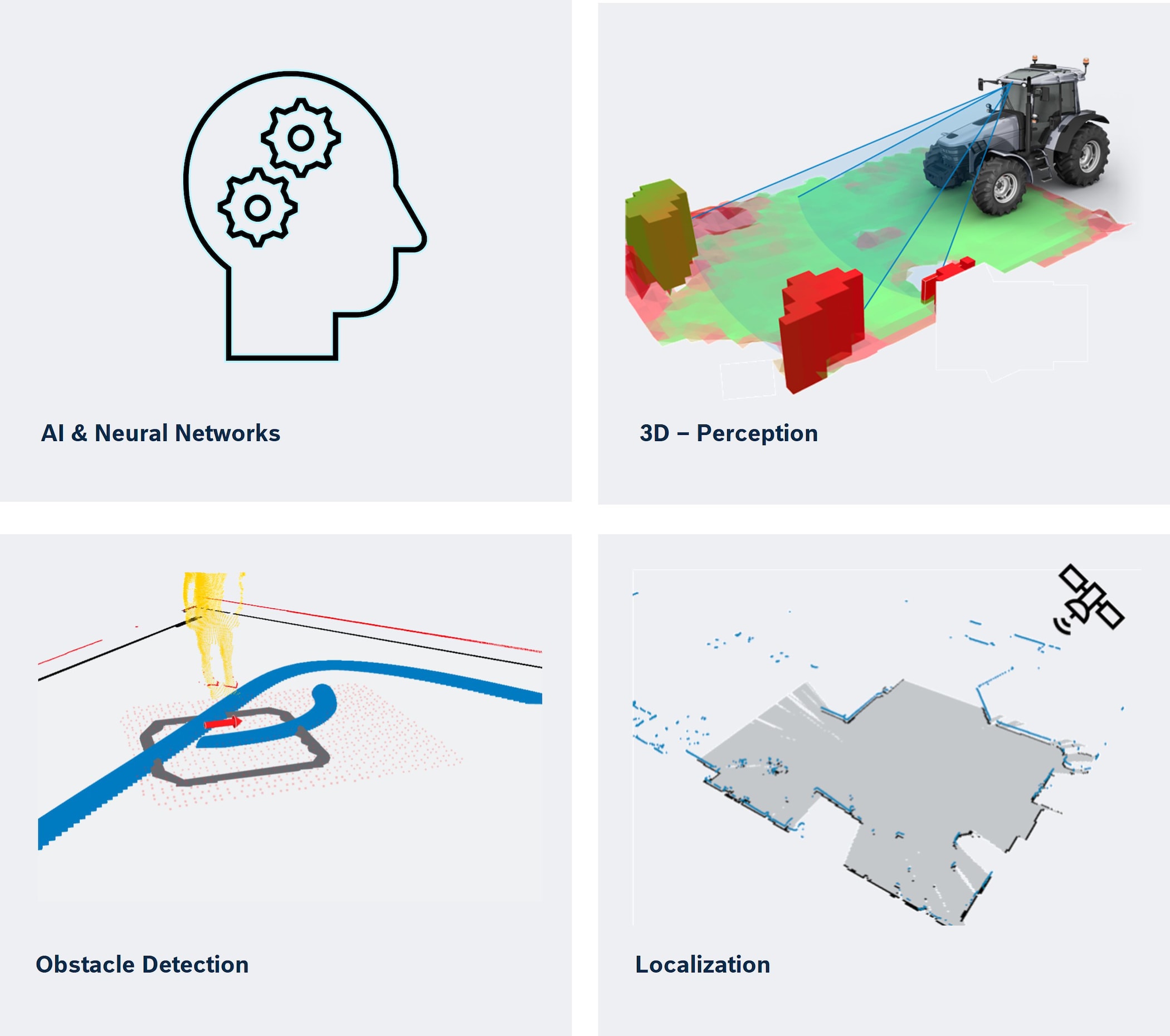
Machine learning and artificial intelligence (AI) are already influencing, and will continue to influence, the design and capabilities of smart mobile hydraulics. The impact is less about making hydraulic hardware “intelligent” and more about how machines are operated, monitored and maintained.
One of the implications, for instance, is in predictive maintenance. AI-based monitoring systems, combined with sensors and telematics, can detect anomalies in pressure, flow or temperature and predict hydraulic failures weeks in advance, reducing unplanned downtime. The AI value comes from better diagnostics, optimized control strategies and more efficient machine operation, not from replacing hydraulics.
Are you seeing increased demand for customized hydraulic solutions?
Yes, we are seeing a growing demand. This trend is driven by several factors, including specialized applications. Industries are increasingly requiring hydraulic systems tailored to unique operational needs, which standard solutions cannot fully address.
There also is a strong push to maximize productivity — achieving the same or greater output in less time — through optimized and customized system designs. Another driver is machine individualization. Customers expect machines to be fine-tuned for specific operator profiles or target markets, enabling personalized performance and enhanced user experience.
What’s an example of a customized solution developed with/for a customer?
I can’t share specific customer details, but I can provide a general example of the type of customized solutions we’ve developed recently. We’ve been working at a system level with multiple customers to optimize implement operations. This involves adjusting and adapting key components — such as pumps, valves and compensators — to work together seamlessly for a specific application — for example, bucket operation.
A critical enabler in these solutions is software integration, which manages the collective behavior of all components. By coordinating their operation, the software ensures maximum performance, efficiency and responsiveness, while maintaining safety and reliability throughout the system.
Do you notice differences in technology trends in different global markets?
The regional distribution of the electro-hydraulic actuation system market reveals significant variations in market size, growth rates and adoption patterns across these different regions. [Cardoso provided the following insights on these regional differences.]
Asia-Pacific
Defining traits:
- Fast adoption cycles and willingness to trial new technologies
- Strong cost/performance focus
- Heavy use of electronics, sensors and software to compensate for operator variability
Typical trends:
- Rapid integration of electro-hydraulics, automation and connectivity
- AI-enabled features moving quickly from premium to mid-range equipment
- Domestic suppliers closing the gap with global leaders in smart components
What drives it:
- Massive infrastructure investment
- Large manufacturing base
- Government-led industrial modernization programs
North America
Defining traits:
- Pragmatic adoption: technology must clearly pay for itself
- Strong focus on uptime and lifecycle cost
Typical trends:
- Smart hydraulics tied closely to fleet management and data analytics
- Automation driven by labor shortages and safety requirements
- High adoption of telematics, diagnostics and predictive maintenance
What drives it:
- High labor costs
- Large fleets and professional end users
- Strong aftermarket and service ecosystems
Europe
Defining traits:
- Technology adoption shaped heavily by regulation
- Preference for refined energy-efficient solutions over brute force
Typical trends:
- Tight integration between hydraulics, electronics and control software
- Electro-hydraulics for energy savings (load-sensing, independent metering)
- Early adoption of technologies supporting emissions reduction and electrification
What drives it:
- Environmental regulations
- High engineering standards
- OEM competition on efficiency and system intelligence
More From SAE Media Group
Motion Design
Vision Integration Transforms Collaborative Robotics
Aerospace & Defense Tech Briefs
Managing Thermal Reliability at the Edge: The Critical Challenge DoD Isn’t Talking About
Aerospace & Defense Tech Briefs
Researchers Discover New Materials That Could Enhance Fighter Jet Efficiency

Tech Briefs
Executive Roundtable: Autonomous Mobile Robots
Battery & Electrification Technology
Enabling Ambitious Battery Production at Scale
Photonics & Imaging Technology
Helping Machine Vision Go Beyond Human Programming


Aerospace & Defense Tech Briefs
NRL Research Physicists Explore Fiber Optic Computing Using Distributed Feedback
Photonics & Imaging Technology
The New Industrial Edge Ecosystem for Machine Vision


Tech Briefs
My Opinion: Sensors Made to Order
Photonics & Imaging Technology
New Study Showcases 3D Photonics with Record Performance for AI
Aerospace & Defense Tech Briefs
The Future of Aerospace: Embracing Digital Transformation and Emerging Technologies
Automotive Engineering
Manufacturers Must Take the Wheel to Scale SDV Success

Off-Highway Engineering
Bits and Bytes Boost Hydraulic System Capabilities
Off-Highway Engineering
Monarch Unveils AI-Powered Autonomous Platform
Automotive Engineering
Revolutionizing Vehicle Technology Through Intelligent Actuators

Motion Design
AI in Motion Control: Optimizing Servo Systems
Automotive Engineering
Driving Success with the Software-Defined Product
Autonomous Vehicle Engineering
Data Drives Driverless Truck Launch
Sensor Technology
The Industrial Nervous System: IIoT and PLCs
Motion Design INSIDER
Simulated Humanoid Robots Learn to Hike Rugged Terrain Autonomously
Motion Design INSIDER
AI Helps Robots Manipulate Objects with Their Whole Bodies
Top Stories
INSIDERManufacturing & Prototyping
 How Airbus is Using w-DED to 3D Print Larger Titanium Airplane Parts
NewsAutomotive
 Microvision Aquires Luminar, Plans Relationship Restoration, Multi-industry Push
INSIDERAerospace
 A Next Generation Helmet System for Navy Pilots
INSIDERDesign
 New Raytheon and Lockheed Martin Agreements Expand Missile Defense Production
ArticlesAR/AI
 CES 2026: Bosch is Ready to Bring AI to Your (Likely ICE-powered) Vehicle
Road ReadyDesign

Webcasts
Semiconductors & ICs
 Advantages of Smart Power Distribution Unit Design for Automotive...
Unmanned Systems
 Quiet, Please: NVH Improvement Opportunities in the Early Design...
Electronics & Computers
 Cooling a New Generation of Aerospace and Defense Embedded...
Power
 Battery Abuse Testing: Pushing to Failure
AR/AI
 A FREE Two-Day Event Dedicated to Connected Mobility
