




Managing Thermal Reliability at the Edge: The Critical Challenge DoD Isn’t Talking About

When a Marine in the field launches an uncrewed aerial vehicle (UAV) to gather intelligence, it becomes more than just a drone. It’s a flying data center that processes AI workloads, runs machine learning algorithms, and transmits critical information through a complex network designed to provide situational awareness across multiple commands. All of this computational power generates significant heat, and in the confined space of a UAV operating in harsh environmental conditions, thermal management becomes critical to mission success. But there’s a fundamental question the U.S. defense isn’t asking: how will we manage the heat?
The Golden Dome, the Trump administration’s vision for missile defense, builds upon the existing Joint All-Domain Command and Control (JADC2) framework for connecting sensors from all branches of the U.S. armed forces into a unified network powered by artificial intelligence. This plan faces an existential threat from thermal management challenges that have plagued edge computing systems for years.
AI Makes Everything Hotter

The introduction of artificial intelligence and machine learning at the edge has fundamentally changed the thermal equation. Each time a drone gathers information, AI infrastructure processes that data faster than ever before, generating exponentially more heat in the process. Unlike traditional data centers, where convection cooling is facilitated by increased energy demand, edge systems won’t have the same luxury of infinite energy to cool those operating at the edge. They must dissipate heat while operating in deserts, arctic conditions, and even in the vacuum of space.
Space-based systems face particularly unique challenges. Satellites must employ very specific thermal system management techniques to thermally balance the spacecraft to maintain peak performance for its mission life. The space sector recognized this thermal challenge early, resulting in advanced thermal management becoming a go-to-market priority for companies.
JADC2: A Golden Opportunity for Systems Engineering
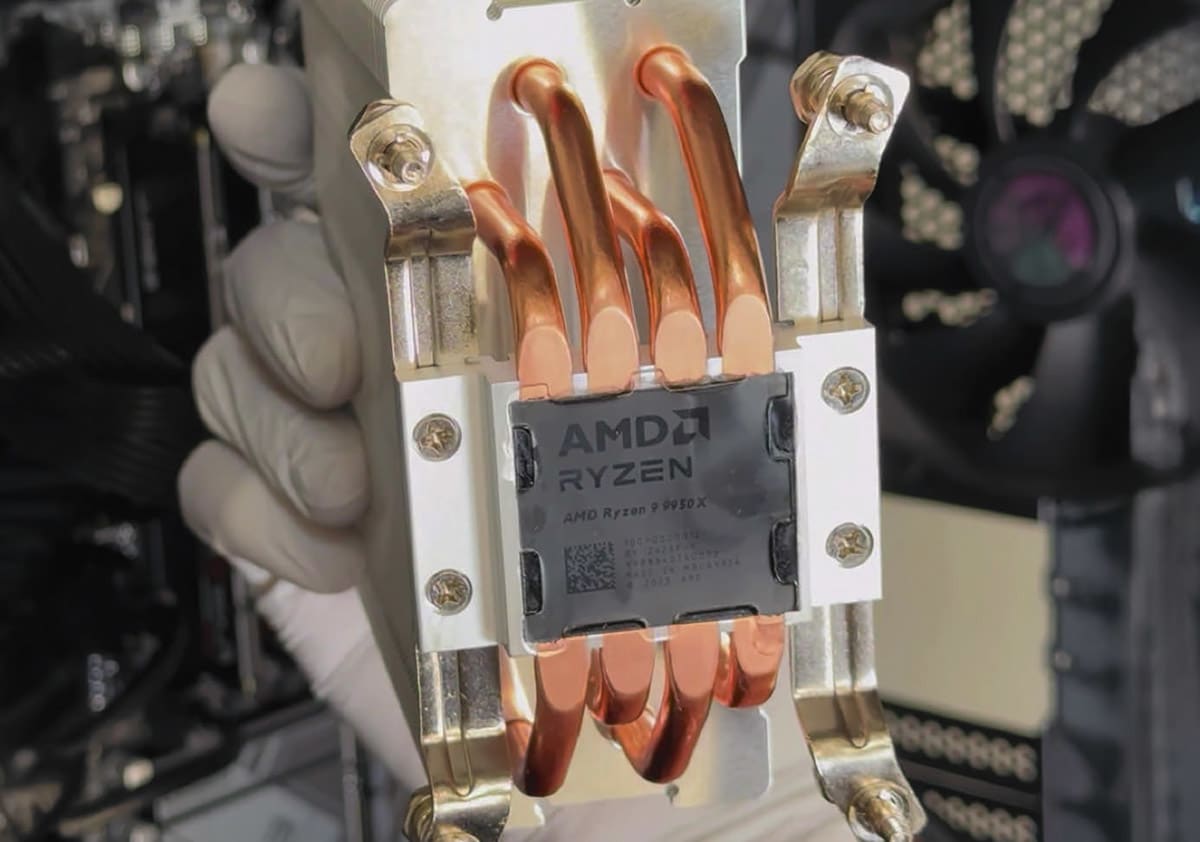
While the Trump administration’s Golden Dome builds on JADC2, it will have the same challenge of mitigating heat generated by edge sensors. The question is whether field-deployed systems will work when they are needed most; how will maximizing hardware reliability over time through thermal management become the centerpiece of the system design approach? As systems are designed to move data through satellites and connect sensors across multiple domains, predictable thermal interface performance must be seen as a foundational requirement, not an afterthought. Our national defense and warfighters must be equipped with reliable and efficient systems, rather than ones that fail when needed most or offer limited operational capabilities in the field, especially when missions require extended hours.
The DoD’s Thermal Blind Spot
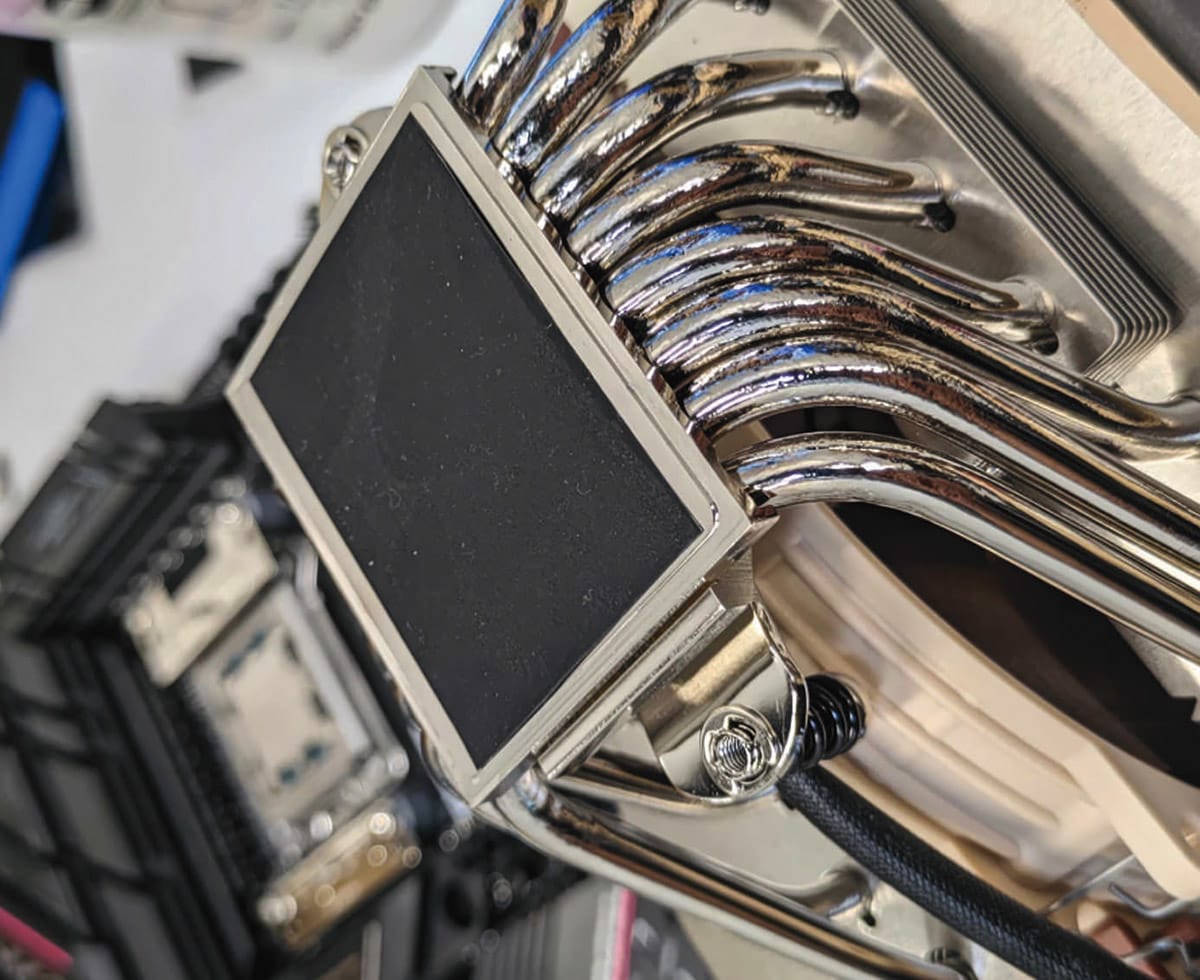
The defense community has taken a surprisingly naive approach to thermal management, treating heat as a secondary concern rather than a primary design constraint. While the 2024 National Defense Authorization Act recognized the strategic importance of advanced thermal interface materials, specifically calling out foreign competition in aligned carbon nanotube technology, procurement practices still default to legacy solutions that degrade under operational stress.
The result? Mission-critical radios and edge sensors will fail prematurely, often before their operational lifespan has ended, leaving warfighters turning to use their personal cell phones to communicate with command or to have an incomplete data set in mission-critical environments.
The 23-Minute Reality Check

Consider this real-world scenario: A warfighter carries a backpack designed as a “mini data center” containing battlefield sensors and/or communications equipment. Consider, every piece of the system generates heat as it processes and transmits mission-critical data. This equipment requires the same thermal management effectiveness as traditional data centers, but lacks the luxury of climate control or redundant cooling systems. If this system overheats or begins to become unreliable, the intelligence being gathered becomes questionable at best.
For example, a drone manufacturer supplying the U.S. Army discovered its systems could only operate for 23 minutes before overheating and forcing a shutdown. Due to the limited flight time, soldiers’ intelligence gathering is restricted to 23 minutes, which could become the difference between mission success and catastrophic failure. This scenario can be mitigated if system architects “require” thermal interface systems management to be predictable.
The Path Forward
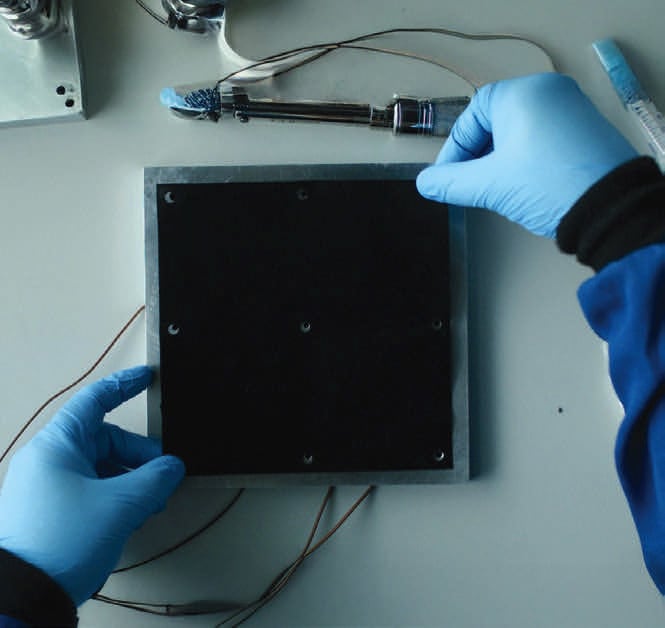
The long-term operational and cost risks of ignoring thermal management are substantial. Billions of dollars invested in modernization will be worthless if the underlying hardware can’t maintain performance under thermal stress. The Pentagon’s $175 billion vision for next-generation command and control hinges on solving this challenge.
By utilizing thermal interface materials that exhibit predictable performance over the system’s mission life, the operational lifespan and peak performance of equipment can be dramatically extended and maintained across extreme environments. But integration must happen at the requirements phase of the design, not as a field retrofit. Thermal management must become a predictable, scalable design input, just like processing power or battery capacity.
As the Golden Dome moves from concept to deployment, the system architects have a choice: continue treating thermal interface management as a secondary concern, or recognize it as the critical enabler of reliable edge computing that modern warfare demands. Warfighters can’t wait for systems to cool down.
This article was written by Rafael Spears, GM of Global Strategy, Carbice (Atlanta, GA). For more information, visit here .
More From SAE Media Group
Aerospace & Defense Tech Briefs
Designing Transportable, High-Performance AI Systems for the Rugged Edge
Aerospace & Defense Tech Briefs
DEVCOM CBC Innovates and Integrates through Autonomous Technologies

Aerospace INSIDER
The Future of Avionics: Machine-Learned and Certified
Aerospace & Defense Tech Briefs
NRL Research Physicists Explore Fiber Optic Computing Using Distributed Feedback
Aerospace INSIDER
AI-Powered Radar Warning Receiver for Fourth Generation Aircraft
Aerospace & Defense Tech Briefs
A Perspective on GVSC Crewstation Development and Addressing Future Ground Combat Vehicle Needs
Aerospace & Defense Tech Briefs
Certified Machine Learning-Based Avionics

Aerospace & Defense Tech Briefs
Breathing Life into Artificial Intelligence and Next Generation Autonomous Aerospace Systems

Aerospace & Defense Tech Briefs
Artificial Intelligence and Autonomous Vehicles
Aerospace & Defense Tech Briefs
Thermal Management Techniques in Avionics Cooling
Aerospace Manufacturing and Machining INSIDER
How AR, Robotics are Increasing Speed of Space Payload Manufacturing at Northrop
Aerospace & Defense Tech Briefs
Space Docking and Satellite AI Research

Defense INSIDER
DOD Taking Measures to Protect Nuclear Weapons and Space Assets
Aerospace INSIDER
Air Force Forecasts 2040 Operating Environments in Global Futures Report


Aerospace INSIDER
Aitech’s New Palm-Sized Satellite Enables Space-Based AI Processing

Aerospace & Defense Tech Briefs
The Evolution of Autonomous Systems in UAV Technology
Defense INSIDER
Algorithms for Autonomous Marine Vehicles

Aerospace & Defense Tech Briefs
Researchers Help Robots Navigate Efficiently in Uncertain Environments
Aerospace & Defense Tech Briefs
RAD-HARD Microelectronics for Space Applications


Top Stories
INSIDERDefense
 New Raytheon and Lockheed Martin Agreements Expand Missile Defense Production
NewsAutomotive
 Ford Announces 48-Volt Architecture for Future Electric Truck
INSIDERManufacturing & Prototyping
 Active Strake System Cuts Cruise Drag, Boosts Flight Efficiency
ArticlesTransportation
 Accelerating Down the Road to Autonomy
INSIDERMaterials
 How Airbus is Using w-DED to 3D Print Larger Titanium Airplane Parts
Road ReadyTransportation

Webcasts
Electronics & Computers
 Cooling a New Generation of Aerospace and Defense Embedded...
Power
 Battery Abuse Testing: Pushing to Failure
Connectivity
 A FREE Two-Day Event Dedicated to Connected Mobility
Automotive
 Quiet, Please: NVH Improvement Opportunities in the Early Design Cycle
Transportation
 Advantages of Smart Power Distribution Unit Design for Automotive &...
Aerospace
 Sesame Solar's Nanogrid Tech Promises Major Gains in Drone Endurance