




DarkSky One Wants to Make the World a Darker Place
The car is designed around our principles for responsible outdoor lighting, which say to put the light where you need it, in the amount that you need it, not more, and turn it off when no one is around.”
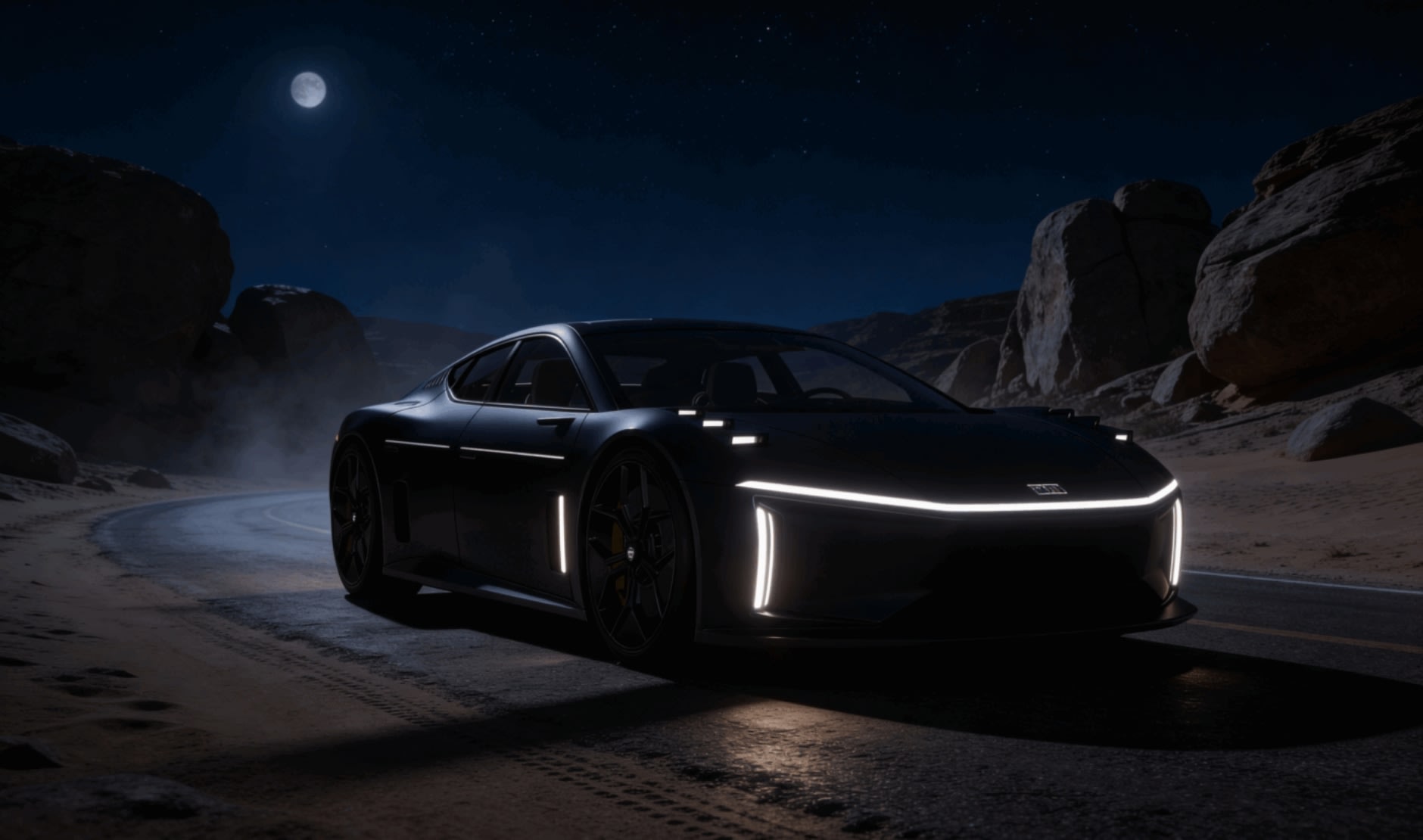
The DarkSky One is a concept of a concept car. It doesn’t physically exist, but a lot of thought went into the design, which was intended to create the first car with nighttime driving front-of-mind. SAE Media spoke with Ruskin Hartley, CEO and executive director of DarkSky International, the group behind the car, at the 2026 Detroit Auto Show, where the DS One was introduced.
What are some of the main ideas behind the DarkSky One?
People appreciate that darkness is something really special. It’s fragile. It’s something essential to all life on Earth. And, actually, just adding more light doesn’t make us see better all the time. Anyone who’s actually driven around on roads at night knows when a car’s coming towards you, the high beams these days, they’re getting brighter, they’re getting more glare and they’re actually creating hazards for lots of people out there. The concept here is to actually engage people in conversation about the value of natural darkness, of the critical role that design plays in having lighting that meets our needs as people, whilst also protecting and respecting the natural world around us, and using DarkSky Motors and DarkSky One as a vehicle to have that conversation.
What are some of the technologies on the car itself?

The car is designed around our principles for responsible outdoor lighting, which say to put the light where you need it, in the amount that you need it, not more, and turn it off when no one is around. So, how that is built into this car? If you’re driving down a road at 30 mph, your headlights don’t need to shine as far down the road as if you’re driving at 70 mph, right? It’s just physics and math. It’s about reducing glare, so the car is designed with black specular paint in mind and clever angles in all the optics and the glass to reduce the glare on the driver, so that the driver, as they’re driving around, can actually enjoy the nighttime environment more as well. Really, it’s a vehicle to have a conversation about lighting design.
There’s no a car here in Detroit, correct?
There is no car. There’s a video of the car. It’s designed by a Japanese concept car company, with the challenge to design for nighttime driving first. So it has a beautiful moon roof. It has Lidar and other sensors around it, so it reduces the need for visual. This is the conversation we want to have with the light design community.
How would autonomous technologies further improve things?
We’ve talked about it. The DarkSky Two has the potential to be a fully autonomous vehicle that will be integrated with the smart systems in our cities, so maybe when it’s driving along, when there are people there, the street lights turn on. I think as we’re developing these autonomous vehicles, are we developing them with the theory that they’re going to use visual sensors to see their way around, or are they going to start to look at non-visual sensors – the lidars, the infrared – so we could actually have vehicles that could see and feel their way around a city without necessarily having the light.
City is one thing. When you’re out in the natural world, maybe you’re driving to a dark sky park, do you really need to have your high beams on full intensity, as if you’re driving down an urban freeway? We know that’s impacting the wildlife. We need to start thinking about these things. We start thinking about the impact.
More From SAE Media Group
Autonomous Vehicle Engineering
The Sensitive Side of Autonomous Vehicles

Automotive Engineering
Osram and Vergence Automation Develop New Lidar and 4D Camera for Autonomous Vehicles
Photonics & Imaging Technology INSIDER
New Product Launches and Technologies to See at Photonics West 2025
Automotive Engineering
2026 Nissan Sentra Review: Putting the Pieces Together

Tech Briefs
Infrared Light-Focusing Platform
Off-Highway Engineering
Peterbilt, Aurora Reveal SAE Level 4 Autonomous Truck
Automotive Engineering
Ford Researches 'Intelligent' Lighting Systems
Automotive Engineering
Designer Yin Meets Engineer Yang
Automotive Engineering
Valve Cuts NVH in GDI Engines
Automotive Engineering
Suppliers Struggling to Keep Pace with Faster Product Cycles, Says IHS
Automotive Engineering
A Hundred Innovations for Renault’s Eolab Concept
Automotive Engineering
ZF's CEO Talks About Lightweight Vehicle Applications
Photonics & Imaging Technology INSIDER
Researchers Combine Light-Manipulation Technologies
Automotive Engineering
New Osram IREDs Enhance Vehicle Vision, less Harmful to Human Eyes

Tech Briefs
Making Diesel Engines Nearly Emission-Free
Automotive Engineering
Toyota Stretches SUV Line-Up with World Debut of Grand Highlander
Battery Technology
Advancing Battery Technology: THE 2021 BATTERY SHOW Preview
Automotive Engineering
‘Cruising Chauffeur’ Demos SAE Level 3 Autonomy
Tech Briefs
Engineering the Flow of Light
Automotive Engineering
Lights Communicate Hella's Autonomous Vehicle Messages
Automotive Engineering
MAGNA Say Some Hurdles of Seat-reconfiguration System to Be Addressed by OEMs
Autonomous Vehicle Engineering
When Autonomy Underperforms: the Evolving Liability Model

Power Electronics INSIDER
World’s Strongest Battery Paves Way for Light, Energy-Efficient Vehicles
Automotive Engineering
Talking SDVs and Zonal Architecture with TE Connectivity

Top Stories
INSIDERRF & Microwave Electronics
 FAA to Replace Aging Network of Ground-Based Radars
PodcastsDefense
 A New Additive Manufacturing Accelerator for the U.S. Navy in Guam
NewsSoftware
 Rewriting the Engineer’s Playbook: What OEMs Must Do to Spin the AI Flywheel
Road ReadyPower
 2026 Toyota RAV4 Review: All Hybrid, All the Time
INSIDERDefense
 F-22 Pilot Controls Drone With Tablet
INSIDERRF & Microwave Electronics
 L3Harris Starts Low Rate Production Of New F-16 Viper Shield
Webcasts
Energy
 Hydrogen Engines Are Heating Up for Heavy Duty
Energy
 SAE Automotive Podcast: Solid-State Batteries
Power
 SAE Automotive Engineering Podcast: Additive Manufacturing
Aerospace
 A New Approach to Manufacturing Machine Connectivity for the Air Force
Software
 Optimizing Production Processes with the Virtual Twin
