




AFWERX Tests Alternative Navigation System on Osprey MK III
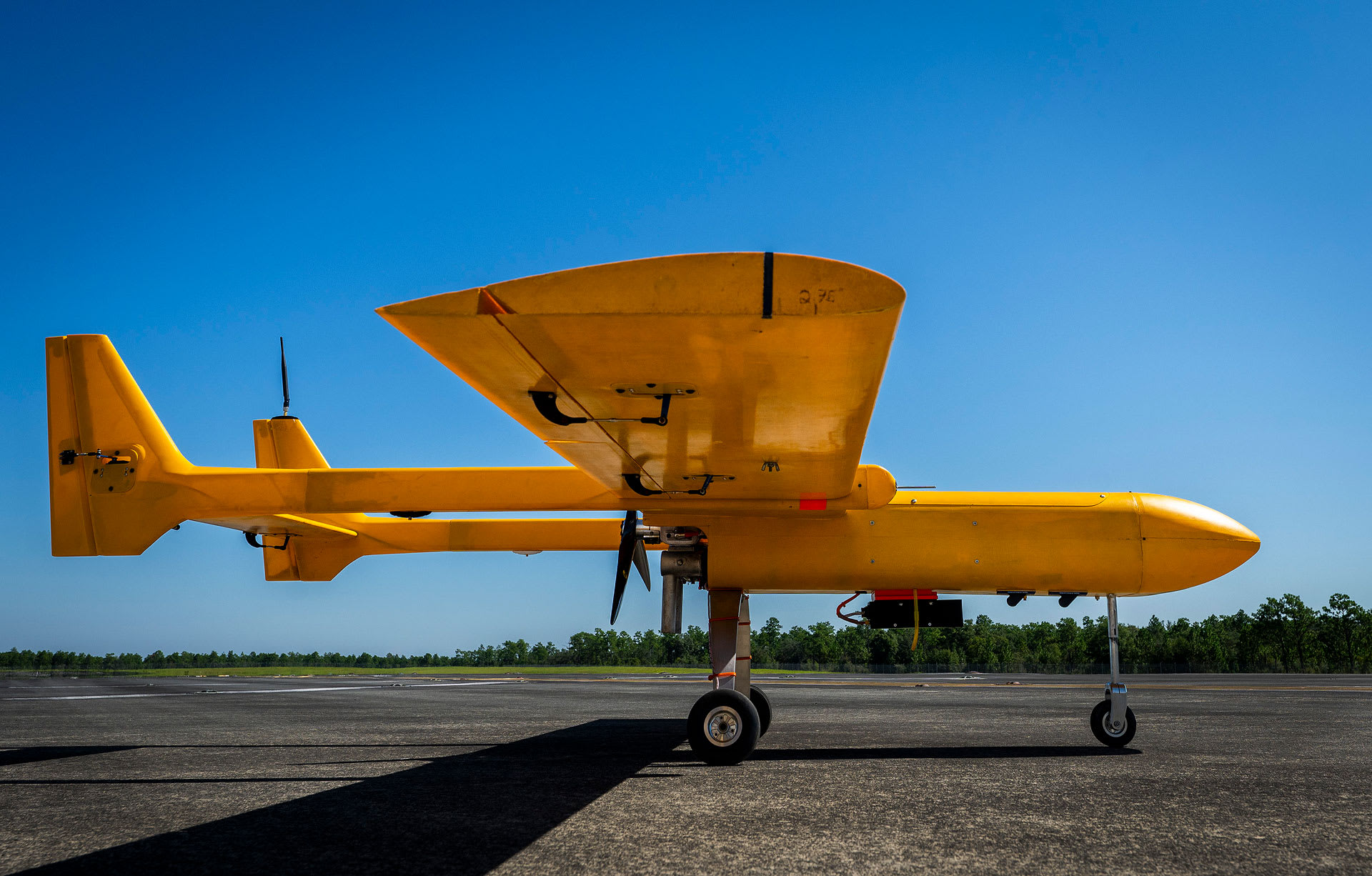
A bright orange dart drifted in the air at approximately 1,000 feet. The cloudless, bright blue skies practically swallowed up the 7-foot, 50-pound unmanned aerial system as it flew its pattern. As it passed overhead, the sound from it at ground level was like a revved up weed eater engine.
Those quiet Osprey MK III flights at Duke Field, north of Eglin Air Force Base, Florida, held in August, were part of vendor alternate navigation software testing by the Autonomy, Data, and AI Experimentation Proving Ground, in collaboration with AFWERX, the Department of the Air Force's innovation arm. It also marked the first time this aircraft flew with a third-party developer's software package operating on the aircraft.
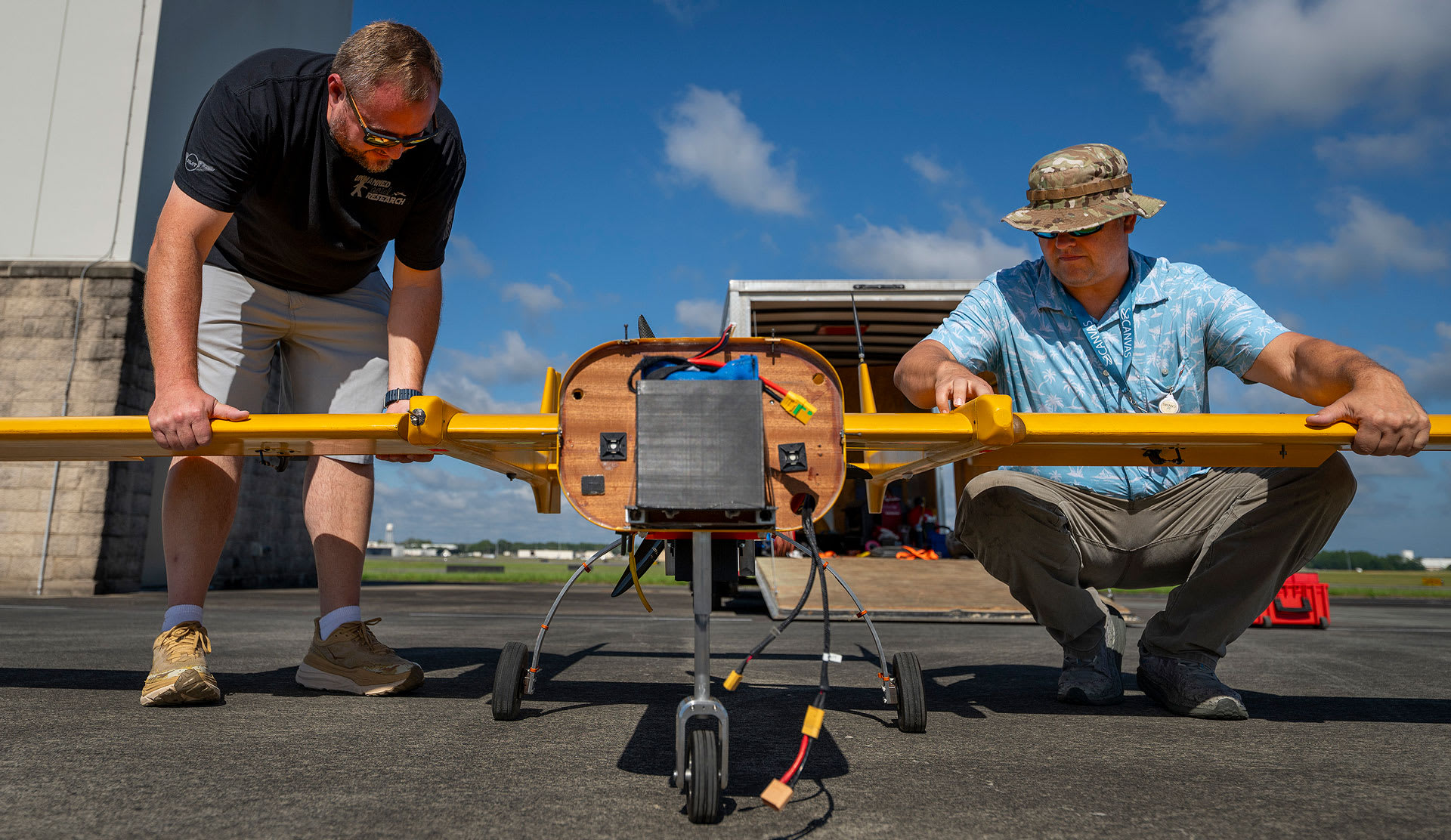
"The autonomy proving ground is giving small businesses the opportunity to compete in acquisition without requiring them to fund any of their own testing," said Anthony Hix, 413th Flight Test Squadron and lead for this test.
The goal of alternative navigation testing is to examine the feasibility of providing an aircraft or weapon with its own internal GPS estimation tools instead of using external sources. Those external sources are prone to jamming and spoofing, which deny the aircraft the ability to maneuver in a combat environment.
For the testing, Osprey MK III takes off via a controller. Once airborne, the aircraft's autonomy takes over and then relies on the alternative navigation software for location and flight guidance. UAS flight controllers monitor the test with multiple cameras and data-gathering equipment to ensure the systems communicate properly and safety is maintained.
According to Hix, the long-term goal of alternative navigation is for the Air Force to gain a new capability to navigate in contested environments with a low size, weight, power and cost solution.
This work aligns with AFWERX's autonomy proving ground fly-offs, which provide a low-cost environment for companies to demonstrate new navigation technologies on small, unmanned aircraft. AFWERX partners with small businesses, startups and industry to accelerate emerging technologies, providing official Air Force test reports and transition pathways that speed adoption by both the Defense Department and commercial markets.
"This type of fly-off provides small businesses the opportunity to vet their alternative navigation systems in a black-box test environment," said Air Force Lt. Col. Jonathan Gilbert, AFWERX Prime division chief. "It enables an experimental approach that is replicable across systems, truly allowing us to measure each system's performance."
More From SAE Media Group
Aerospace INSIDER
Two Startups Partner to Expand Hydrogen-Powered Drone Production
Aerospace INSIDER
WATCH: Air Force Research Lab's First Flight of XQ-67A Drone
Aerospace INSIDER
Anduril Completes First Semi-Autonomous Flight of CCA Prototype
Aerospace INSIDER
MQ-1C Completes First Air-Launched Effect Flight Demonstration
Defense INSIDER
Sikorsky Converts Black Hawk into U-Hawk Autonomous Helicopter
Aerospace INSIDER
Air Force Researchers Design, Build and Fly Drone in 24 Hours
Aerospace INSIDER
Quarterhorse Hypersonic Test Aircraft Completes First Flight
Aerospace INSIDER
German Air Force Starts Flight Testing New Heron ISR Drone
Aerospace INSIDER
BAE Systems Acquires Developer of Electric Heavy Lift Quadcopters
Aerospace & Defense Tech Briefs
Reconnaissance Vehicle Sensor Suite Upgrade
Aerospace Manufacturing and Machining INSIDER
Small Low-Cost Engines for Drones and Collaborative Combat Aircraft

Aerospace INSIDER
Helsing Unveils New Autonomous Fighter Jet 'CA-1 Europa'
Aerospace INSIDER
VSR700 Unmanned Helicopter Performs Autonomous Flight Testing with DGA
Defense INSIDER
Army Researchers Demonstrate 3-D Printed Drones
Defense INSIDER
Navy Tests Sensor-Equipped UAVs
Aerospace & Defense Tech Briefs
Vertical Takeoff and Landing Drone
Aerospace & Defense Tech Briefs
Textron Systems, Textron Aviation Defense Demonstrate Simulated Manned-Unmanned Teaming Capability
Aerospace & Defense Tech Briefs
Aitech Defense Will Provide Data Interface Technology for Boeing’s Unmanned MQ-25 Refueling Platform
Aerospace INSIDER
XQ-67A's First Flight Shows 'Genus' Approach to Aircraft Design
Aerospace & Defense Tech Briefs
Unmanned Aerial Vehicle
Aerospace INSIDER
AI Algorithms Fly Uncrewed XQ-58A Valkyrie Drone for Three Hour Sortie
Aerospace & Defense Tech Briefs
GA-ASI Maximizes Fuel Capacity for MQ-25 Entry
Top Stories
INSIDERDefense
 New Raytheon and Lockheed Martin Agreements Expand Missile Defense Production
NewsAutomotive
 Ford Announces 48-Volt Architecture for Future Electric Truck
INSIDERManufacturing & Prototyping
 Active Strake System Cuts Cruise Drag, Boosts Flight Efficiency
ArticlesTransportation
 Accelerating Down the Road to Autonomy
INSIDERMaterials
 How Airbus is Using w-DED to 3D Print Larger Titanium Airplane Parts
Road ReadyTransportation

Webcasts
Electronics & Computers
 Cooling a New Generation of Aerospace and Defense Embedded...
Power
 Battery Abuse Testing: Pushing to Failure
Connectivity
 A FREE Two-Day Event Dedicated to Connected Mobility
Automotive
 Quiet, Please: NVH Improvement Opportunities in the Early Design Cycle
Transportation
 Advantages of Smart Power Distribution Unit Design for Automotive &...
Aerospace
 Sesame Solar's Nanogrid Tech Promises Major Gains in Drone Endurance