




Spyder Rocket’s First Hypersonic Flight
UP Aerospace
Denver, CO
www.upaerospace.com

UP Aerospace has achieved a significant milestone with the successful launch of its high-performance Spyder rocket. The maiden flight took place at Launch Complex 36, in White Sands, New Mexico, marking a new era in hypersonic mission capabilities. The mission reached the threshold of hypersonic speeds similar to the UP Aerospace SpaceLoft rocket missions that have been operational for 20 years.
The mission was funded by the Stockpile Responsiveness Program (SRP) at Los Alamos National Laboratory (LANL) and was executed with the support of the Navy White Sands Detachment. The LANL payload test vehicle was successfully deployed in flight.
Spyder was specifically designed to support hypersonic missions reaching speeds of Mach 10. The launch vehicle is the result of an eight-year collaboration between UP Aerospace, Cesaroni Aerospace, NASA’s Flight Opportunities Program, Marshall Space Flight Center, and Los Alamos National Laboratory. Since 2005, UP Aerospace and Cesaroni Aerospace have worked closely to develop cutting-edge solid rocket motors technologies including the Spyder booster and upper stage motors. Future developments of Spyder include the maximum performance booster motor and multi upper stage Spyder variants capable of achieving altitude’s approaching 300 km to support a wide variety of hypersonic mission objectives.
UP Aerospace has been providing launch services supporting a variety of customers including NASA, the European Space Agency (ESA), and LANL, and began developing Spyder technologies under the NASA “Tipping Point” contract awarded in 2017. The Spyder rocket was developed to provide enhanced mass lifting and speed performance capabilities to support thermal protection system development, re-entry capsule stability and control evaluations, and high speed suborbital flight testing capabilities at a greatly reduced time and cost.
“The successful launch of Spyder-1 sets the stage for the next mission, which will integrate guidance and control systems into the Spyder-2 vehicle. We are excited for its upcoming launch, scheduled for early 2026,” said Jerry Larson, President and CEO of UP Aerospace.
Visit Here
More From SAE Media Group
Aerospace INSIDER
Firefly Alpha Rocket Loses Engine Nozzle During Launch
Aerospace INSIDER
Blue Origin Rocket Reaches Intended Orbit on First Launch
Aerospace INSIDER
Europe's Reusable Rocket Prepares for First Flight
NASA Spinoff
Commercial Sales Flow from NASA Valves
NASA Spinoff
Launch, Return, Repeat
Tech Briefs
Spacecraft to Remove Orbital Debris
NASA Spinoff
A Huge Development for Tiny Satellites
Aerospace & Defense Tech Briefs
OmegA Rocket Sustains Explosion During First Static Test, Northrop Grumman Maintains Test Was a Success
Aerospace & Defense Tech Briefs
Vulcan Rocket Completes First National Security Launch for Space Force

Aerospace & Defense Tech Briefs
Final Delta IV Heavy Rocket Launched
Aerospace & Defense Tech Briefs
Can the Air Force Reach a 24-Hour Launch Window?


Aerospace & Defense Tech Briefs
Generation Orbit’s GOLauncher1 Is Officially the Air Force’s X-60A Hypersonic Flight Research Vehicle
Aerospace & Defense Tech Briefs
Northrop Grumman Wins $792M to Deliver Intermediate, Heavy Versions of OmegA Space Launch Vehicle
Aerospace Manufacturing and Machining INSIDER
Advanced Manufactured Solid Rocket Motor Completes Latest Flight Test
Aerospace & Defense Tech Briefs
Late Paul Allen’s Stratolaunch Company Cancels Launch Vehicle Projects
Aerospace INSIDER
New Report Finds Engine Nozzle Failure Caused Blue Origin Crash
Tech Briefs
Aerospace Vehicle Entry Flightpath Control
NASA Spinoff
Controlled Propulsion for Gentle Landings
Aerospace INSIDER
Boeing X-37B Latest Mission Tests Quantum Inertial Sensor in Space

Tech Briefs
10 Surging Space Startups
Aerospace & Defense Tech Briefs
Delta II’s Final Flight a Success
Aerospace & Defense Tech Briefs
Three Stages of Separation: Bidding Farewell to the Delta II Launch Vehicle
Aerospace & Defense Tech Briefs
Blue Origin Mission 9 a Success
Aerospace INSIDER
Abort Motor for NASA’s Orion Spacecraft Successfully Tested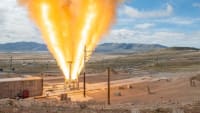
Top Stories
NewsRF & Microwave Electronics
 Microvision Aquires Luminar, Plans Relationship Restoration, Multi-industry Push
INSIDERAerospace
 A Next Generation Helmet System for Navy Pilots
INSIDERDesign
 New Raytheon and Lockheed Martin Agreements Expand Missile Defense Production
INSIDERMaterials
 How Airbus is Using w-DED to 3D Print Larger Titanium Airplane Parts
NewsPower
 Ford Announces 48-Volt Architecture for Future Electric Truck
ArticlesAR/AI

Webcasts
Electronics & Computers
 Cooling a New Generation of Aerospace and Defense Embedded...
Automotive
 Battery Abuse Testing: Pushing to Failure
Power
 A FREE Two-Day Event Dedicated to Connected Mobility
Unmanned Systems
 Quiet, Please: NVH Improvement Opportunities in the Early Design Cycle
Automotive
 Advantages of Smart Power Distribution Unit Design for Automotive &...
Energy
 Sesame Solar's Nanogrid Tech Promises Major Gains in Drone Endurance
Similar Stories
INSIDERAerospace
 NASA Powers Up Avionics System for Newest Rocket
INSIDERAerospace
 NASA Tests New Rocket Booster Connection to its Limits
INSIDERGovernment
 Europe's Reusable Rocket Prepares for First Flight
INSIDERElectronics & Computers
 Radian Aerospace Unveils R3V: Reusable Hypersonic and Spaceflight Test Platform
INSIDERDefense
 Adranos Secures Government Contracts for Hypersonic Research