




Boeing X-37B Latest Mission Tests Quantum Inertial Sensor in Space
Boeing's X-37B Orbital Test Vehicle was launched from Kennedy Space Center, Florida on a SpaceX Falcon 9 on August 22 for its eighth mission, and has been confirmed to be "healthy on orbit and proceeding with standard checkout," according to Boeing.
The eighth mission is a unique one, as it will demonstrate an emerging technology that is critical to the Department of Defense: the first strategic grade quantum inertial sensor in space. Additionally, the X-37B is hosting several other technology demonstrations from other government partners on the latest mission, including laser communications. The quantum inertial sensor that is being tested as part of the demonstration is designed to support navigation when GPS is unavailable.

In the Fall of 2023, DIU, Vector Atomic and partner Honeywell aerospace delivered the quantum inertial sensor, the first space hardware for the company. After delivery of the space experimental payload, the team fully integrated the quantum inertial measurement unit (IMU), a fundamental system needed for comprehensive inertial navigation. Extensive ground and flight tests will be executed this Fall. Lessons learned from qualifications of the space inertial sensor directly contributed to subsequent design cycles, emphasizing the benefits from rapid prototyping for emerging technology like quantum sensing. This space experiment is a notable benchmark in DIU’s Transition of Quantum Sensing (TQS) program, one in a series of operationally relevant quantum sensing demonstrations occurring across all domains.
TQS is a collaboration between DIU, Office of the Undersecretary of Defense for Research & Engineering's Quantum (OUSD(R&E)-Quantum), and the Services, aims to accelerate fielding of quantum sensors to address strategic Joint Force needs, to include positioning, navigation, and timing (PNT) and anomaly detection missions. The collaborative approach of the TQS program combined with a mixture of startups, non-traditional government contractors, traditional defense contractors, and DoD laboratories, is vital for delivering the next generation of resilient and precise navigation capabilities. Along with the TQS inertial efforts, DIU and stakeholders are conducting field tests for magnetic, gravity aided navigation as well as anomaly detection across land, sea, air, and with this mission space- domains.
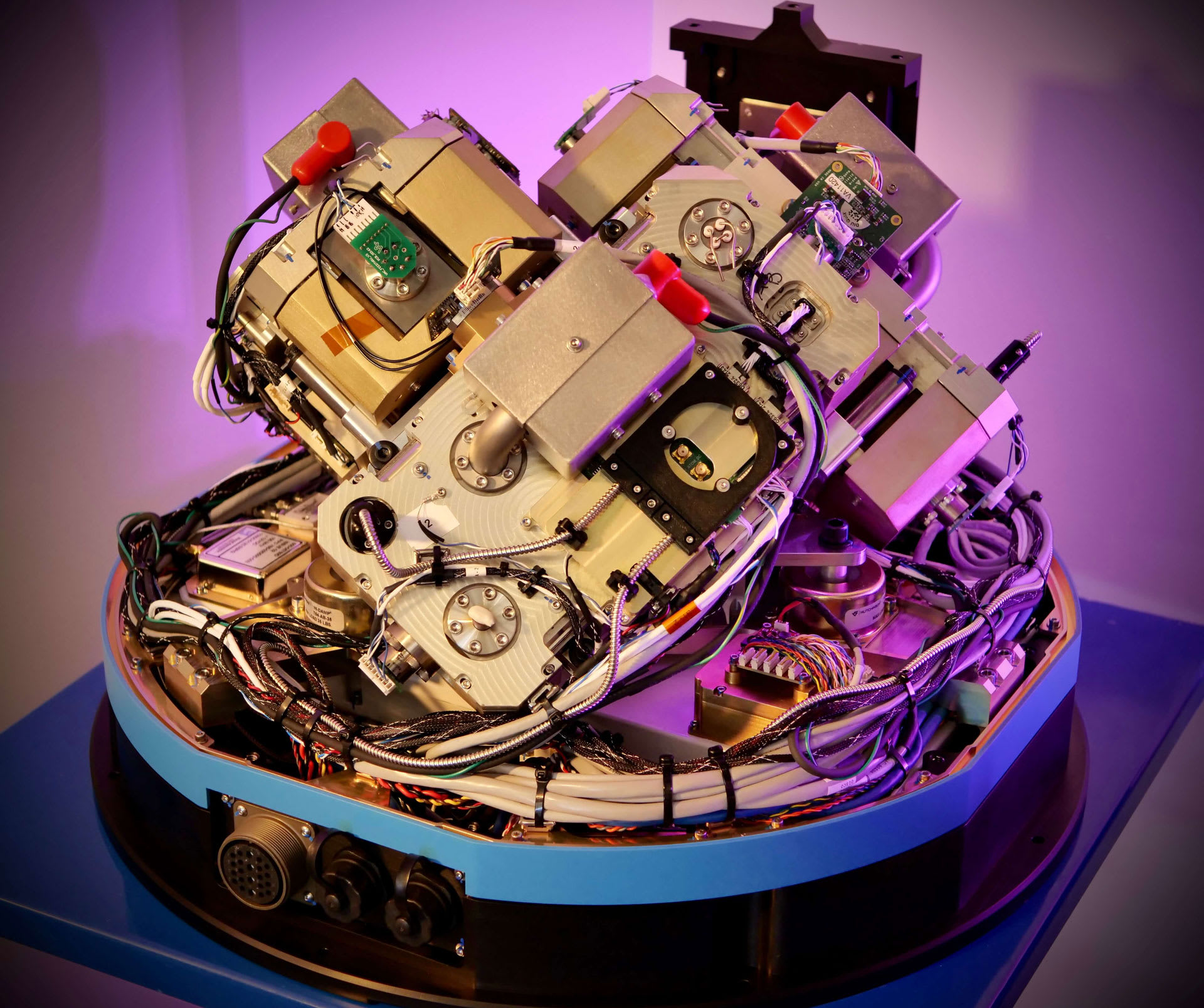
This quantum inertial sensor represents a notable progression for the quantum community. “Building a fully integrated, high performance atomic instrument that meets the rigor for space qualification is a positive referendum for quantum sensors as it relates to practical DoD missions. Demonstrations like the quantum inertial space experiment confirms the maturation the DoD needs to see from the quantum sensing community,” says Lt. Col Nicholas Estep, Director of the Emerging Technology Portfolio at DIU.
Less than six months after completing its seventh mission with a landing at Vandenberg Space Force Base, California in March, Boeing's orbital test vehicle is back in space. This mission includes a Boeing integrated service module to increase payload capacity for experimentation activities on orbit.
"Our role is to make sure the spaceplane is the most reliable testbed it can be," said Michelle Parker, vice president of Boeing Space Mission Systems. "None of this happens without teamwork. Launch is the starting line for this mission, but the work that follows –the quiet, methodical work on orbit, analysis and eventual return is where progress is earned."
The X-37B is a government–industry partnership led by the U.S. Air Force Rapid Capabilities Office, with the U.S. Space Force overseeing operations. Boeing teams primarily based in Seal Beach, Calif., and Kennedy Space Center, Fla., design, build, integrate and operate the reusable spaceplane. Since first flight in 2010, the orbital test vehicle has completed seven missions and accumulated more than 4,200 days in space, returning after each flight for inspection and augmentation.
"Having a returnable space platform allows us to learn faster," said Col. Brian Chatman, installation commander for Space Launch Delta 45. "The data we gather from the X-37B speeds decisions, hardens our architectures, and helps Guardians stay connected and on course even in contested environments. This is how we move from promising ideas to fieldable capability at pace."
More From SAE Media Group


Aerospace INSIDER
Firefly Alpha Rocket Loses Engine Nozzle During Launch
Aerospace & Defense Tech Briefs
Can the Air Force Reach a 24-Hour Launch Window?
Aerospace & Defense Tech Briefs
Final Delta IV Heavy Rocket Launched
Aerospace & Defense Tech Briefs
Vulcan Rocket Completes First National Security Launch for Space Force
Aerospace INSIDER
DARPA Teams With Industry to Create Spaceplane

Aerospace INSIDER
Boeing Unmanned Plane Launches for U.S. Space Force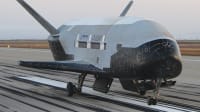
Aerospace & Defense Tech Briefs
New Zealand and LeoLabs Establish the First Low-Earth Orbit Regulatory Platform
Aerospace & Defense Tech Briefs
Lockheed Martin Ships AEHF Satellite in Advance of ULA Rocket Launch
Aerospace & Defense Tech Briefs
Navigation Unit
Aerospace INSIDER
Boeing to Develop New Space Force Nuclear Communications Satellites
Aerospace INSIDER
Three Companies to Build New Multi-Orbit Logistics Prototype Spacecraft
Aerospace INSIDER
Moonlighter Satellite to Host First On-Orbit Cybersecurity Challenge
Aerospace INSIDER
LEO Satellites Complete First Ever Link 16 Broadcast From Space
Aerospace INSIDER
Vulcan Rocket Completes First National Security Launch for Space Force
Tech Briefs
Top 5 Videos of 2025

Defense INSIDER
Satellite Communications for the Army’s NGC2 Pilot
Aerospace & Defense Tech Briefs
In-Orbit Commercial Spacecraft Undocking
Tech Briefs
Answering the Call of Distress
Aerospace & Defense Tech Briefs
Space Launch Providers Submit Proposals for National Security Space Launch Program
Tech Briefs
Building Technology to Clean Up Space
Aerospace & Defense Tech Briefs
OmegA Rocket Sustains Explosion During First Static Test, Northrop Grumman Maintains Test Was a Success
Aerospace & Defense Tech Briefs
Stratolaunch All-Composite Aircraft Achieves First Flight
Aerospace & Defense Tech Briefs
Iridium, Aireon, SpaceX Celebrate Satellite Launch, System Deployment
Top Stories
INSIDERManufacturing & Prototyping
 How Airbus is Using w-DED to 3D Print Larger Titanium Airplane Parts
INSIDERManned Systems
 FAA to Replace Aging Network of Ground-Based Radars
NewsTransportation
 CES 2026: Bosch is Ready to Bring AI to Your (Likely ICE-powered) Vehicle
NewsSoftware
 Accelerating Down the Road to Autonomy
EditorialDesign
 DarkSky One Wants to Make the World a Darker Place
INSIDERMaterials
 Can This Self-Healing Composite Make Airplane and Spacecraft Components Last...
Webcasts
Defense
 How Sift's Unified Observability Platform Accelerates Drone Innovation
Automotive
 E/E Architecture Redefined: Building Smarter, Safer, and Scalable...
Power
 Hydrogen Engines Are Heating Up for Heavy Duty
Electronics & Computers
 Advantages of Smart Power Distribution Unit Design for Automotive...
Unmanned Systems
 Quiet, Please: NVH Improvement Opportunities in the Early Design...
