




NASA Tests New Rocket Booster Connection to its Limits
A critical connection between NASA's new rocket and its twin solid rocket boosters that will help it get to space proved it could withstand millions of pounds of launch stress during a series of ground tests.
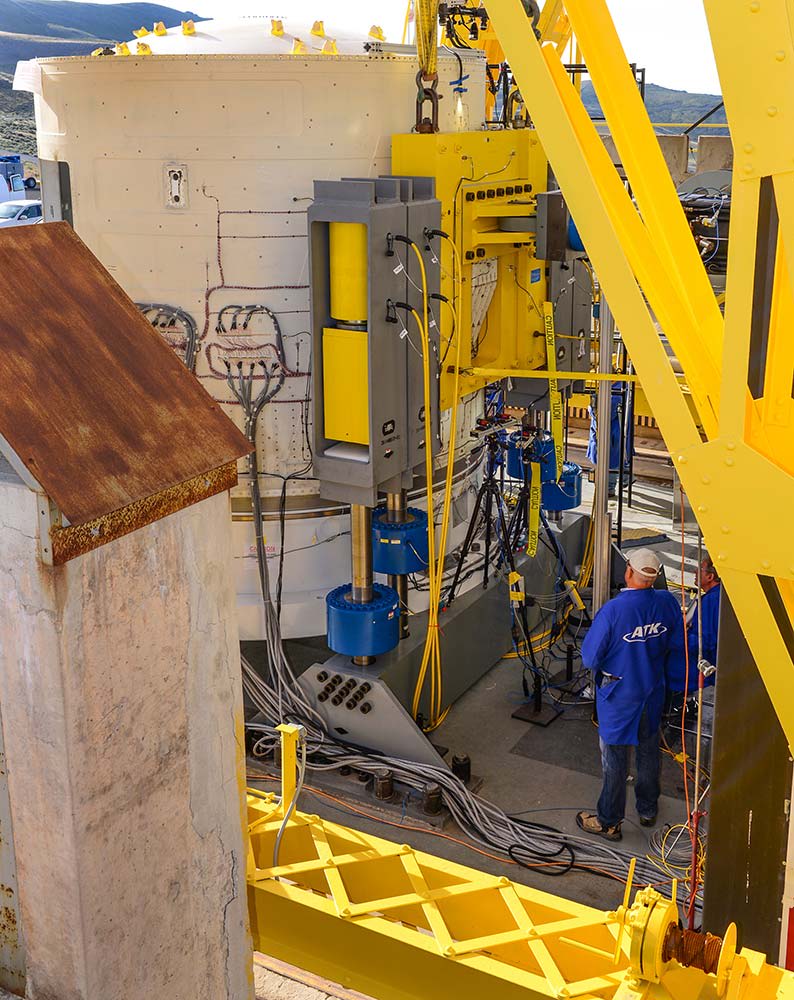
The booster forward skirt, which houses the electronics responsible for igniting, steering, and jettisoning the two five-segment boosters and carries most of the forces acting on the boosters during launch, is one of two places at the top and bottom of the booster where it is attached by struts to the Space Launch System (SLS) core stage. When completed, SLS will be capable of taking a crew and cargo on deep space missions, including to an asteroid and eventually Mars.
For the forward skirt test, conducted by ATK, engineers used increments of force — about 200,000 pounds per minute — to prove the design capabilities meet the strength requirements, with sufficient margin. The structure was also subjected to a combination of axial and lateral loads, which are critical at liftoff. The team intentionally took the hardware beyond required margins — not typical for structural loads testing on this scale.
Click here to watch a video of the test on Tech Briefs TV at www.techbriefs.com/tv/booster-test.
More From SAE Media Group
Aerospace & Defense Tech Briefs
Spyder Rocket’s First Hypersonic Flight
Aerospace INSIDER
Abort Motor for NASA’s Orion Spacecraft Successfully Tested
Tech Briefs
Artemis II: The Final Countdown
NASA Spinoff
Commercial Sales Flow from NASA Valves
Aerospace INSIDER
Mini Models Fire Up to Test Space Launch System
Tech Briefs
NASA’s Ruggedized Video Camera Ready for Earth
Tech Briefs
Charlotte Rocketry Team Breaks NASA Record
Aerospace & Defense Tech Briefs
3D Printed Spacecraft Parts
Aerospace Manufacturing and Machining INSIDER
NASA Builds Welding Test Article for SLS Exploration Upper Stage
Motion Control and Automation Technology INSIDER
Researchers Help NASA Eliminate Vibration in Space System Joints
NASA Spinoff
Redefining the 'Rugged' Video Camera
Aerospace INSIDER
NASA Tests Prepare Space Launch System for Liftoff
Aerospace INSIDER
Blue Origin Rocket Reaches Intended Orbit on First Launch
NASA Spinoff
Launch, Return, Repeat
Aerospace INSIDER
Firefly Alpha Rocket Loses Engine Nozzle During Launch
Aerospace & Defense Tech Briefs
Northrop Grumman Tests, Qualifies Orion Launch Abort Motor for Flight in Cold Conditions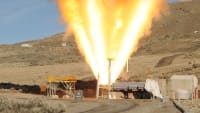
Aerospace INSIDER
NASA Tests 3D-Printed Rocket Part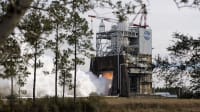

Aerospace INSIDER
NASA Plane Simulates Rocket Maneuvers for New Launch System
Tech Briefs
Going Back to the Moon with Orion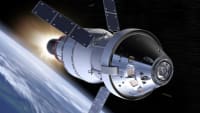
Aerospace INSIDER
NASA Powers Up Avionics System for Newest Rocket

Aerospace & Defense Tech Briefs
RS-25 Rocket Engines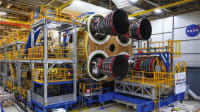
Tech Briefs
ARTEMIS I: Our Return to the Moon Begins
Aerospace INSIDER
NASA Experiment Flies with Virgin Galactic
Tech Briefs
Motion in Space: Astrobee Breakthrough
Top Stories
INSIDERDefense
 New Raytheon and Lockheed Martin Agreements Expand Missile Defense Production
NewsAutomotive
 Ford Announces 48-Volt Architecture for Future Electric Truck
INSIDERManufacturing & Prototyping
 Active Strake System Cuts Cruise Drag, Boosts Flight Efficiency
ArticlesTransportation
 Accelerating Down the Road to Autonomy
INSIDERMaterials
 How Airbus is Using w-DED to 3D Print Larger Titanium Airplane Parts
Road ReadyTransportation

Webcasts
Electronics & Computers
 Cooling a New Generation of Aerospace and Defense Embedded...
Power
 Battery Abuse Testing: Pushing to Failure
Connectivity
 A FREE Two-Day Event Dedicated to Connected Mobility
Automotive
 Quiet, Please: NVH Improvement Opportunities in the Early Design Cycle
Transportation
 Advantages of Smart Power Distribution Unit Design for Automotive &...
Aerospace
 Sesame Solar's Nanogrid Tech Promises Major Gains in Drone Endurance