




The Unusual Machines Approach to Low-Cost Drones and Drone Components
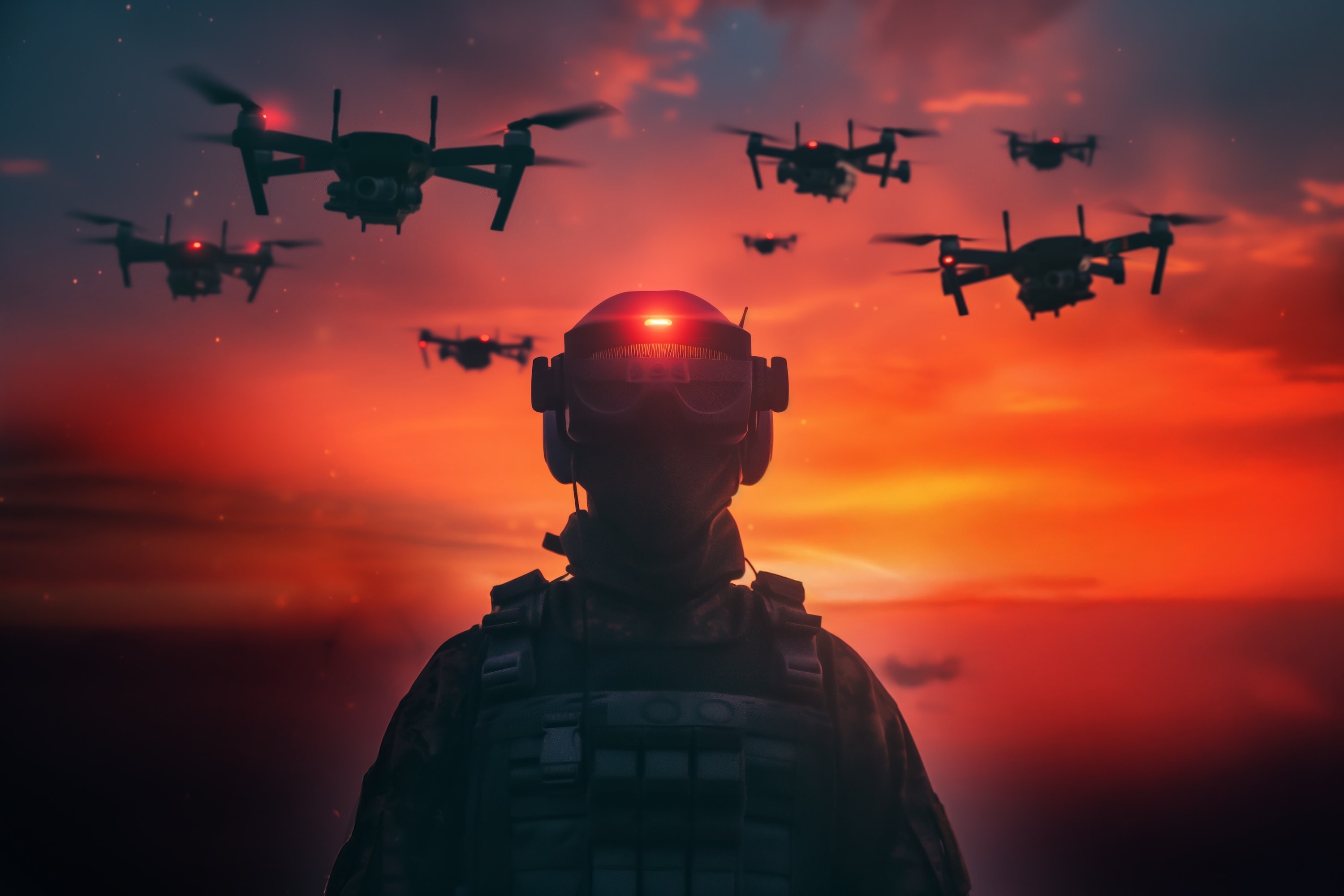
Headquartered in San Juan, Puerto Rico, Unusual Machines describes itself as a “classic American technology company born from garage tinkerers and hobbyists, focused on serving the emerging drone industry with unique and innovative products.” The company recently launched a new low-cost flight controller for drones, the Riot Brave F7, that achieved “Blue UAS” certification from the Department of Defense’s (DoD) Defense Innovation Unit (DIU) in August.
The Riot Brave F7 — just $58 — features a STMF722RET6 processor equipped with Bosch accelerometer and barometer, and has 16Mb of built in Blackbox Memory. While the company developed Riot Brave F7 primarily as a low cost flight controller option for FPV drones, there are broader possibilities for it, including military applications.
Over the last year, the DoD launched its new “Replicator” initiative, which is focused on the deployment of thousands of new low-cost or “attributable” autonomous systems such as drones. On this episode of the podcast, Evans provides some perspective on Replicator, how the war in Ukraine is reflecting the effectiveness of low-cost modified drones in modern warfare, and the future of low-cost drones and drone components manufactured in the U.S.
Check out our question and answer session with Allan Evans, CEO of Unusual Machines, from his appearance on the Aerospace & Defense Technology podcast as he explains why the Brave F7 is a significant milestone in their first steps toward manufacturing embedded components for drones in the U.S.
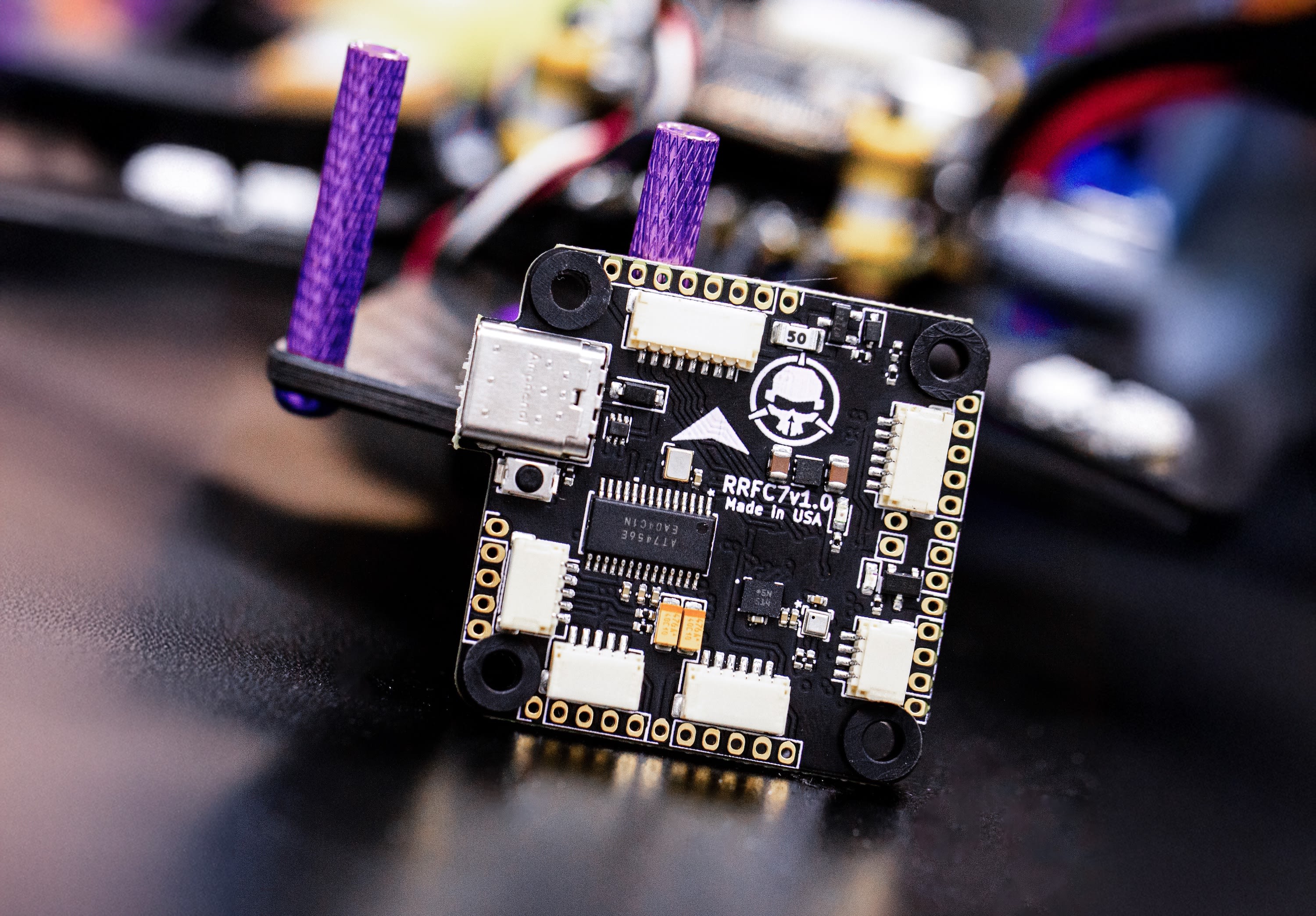
Aerospace & Defense Technology (A&DT): Unusual Machines launched the new Rotor Riot Brave F7 flight controller, which was eventually approved for inclusion on the Blue UAS framework list. What is that controller and how does it work?
Allan Evans: Flight controllers are the computer that takes the commands from the pilot and tells everything what to do to fly where you’re trying to go. That, we think that it’s very important, and it’s one of the critical components for the U.S. government to review for drones. So we think the Defense Innovation Unit, which maintains the Blue UAS list, does a really good job of auditing.
We thought, okay, we know what this should be, etc. Let’s go get it audited. We worked very closely with them to get it approved.
Really what we have here is sort of the value drone brain. You might hear of NVIDIA or some of these others doing these really high-end drones. But there’s a huge market for, attritable drones, especially with the Replicator initiative.
There’s a real focus on cost. Also in Ukraine, they’re using Chinese components that are equivalent to this flight controller.
And we’re actually able to make it in the United States and sell at the same price as the Chinese equivalent. We’re really trying to drive value here and quality. The real potential customers, and actually where we have orders already, is that we’re shipping more than a thousand a month to Europe for use with FPV drones in Ukraine.
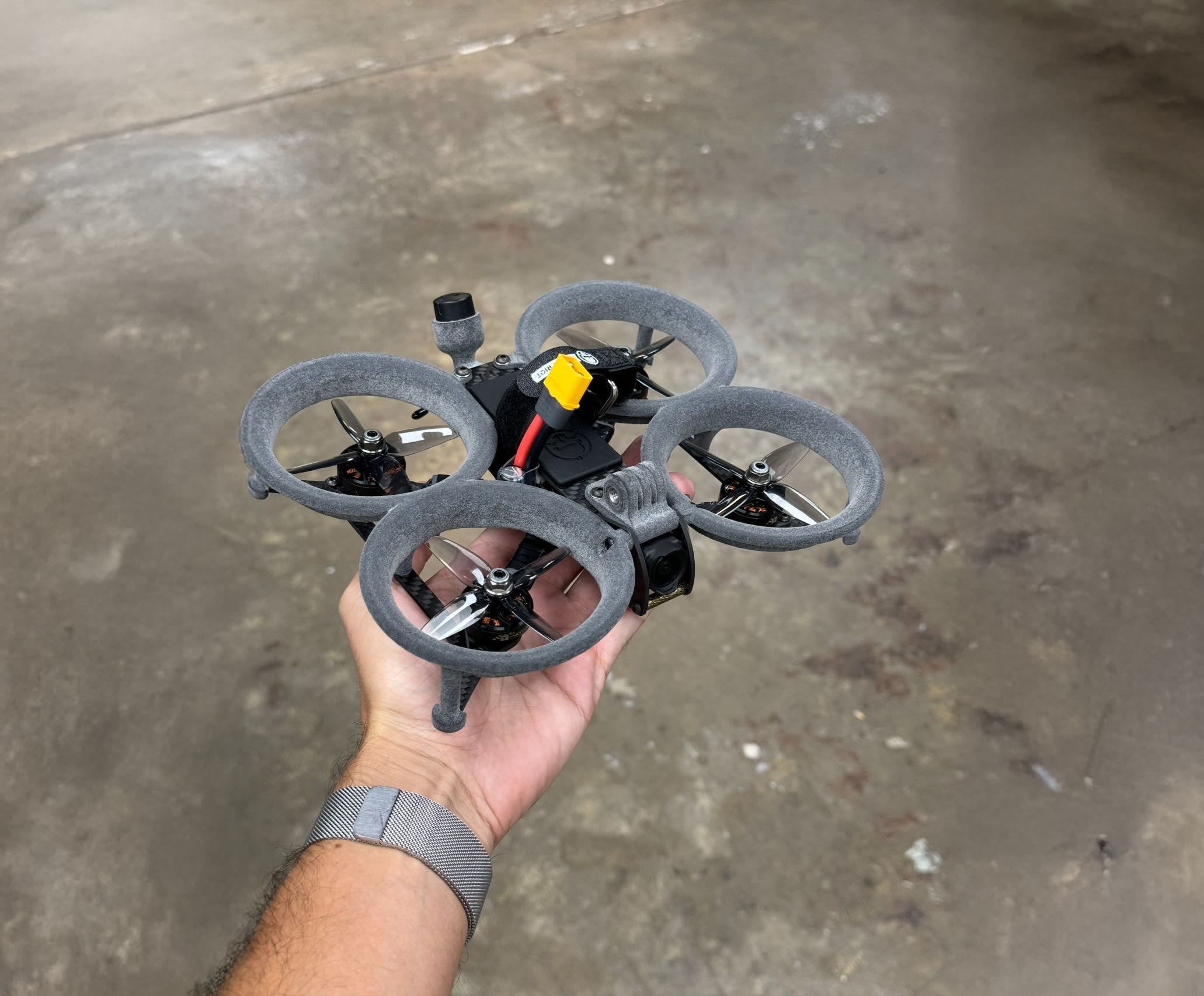
But really anyone wanting to build attritable FPV systems, these are just at much better value and solve the problem than any alternatives. So if the Marines want to mimic some of what Ukraine’s doing, they might buy some of these to build it. Red Cat Holdings, for instance, this would work there and it creates this really competitive cost basis for drones that may only be used once, you know, where you don’t want to put a ton of money into it.
A&DT: What was involved in the process of obtaining a Blue UAS certification for the flight controller?
Evans: It’s sort of new. So it’s maybe a little less well understood than some other certifications. The Blue UAS certification looks a lot like other certifications we’re familiar with like the FCC stamp or FDA approval.
It’s this review by a third party and approval. What they do for review, and this is done by the Defense Innovation Unit, is they go in and they do a cybersecurity audit and a country of origin audit. So they’ll beat it up from a cybersecurity perspective to be sure that it’s not leaking information or sending data anywhere it shouldn’t.
They’ll do this for drones and parts. But then they also rip the thing all the way down, and they look at each of the pieces that are used to build it and say, what is the risk of that piece? So they do this really comprehensive risk audit, both on cybersecurity and on manufacturability.
If you pass that risk audit, they say, okay, this very specific build is low enough risk that the government can just freely buy it and know that it’s approved rather than having to get a special exception. This is a really great program because it lets all the different government agencies very quickly buy drones or drone parts that are approved.
They’ll do this for drones and parts. But then they also rip the thing all the way down, and they look at each of the pieces that are used to build it and say, hey, what is the risk of that piece? And so they do this really comprehensive risk audit, both on cybersecurity and on manufacturability.
And if you pass that risk audit, they say, okay, this very specific build is low enough risk that the government can just freely buy it and know that it’s approved rather than having to get a special exception. This is a really great program because it lets all the different government agencies very quickly buy drones or drone parts that are approved. And without self-certification or whatever else.
A&DT: Are you seeing interest in your new drone flight controller from the Department of Defense as part of its Replicator program?
Evans: So, we’re seeing a lot of interest in Europe right now. They have an immediate need. I talked about that a little bit earlier.
The Department of Defense interests we see is not in as a prime, but from other systems integrators. So, we’re working with Red Cat Holdings on FANG, which is an FPV attritable drone. They’re seeing the interests from the government directly, whereas we see the interest from them, because we want to be a supplier to everyone, rather than build a product specifically for the government.
We’re seeing the interests through some of the direct government customers. The reason why we’re not trying to go build a drone for the Replicator Initiative is we don’t want to compete with our customers. So, whether it’s motors or ties into your controller, if you’re talking about AeroVironment or Kratos, or you pick your defense supplier, if they need parts from us, we’re happy to provide them, but we don’t want to compete with them.
I think a really big one is the recent news around Skydio. Their batteries were manufactured in China, and China then cut them off, so they have to ration batteries, and it’s hurting their sales. I think that has highlighted the ability to play games with the supply chain on both sides, and is going to cause the US government and the Department of Defense to focus more, not even on the final product, but also on where the parts in the final product come from.
For more information, visit here .
Listen to the podcast with Allan Evans
More From SAE Media Group
Aerospace INSIDER
New Commercial Drones and Components Added to Blue UAS Framework
Aerospace & Defense Tech Briefs
Unmanned Aircraft Systems Help Responders in Urban Environments

Aerospace INSIDER
New Drones and Software Selected for DoD's Replicator 1.2


Aerospace INSIDER
BAE Systems Acquires Developer of Electric Heavy Lift Quadcopters
Aerospace INSIDER
Honeywell Launches New System to Counter Drone Swarms
Tech Briefs
AUSA 2024: New Drones and Counter UAS Technology
Aerospace INSIDER
Two Startups Partner to Expand Hydrogen-Powered Drone Production
Aerospace & Defense Tech Briefs
Aerospace & Defense Podcasts
Aerospace INSIDER
Researchers Crash Drones to Expose Design Flaws

Aerospace Manufacturing and Machining INSIDER
Teledyne FLIR to Produce 1,000 Pocket-Sized Drones for Use in Ukraine
Aerospace & Defense Tech Briefs
Human-Focused Research Aims to Enhance UAS Effectiveness, Readiness



Aerospace INSIDER
Four Companies to Design Air Force Enterprise Test Drone Prototypes
Aerospace & Defense Tech Briefs
Foreign Counter-Unmanned Aerial Systems: Developments in the International Arms Markets


Aerospace & Defense Tech Briefs
GOKBERK C-UAS Testing
Aerospace INSIDER
MQ-1C Completes First Air-Launched Effect Flight Demonstration
Top Stories
NewsSensors/Data Acquisition
 Microvision Aquires Luminar, Plans Relationship Restoration, Multi-industry Push
INSIDERRF & Microwave Electronics
 A Next Generation Helmet System for Navy Pilots
INSIDERWeapons Systems
 New Raytheon and Lockheed Martin Agreements Expand Missile Defense Production
NewsAutomotive
 Ford Announces 48-Volt Architecture for Future Electric Truck
INSIDERAerospace
 Active Strake System Cuts Cruise Drag, Boosts Flight Efficiency
ArticlesTransportation

Webcasts
Aerospace
 Cooling a New Generation of Aerospace and Defense Embedded...
Energy
 Battery Abuse Testing: Pushing to Failure
Power
 A FREE Two-Day Event Dedicated to Connected Mobility
Automotive
 Quiet, Please: NVH Improvement Opportunities in the Early Design Cycle
Electronics & Computers
 Advantages of Smart Power Distribution Unit Design for Automotive &...
Unmanned Systems
 Sesame Solar's Nanogrid Tech Promises Major Gains in Drone Endurance