




Researchers Crash Drones to Expose Design Flaws

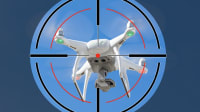
Sales of drones are soaring. But new research by a Johns Hopkins computer security team has raised concerns about how easily hackers could cause these robotic devices to ignore their human controllers and land or, more drastically, crash. The team discovered three different ways to send rogue commands from a computer laptop to interfere with an airborne hobby drone’s normal operation and land it or send it plummeting.
Wireless network penetration testing on a popular hobby drone found vulnerabilities that disrupted the process that enables a drone’s operator on the ground to manage its flight. The team hopes the tests will serve as a wake-up call so that future drones for recreation, aerial photography, package deliveries, and other commercial and public safety tasks will leave the factories with enhanced security features onboard.
More From SAE Media Group
Aerospace INSIDER
GA-ASI Announces Gray Eagle 25M for Multi-Domain Operations
Aerospace & Defense Tech Briefs
The Unusual Machines Approach to Low-Cost Drones and Drone Components
Aerospace INSIDER
New Commercial Drones and Components Added to Blue UAS Framework
Aerospace & Defense Tech Briefs
MQ-25 Vehicle Management Computer Upgrade
Aerospace & Defense Tech Briefs
Autonomous Collaborative Platform
Aerospace & Defense Tech Briefs
MUSHER Demonstrates Manned-Unmanned Aircraft Teaming Applications
Aerospace & Defense Tech Briefs
PHASA-35 Stratospheric Flight


Motion Design INSIDER
AI-Powered Vision System Helps Drones Navigate Safely

Tech Briefs
A Drone Takes Off in UCSD's 'Aerodrome'

Tech Briefs
AUSA 2024: New Drones and Counter UAS Technology
Aerospace & Defense Tech Briefs
AI Algorithms Fly Valkyrie XQ-58A
Aerospace & Defense Tech Briefs
Uncrewed Solar Aircraft Passes Key Ground Tests
Aerospace & Defense Tech Briefs
Remotely Piloted Air Systems
Aerospace & Defense Tech Briefs
Quantifying Autonomous Soaring on a Surveillance and Communications Relay Mission
Tech Briefs
AIRVUE: Prelude to Self-Flying Aircraft
Aerospace & Defense Tech Briefs
Mobile Counter Unmanned Aircraft System
Aerospace & Defense Tech Briefs
Unmanned Aircraft Systems Help Responders in Urban Environments


NASA Spinoff
From Shark Searches to Space Tours
Aerospace INSIDER
BAE Systems Acquires Developer of Electric Heavy Lift Quadcopters
Aerospace & Defense Tech Briefs
Assessment of Noncommercial Icing Prediction Capabilities for Army Applications
Tech Briefs
Algorithms Improve Quadrotor Drone Performance
Aerospace INSIDER
MQ-1C Completes First Air-Launched Effect Flight Demonstration
Aerospace & Defense Tech Briefs
Counter-Drone Technology
Top Stories
INSIDERManufacturing & Prototyping
 How Airbus is Using w-DED to 3D Print Larger Titanium Airplane Parts
INSIDERManned Systems
 FAA to Replace Aging Network of Ground-Based Radars
NewsTransportation
 CES 2026: Bosch is Ready to Bring AI to Your (Likely ICE-powered) Vehicle
NewsSoftware
 Accelerating Down the Road to Autonomy
EditorialDesign
 DarkSky One Wants to Make the World a Darker Place
INSIDERMaterials
 Can This Self-Healing Composite Make Airplane and Spacecraft Components Last...
Webcasts
Defense
 How Sift's Unified Observability Platform Accelerates Drone Innovation
Automotive
 E/E Architecture Redefined: Building Smarter, Safer, and Scalable...
Power
 Hydrogen Engines Are Heating Up for Heavy Duty
Electronics & Computers
 Advantages of Smart Power Distribution Unit Design for Automotive...
Unmanned Systems
 Quiet, Please: NVH Improvement Opportunities in the Early Design...
