




EV Lightweighting via Industrial Rubber Products

Electric trucks and off-highway vehicles weigh about 30% more than their gasoline- and diesel-powered counterparts. That’s a challenge for OEMs who want to reduce vehicle weight to increase range but are bound by the limits of current battery technology.
To reduce vehicle weight, OEMs can make design changes in other areas, such as by replacing steel with thermoformed plastics, aluminum alloys and composite materials. What manufacturers may overlook, however, is the weight savings that can be achieved with industrial rubber products. Rubber is already lightweight, but there are heavier-than-necessary elastomeric components used throughout vehicle interiors and exteriors, typically with metal or plastic fasteners.
Door and window gaskets, rubber flooring, battery seals and molded parts like rubber bushings all provide engineers with lightweighting opportunities. Larger design changes and new assembly processes may be required, but EV lightweighting still begins with material selection.
TPE the light choice

Electric trucks and off-highway vehicles use various synthetic rubber compounds, but ethylene propylene diene monomer (EPDM) is used commonly for sealing because of its durability, weather-resistance and cost-effectiveness. EPDM weather seals, or weather stripping, are rubber components that form a seal around the edges of a vehicle’s doors, windows, windshield, roof, hatches, wheel wells, fender flares and other exposed areas. EPDM rubber also has applications in vehicle flooring, floor mats and for storage compartment liners.
Santoprene, a type of thermoplastic elastomer (TPE), weighs approximately 30% less than EPDM and provides the type of environmental resistance that trucks and off-road vehicles require. This flexible and abrasion-resistant thermoplastic vulcanizate (TPV) can also replace the EPDM that is used for flooring instead of carpets, which are lighter weight but can wear out more quickly. The material offers a smoother surface finish for tighter sealing between the gaps of mating surfaces.
Celanese, formerly ExxonMobil Chemical, makes grades of Santoprene with compression set levels that are comparable to EPDM. That is important for sealing vehicle doors because a gasket that fails to return to its original size after being compressed won’t fill the gap when the door is closed again. The material also is used in window channels and to seal exterior lighting. Applications for this TPE include cowl vent grille seals, air guide seals and roof seals.

For designers, it’s important to consider that seals can be molded as a single piece or cut from extruded lengths and then glued, molded or spliced into finished gaskets. There are various molding processes, but injection molding is used commonly by the automotive industry because it supports high-volume production. For lower-volume production, such as with the assembly of off-highway vehicles, extruded lengths of Santoprene can be waterjet cut and joined with a choice of bonding methods.
Adhesive tapes have their place
Electric trucks and off-highway vehicles contain thousands of fasteners such as bolts, screws and rivets. Engineers can use lighter weight plastic clips for vehicle interiors, but these plastic components still add weight — and that weight adds up across many points of attachment. Plus, metal fasteners are still required for many heavy-duty applications because most plastics can’t match metals in terms of tensile strength.
Not every fastener has a nut, bolt or locking feature, but critical joints may need metal lock washers, lock wires, cotter pins, brackets or other secondary mechanisms. Cumulatively, all these features can add a significant amount of weight to the vehicle. Adhesives can’t replace fasteners in every application, but they’re well-suited for door gaskets and vehicle interiors, including floors, ceilings and side panels. In addition to being light-weight, acrylic foam tapes distribute stresses evenly across surfaces.
During the 1980s, 3M introduced its VHB tapes to replace vehicle screws, rivets and welds. The first application was ambulance panels. Today, there are many types of acrylic foam tapes, including products that can bond to powder-coated, painted and other difficult-to-stick surfaces. There are even 3M VHB tapes for bonding low surface energy (LSE) plastics such as polypropylene (PP) and polyethylene (PE), both of which can be thermoformed into body panels.
Acrylic foam tapes from 3M and other suppliers can be used to attach these panels instead of rivets or other fasteners. Adhesive tapes can also be used to attach rubber seals to painted or powder-coated surfaces such as door frames. Additional applications include attaching flooring, headliners and acoustic side panels. In a truck cabin, for example, sound-absorbing insulation that’s made from polyester or polyurethane foams can be attached to body panels with a pressure-sensitive adhesive tape. OEMs who use peel-and-stick insulation can reduce vehicle weight while speeding product assembly.
Battery seals and beyond

Lightweight rubber foams made of polyurethane or silicone are also used to seal and insulate EV batteries. These specialized foams can include additives that provide flame resistance, an important consideration because of the potential for thermal runaway in EV battery cells. They also can provide cushioning and vibration control.
Rubber bushings, a type of vibration isolator, are also used in EVs. By decreasing the size of bushings for suspension parts, engineers can reduce vehicle weight overall. To support this design change, however, it’s necessary to choose a lightweight rubber that won’t sacrifice anti-vibration performance. Importantly, the rubber must also be bondable to the metal component that provides the bushing with dimensional stability.
Electric trucks and off-highway vehicles also contain other industrial rubber products that can support lightweighting initiatives. By working with a fabricator who can source the right materials and supply ready-to-install products that use adhesive tapes instead of fasteners, OEMs can make progress on their vehicle weight-reduction goals. The right rubber products can also support a quieter and safer ride for equipment operators.
Roberto Naccarato, sales and marketing manager for Elasto Proxy , a rubber fabricator and distributor for the machinery and equipment industry, wrote this article for Truck & Off-Highway Engineering.
More From SAE Media Group


Off-Highway Engineering
Advanced Engineered Material Technologies for a Challenging Environment
Automotive Engineering
Aluminum Prepares for Its Next Big Leap


Tech Briefs
Airless Alloy Tire Has NASA Roots
Automotive Engineering
Lighter, Recyclable Body Seal from Cooper Standard Wins SAA Award

Automotive Engineering
Assembling Aluminum Vehicles in Volume
Off-Highway Engineering
Acrylic Tape
Tech Briefs
5 Ws of PDK Recyclable Plastic
Automotive Engineering
Lightweight Steel Is Stronger Than Titanium
Medical Design Briefs
Thermoplastic Elastomers
Off-Highway Engineering
TPE Diaphragms

Off-Highway Engineering
Taking on NVH Reduction Techniques

Automotive Engineering
Lighter, Stronger Chassis

Medical Design Briefs
High-Performance Crosslinkable Thermoplastic Elastomers for Medical Applications
Automotive Engineering
Recaro Pioneers Seating Shells Made with CF Recyclate
Automotive Engineering
Weaving a New Future for Composites
Off-Highway Engineering
Ashok Leyland Pursues Stainless Steel for Bus ‘Super Structures’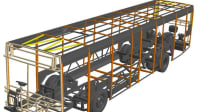
Off-Highway Engineering
Accelerating ADAS Adoption With Pressure-sensitive Tapes
Medical Design Briefs
Product of the Month
Aerospace & Defense Tech Briefs
Engineered Solutions for Enclosure Sealing and Insulation
Medical Design Briefs
Custom Precision Rubber, TPE, and Plastic Molding Services
Top Stories
NewsRF & Microwave Electronics
 Microvision Aquires Luminar, Plans Relationship Restoration, Multi-industry Push
INSIDERAerospace
 A Next Generation Helmet System for Navy Pilots
INSIDERDesign
 New Raytheon and Lockheed Martin Agreements Expand Missile Defense Production
INSIDERMaterials
 How Airbus is Using w-DED to 3D Print Larger Titanium Airplane Parts
NewsPower
 Ford Announces 48-Volt Architecture for Future Electric Truck
ArticlesAR/AI

Webcasts
Electronics & Computers
 Cooling a New Generation of Aerospace and Defense Embedded...
Automotive
 Battery Abuse Testing: Pushing to Failure
Power
 A FREE Two-Day Event Dedicated to Connected Mobility
Unmanned Systems
 Quiet, Please: NVH Improvement Opportunities in the Early Design Cycle
Automotive
 Advantages of Smart Power Distribution Unit Design for Automotive &...
Energy
 Sesame Solar's Nanogrid Tech Promises Major Gains in Drone Endurance