




Pumping Up Hydraulic Capabilities
Electrohydraulic advances keep coming as distributed electronics flex their muscle.

Hydraulic technologies are evolving rapidly as clever engineers figure out how to alter spools and valves. These mechanical changes pale in comparison to the advances that transpire as design teams leverage rising computing power and falling prices for electronics.
Electrohydraulic systems are employing more sensors and utilizing controls that are networked to a growing number of components. That’s making it possible for design teams to continue to improve performance while adding more sophisticated features and functions. These trends show no signs of slowing down.

“Our hydraulic division has focused on digitizing our portfolio and embedding computational horsepower on many of our individual products,” said Paul Brenner, Senior Systems Engineer, Eaton. “Now we are taking the strategy to the next step, networking complementing product groups and subsystems with the goal of reducing commissioning time and enabling advanced functionality. We term this next step as Intelligent Machine Control.”
Valves, spools, sensors, and smarts
Valves are changing dramatically as engineers come up with new fluid flow techniques, add sensors, and enhance electronic controls. Spool design helped Case IH improve the efficiency of hydraulics on some of its newer tractors.
“We altered our spool to get better tolerances and adjusted its shape to provide improved flow,” said Mitch Kaiser, a Marketing Manager at Case IH.
Some design teams are moving to dual-spool configurations, which help engineers overcome some of the compromises inherent when there’s a fixed relationship between inlet and outlet metering.
“Through the use of twin-spool architecture, onboard sensors, and electronics, our CMA design senses load conditions, flow demand, and available flow and implements proprietary control strategies to optimize performance and reduce parasitic loses at the machine level,” Brenner said. “The customer can now focus on specifying the force and velocity requirements of the machines actuators.”
Advances in various sensing technologies has made it viable to employ more sensors in valves. That lets engineers more closely monitor positioning and other parameters.
“We are seeing sensors in applications that did not have them before,” said Kirk Lola, Business Development Manager at Parker Hannifin Electronic Controls Division. “In particular, Hall-effect sensors give spool position feedback for better system performance in systems using hydraulic spool valves. In addition to valve feedback, Parker has added position sensors to our piston pumps for swash plate position feedback for improved hydraulic system performance.”
Ready for Mensa
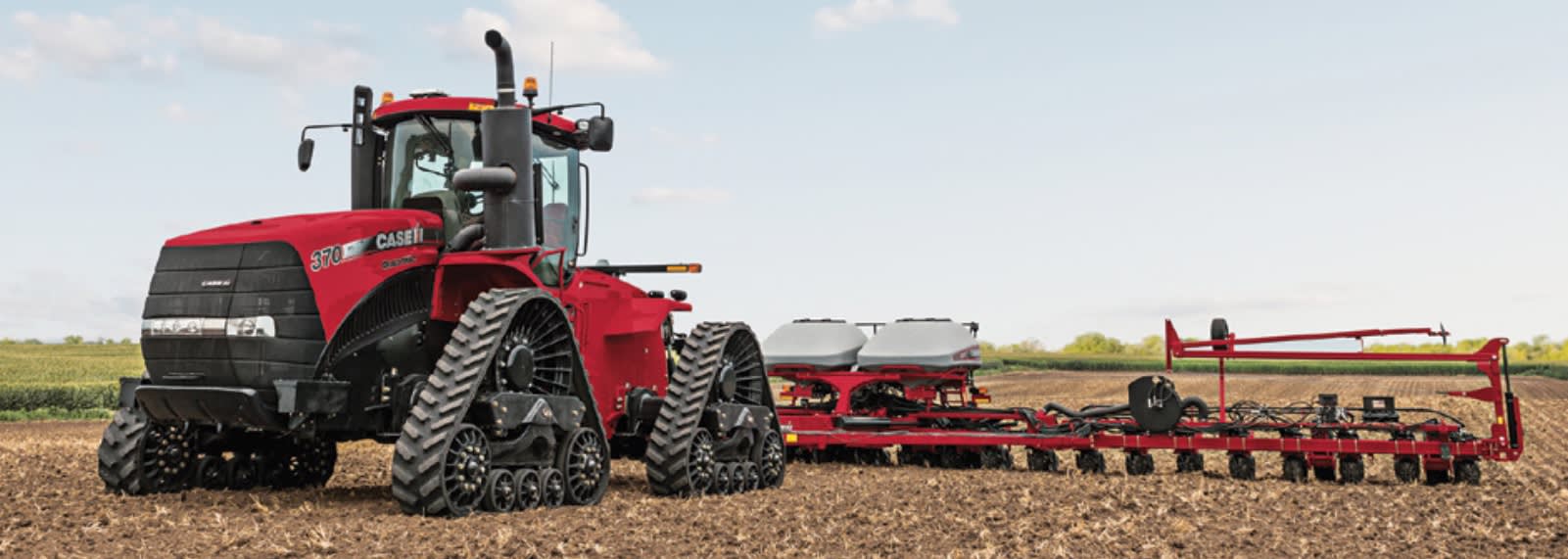
The expansion of sensor technologies is being surpassed by the growth of computing power throughout the hydraulic field. Powerful electronic control units (ECUs) are being placed on more devices, pushing the intelligence level of vehicles skyward. Networks link these elements to add features and improve efficiency.
“Hydraulic ECUs are evolving as the interconnectivity of the system grows,” Lola said. “By placing the electronics on the hydraulics, the ECU is dedicated to the performance of that device. This allows it to work smarter and more efficiently. Hydraulic ECUs need to not only control electrohydraulics very well, they also must be able to communicate with the rest of the control system and in many cases, the engine controller.”

These controllers are all linked by CAN bus, either using the SAE J1939 or CANopen. ISO bus is available as a higher level protocol. These links make it fairly straightforward to set systems up and link them together for maximum efficiency.
“These protocols provide solutions for the needs of embedded architectures, like start-up, boot load, parameter storage, data exchange, and error handling,” Brenner said. “The availability of advanced controllers now enables modular electronics and control architectures. Each subsystem function is operated by its own embedded controller; networking to the vehicle system is simple with no, or minimal, change to the other controllers in the system.”
Significant benefits come when all the elements work together. When the engine and the hydraulic systems communicate, they can work in harmony to conserve fuel without sacrificing performance. That’s true in Caterpillar’s 336F excavator, a hydraulic hybrid that uses a proprietary pump tightly linked to the engine.
“The key piece of our hybrid system is the electrohydraulic pump, the Electronic Standardized Programmable pump,” said Randy Peterson, Chief Engineer, Hydraulics, Caterpillar Advanced Components & Systems Division. “By controlling it electronically and communicating to the electronic engine, the system is very responsive. This allows us to lower the engine speed to save fuel. In the past, dropping engine speed usually caused excessive lugging and poor response to load. That isn’t the case with our system.”
Most observers expect to see more distributed architectures as it becomes more cost effective to mount ECUs on or in pumps and other components. That highlights the rising contribution that electronics and software have in off-highway and other commercial vehicles.
“We see a continuing trend toward more distributed systems, as more hydraulic components have some intelligence on board,” Lola said. “More powerful ECUs dedicated to a particular hydraulic component allow for faster and better control of the hydraulic components. By spreading out the ECUs across the whole machine, the overall machine intelligence goes up.”
Broader horizons

The increased intelligence of electrohydraulic systems is making it viable for the technology to expand its role. Hydraulic fans are one of the functions that are increasingly converting to hydraulic power.
“We are more deeply integrating hydraulic cooling fans into the engine, exhaust aftertreatment, cooling, and hydraulic systems to make the overall machine more efficient,” Peterson said. “By doing this, we can keep the fan speed as low as possible to minimize parasitic losses and reduce noise while attending to the cooling needs of the machine.”
Fluid power is efficient and it leverages some of the systems already found on vehicles. Intelligent systems bring many benefits for engineers tasked with reducing fuel consumption while offering more capabilities.
“One of the largest advantages for hydraulics is that it offers higher power density than many other forms of actuation,” Lola said. “The electronics and software allow intelligent functions like auto reversing and adjusting, fan speeds to match engine loading, and smart operation to more accurately maintain a target coolant or oil temperature. Having a separate hydraulic control system for the cooling system allows the cooling system to run independent of engine speed vs. traditional direct fan drives that ran the fan proportional to the engine speed.”
More From SAE Media Group
Off-Highway Engineering
Reshaping the Mobile-hydraulic Ecosystem
Off-Highway Engineering
Komatsu Augments Intelligent Machine Control in New Excavator
Off-Highway Engineering
Holistic Hydraulic Designs Add More Sensors, Advanced Controls
Off-Highway Engineering
New Holland Electric Mini-Excavator Hits Market
Automotive Engineering
Valve Cuts NVH in GDI Engines
Automotive Engineering
The Inside Story on Thermal Management
Power Electronics INSIDER
Highly Conductive Aluminum Can Equal Copper
Motion Design
Making the Jump to Electric
Off-Highway Engineering
‘Electronification’ of Working Hydraulics in Compact Machines
Off-Highway Engineering
Volvo CE’s New Short Swing Radius Excavator
Off-Highway Engineering
Eaton Solves Nuisance Problems with Electrohydraulic Solutions
Off-Highway Engineering
Electrohydraulic Power Steering Pursued for Heavy-Duty Vehicles
Off-Highway Engineering
Alternative Drive System for Wacker Neuson’s Smallest Excavator
Tech Briefs
Thermal Bypass Valves
Off-Highway Engineering
Liebherr Reveals ‘Hybrid’ CFRP Cylinders and Parallel-Pump Concept
Off-Highway Engineering
FEV Simplifies Off-Highway Electrification
Off-Highway Engineering
Rexroth Takes Aim at Electrification for Off-Highway Vehicles


Off-Highway Engineering
Operator Safety, Productivity Focus of Volvo CE's Crawler Excavator
Off-Highway Engineering
Schaeffler Optimizes Rolling Bearings for Hydraulic and Axle Drives
Off-Highway Engineering
Terzo Strives to Electrify Fluid Power
Off-Highway Engineering
Volvo CE, Norrhydro Team to ‘Revolutionize’ Digital Hydraulics
Automotive Engineering
More Gears, More Challenges
Off-Highway Engineering
Development Trends for Heavy Engines
Motion Design
Revolutionizing Motion Control with Linear Motors

Off-Highway Engineering
ASV Rolls out a Pair of New Loaders
Top Stories
INSIDERManufacturing & Prototyping
 How Airbus is Using w-DED to 3D Print Larger Titanium Airplane Parts
INSIDERManned Systems
 FAA to Replace Aging Network of Ground-Based Radars
NewsTransportation
 CES 2026: Bosch is Ready to Bring AI to Your (Likely ICE-powered) Vehicle
NewsSoftware
 Accelerating Down the Road to Autonomy
EditorialDesign
 DarkSky One Wants to Make the World a Darker Place
INSIDERMaterials
 Can This Self-Healing Composite Make Airplane and Spacecraft Components Last...
Webcasts
Defense
 How Sift's Unified Observability Platform Accelerates Drone Innovation
Automotive
 E/E Architecture Redefined: Building Smarter, Safer, and Scalable...
Power
 Hydrogen Engines Are Heating Up for Heavy Duty
Electronics & Computers
 Advantages of Smart Power Distribution Unit Design for Automotive...
Unmanned Systems
 Quiet, Please: NVH Improvement Opportunities in the Early Design...
