




Connectivity Continues Its Advance
More OEMs and Tier 1 suppliers are focusing on embedded telematic systems, hoping to displace aftermarket hardware.
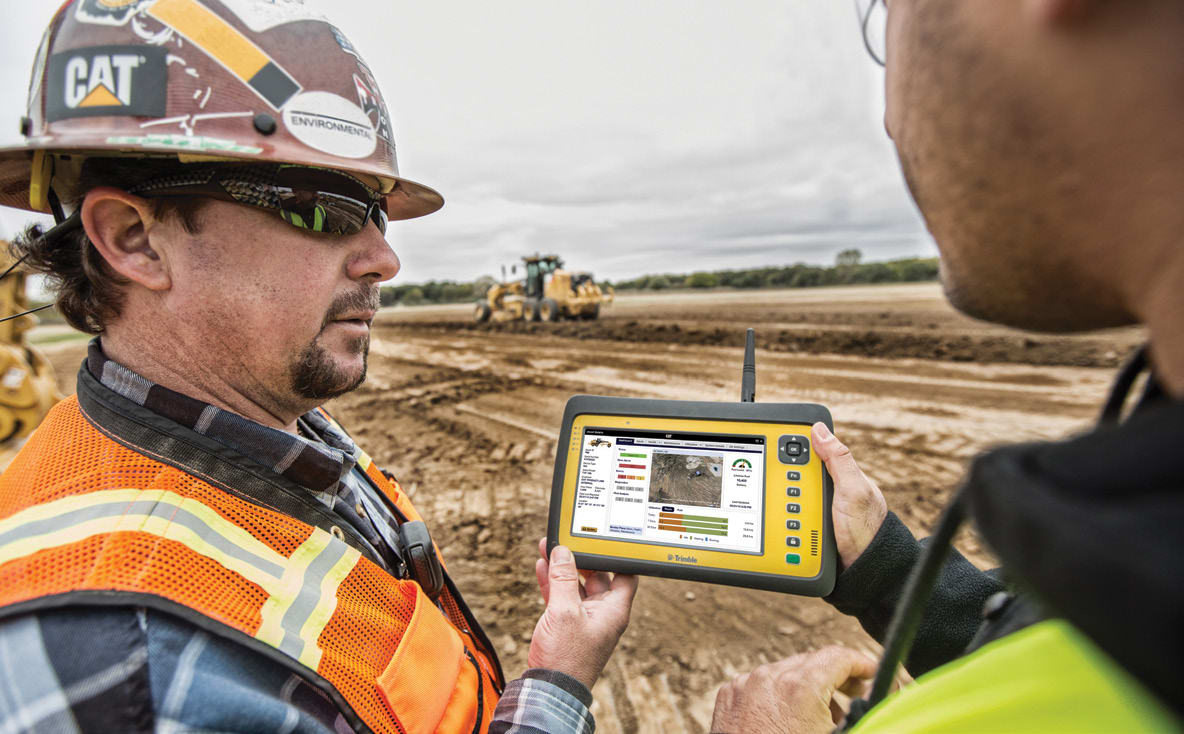
Fleet owners have been deploying telematic solutions for some time, but connectivity still is just beginning to move from early adopters to the mass market. Connectivity is providing more owners and operators a broad range of benefits, prompting a surge of developments by suppliers.
Connections using cellular and other wireless links are transforming design plans, running the gamut from axles and infotainment systems to leveraging cloud computing. Connectivity even is beginning to impact developments at companies that traditionally focus more on mechanical designs than electronics, according to some contract designers.

“Many of our programs are no longer looking just at transmissions or other systems, they’re including connectivity,” said Lee Barnes, Jr., Director of Connected and Autonomous Vehicle Business at Ricardo. “Companies that make axles that switch from two- to four-wheel drive want to use vehicle-to-vehicle (V2V) communications so that when the first vehicle in a convoy hits an icy patch, it can tell following vehicles that they should switch to deal with ice.”
Analysts at Berg Insight predict that fleet-management system deployments in North America and Europe will exceed 17 million by 2019, up from barely eight million in 2014. To date, aftermarket devices have played a major role. But the benefits of integration by OEMs may drive a shift to factory installations.
“There’s a trend for more people to go to embedded telematic solutions, but we still see a lot of companies using after-market solutions,” said Stephan Tarnutzer, Vice President of Electronics, FEV North America. “For OEMs, embedded systems can be a differentiator; they can provide more value-added features. They can combine telematics with things like prognostics and diagnostics. Embedded solutions work with all features and functions of the vehicle, unlike aftermarket solutions.”
Offerings multiply

Product offerings are exploding. In March Caterpillar unveiled Cat Connect and Cat Product Link technologies that connect any brand and type of equipment using a single reporting system, VisionLink. Cellular, satellite and Bluetooth links can be used to access data ranging from machine hours and location through machine health parameters and production data.
Parker Hannifin rolled out IQAN Connect, which integrates Parker’s intelligent hydraulic components with electronic control hardware and software using SAE J1939 links. Data is stored in the cloud for access by fleet owners, giving them real-time diagnostics to help reduce downtime and improve productivity. Cummins is touting its Connected Advisor system for monitoring engines and aftertreatment systems.
Deere and LHP Telematics recently teamed up to expand the role of John Deere WorkSight and JDLink, combining platforms into one application and simplifying operations. These products follow a trend of making it easier to understand what’s happening with vehicles.
“It’s not good enough to just provide data any more,” said Jeffrey Cohen, Vice President of Telogis. “A fleet manager’s job is to run the fleet, not look at technology. They want something that’s easy to understand and easy to use.”
Ease of use always is a critical factor when new technologies emerge. For example, a fleet with an idling problem can create incentives for those who reduce idling the most. Conserving fuel then becomes a game for operators — and telematic data shows managers which operators need training.
Clouds rise
While some fleet owners will use their own information technology (IT) departments to collect data, many will turn to the Cloud. The volume of data transmitted by a system that monitors data available on vehicle networks will be huge. Third-party providers can help managers access data without becoming IT experts.
“Cloud computing is essential for the connected off-highway vehicle environment,” said Jose Ogara, Product Manager at TTControl. “The cost and effort required to host machine data and to run applications for the analysis of the data is often too big for many customers, so cloud computing allows you to start small and scale.”
Managers who want to schedule maintenance and monitor vehicle productivity for fleets soon may be clamoring for more bandwidth. Product developers are already making preparations to provide that as soon as cellular providers start shifting from 4G to faster 5G technologies.
“Companies will move quickly to 5G when it’s available because of the sheer volume of data being transferred,” FEV’s Tarnutzer said.
Platoon ready
There’s a fair chance that within a few years, vehicle-to-vehicle/infrastructure (V2X) communications will be added to the connectivity mix. In the U.S., NHTSA (National Highway Traffic Safety Administration) has long promised to mandate its use in passenger cars. But fleet owners may leverage the concept more rapidly than automakers.
Commercial trucks can save fuel and reduce congestion by platooning. Several vehicles can travel closely together, setting a steady pace and even adjusting traffic lights so they can smoothly pass traffic lights as a convoy. As connectivity and cloud computing expand in transportation, interest is growing.
“We’re seeing a lot of activity in the platooning space,” Tarnutzer said. “In platooning, you need a lot of communication to the back end.”
Some programs rely on communications sent between vehicles in a fleet, communicating speeds, potential braking needs and other information. Other projects use the Cloud to collect data from all connected vehicles on the road and sharing relevant information.
“If you have a smart infrastructure, data sent to the Cloud can be accessed by any vehicle,” Ricardo’s Barnes said. “Data can be held in the Cloud and can be parsed to vehicles that need it. For vehicle convoys, this data can tell them things like speed and distance and whether they need to shift because they’re going up a hill.”
Whether these communication systems will use cellular links or the dedicated short range communications (DSRC) promoted by NHTSA remains an open question. DSRC offers many benefits like high speed, but it won’t make an impact until a fair number of vehicles have compatible communications. Cellular is ubiquitous, but no one’s yet spent much time figuring out how V2X data would be handled securely. Opinions vary.
“There’s more interest in cellular communications than in DSRC,” Tarnutzer said. But that’s not what Barnes is hearing.
“It’s not set in stone whether cellular or DSRC will be used, but every situation we’re involved in now uses DSRC,” he said. “As the industry goes to 5G, that could change.”
More From SAE Media Group
Autonomous Vehicle Engineering
Truck Platoons on the Move
Off-Highway Engineering
Freightliner’s Medium-Duty Makeover
Off-Highway Engineering
Meeting Truck Autonomy Hurdles Head-on
Automotive Engineering
Connected Vehicles, Cloud Services Bring Big Data Issues to Vehicles
Autonomous Vehicle Engineering
Prepping Cities for Vehicle Autonomy
Motion Design INSIDER
Improving Traffic Signal Timing with a Handful of Connected Vehicles
Off-Highway Engineering
U.S. Army Marches Toward Driverless Future
Off-Highway Engineering
Security, Bandwidth Drive Over-The-Air Development
Automotive Engineering
Outlook for Autonomous Driving Includes Cloud
Autonomous Vehicle Engineering
Autonomy for the Masses

Autonomous Vehicle Engineering
Integration, Communication Hurdles to Truck Automation
Automotive Engineering
Mobileye Ready to Meet FMVSS 127 with Vision-Only System
Tech Briefs
SAE WCX™ Digital Summit Preview
Off-Highway Engineering
Connections Dig Deeper
Off-Highway Engineering
Over-The-Air Affair
Off-Highway Engineering
Realizing Software-Defined Commercial Vehicles

Off-Highway Engineering
Sensors Evolve to Satisfy CV Demands
Autonomous Vehicle Engineering
Industry Remains Unsettled on Vehicle Connectivity Standard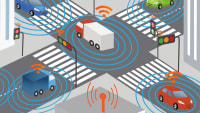
Off-Highway Engineering
HMIs Extend Beyond the Cab
Motion Design INSIDER
Autonomous Bus Sounds: It’s All About When, Not How
Automotive Engineering
Cellular, Security Challenge Vehicle-to-Vehicle’s Role
Off-Highway Engineering
Aftertreatment Comes With Challenging Diagnosis
Power Electronics INSIDER
Highway Segment Charges Electric Vehicles
Automotive Engineering
GM Announces SAE Level 3 Autonomy and SDV Technology
Off-Highway Engineering
Accelerating Down the Road to Autonomy
Automotive Engineering
Riding Along With Mercedes and Its in-city Driver Assistance System
Autonomous Vehicle Engineering
Platform-Agnostic Interface Aims to Accelerate Truck Autonomy
Autonomous Vehicle Engineering
Road Tested
Top Stories
INSIDERDefense
 New Raytheon and Lockheed Martin Agreements Expand Missile Defense Production
NewsAutomotive
 Ford Announces 48-Volt Architecture for Future Electric Truck
INSIDERManufacturing & Prototyping
 Active Strake System Cuts Cruise Drag, Boosts Flight Efficiency
ArticlesTransportation
 Accelerating Down the Road to Autonomy
INSIDERMaterials
 How Airbus is Using w-DED to 3D Print Larger Titanium Airplane Parts
Road ReadyTransportation

Webcasts
Electronics & Computers
 Cooling a New Generation of Aerospace and Defense Embedded...
Power
 Battery Abuse Testing: Pushing to Failure
Connectivity
 A FREE Two-Day Event Dedicated to Connected Mobility
Automotive
 Quiet, Please: NVH Improvement Opportunities in the Early Design Cycle
Transportation
 Advantages of Smart Power Distribution Unit Design for Automotive &...
Aerospace
 Sesame Solar's Nanogrid Tech Promises Major Gains in Drone Endurance