




HMIs Extend Beyond the Cab
Telematic functions are being integrated into multi-function user interfaces.
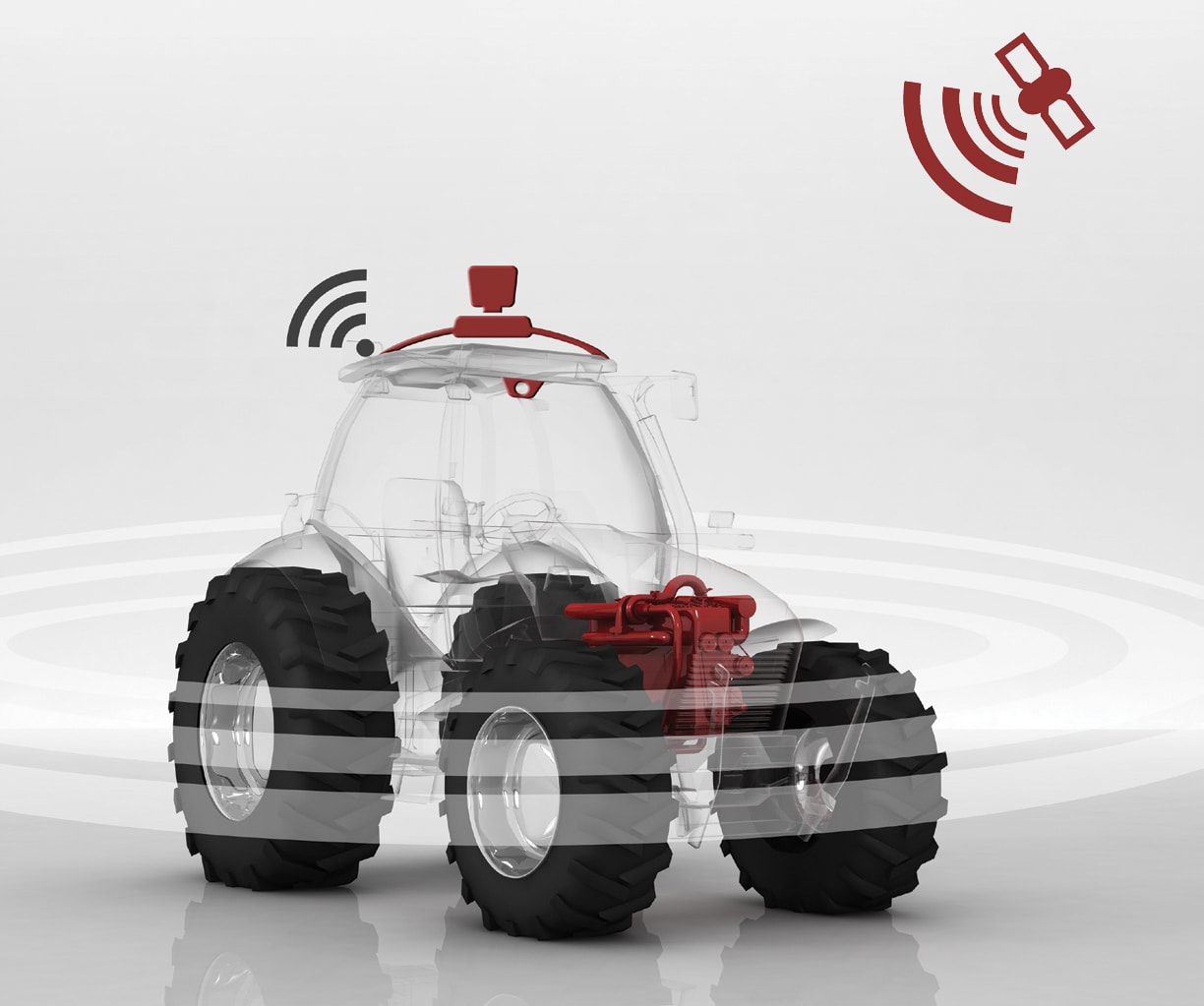
Human-machine interfaces (HMIs) are evolving in multiple paths — they’re becoming a more important product differentiator while also expanding their control functions outside the vehicle. As connectivity moves deeper into the mainstream, HMIs are being redesigned to make it easier for operators to utilize the broad range of features and functions that come with telematics.
Fleet operators who have utilized connectivity to gain information for some time seek improved techniques for making some of this data available to operators, while those new to telematics want a wealth of basic functions. Tool providers note that off-highway and commercial vehicle developers are using communication technologies to make vehicles safer and more productive.
“Automotive HMIs focus on infotainment; in off-highway and commercial vehicles, safety and operations are more important,” said Manuela Papadopol, Marketing Director, Elektrobit, which makes HMI design tools. “HMIs with connectivity are now a key differentiator. Many of the instrument clusters are very graphical.”

Handling communications from outside the vehicle is a logical extension of HMI capabilities. It highlights the central role that user interfaces play in making vehicles more useful and productive. HMIs play an important role throughout the vehicle’s life cycle.
“The HMI is already the central communication hub in many off-highway vehicles today,” said Christiana Seethaler, Product Development Director at TTTech Computertechnik. “Alternatively, it is also useful as a development and debugging interface during application development.”
The tight link between HMIs and communication modules is following a common arc: once developers and users get comfortable with a few features, they start adding more functionality.
Many channels
Connectivity’s swift journey from a high-end offering to a mainstream option is now evolving to include a range of communications interfaces. It’s no longer uncommon for vehicles to have more than one outside link.

“Wireless connectivity options like Wi-Fi and mobile telecommunication options like GSM are becoming more prevalent in HMI devices as enablers for telematics solutions like remote assistance/maintenance and fleet management,” Seethaler said.
While this data often flows from vehicles to operation centers, bidirectional links often let operators access the Internet or their management system. That makes it easy for them to get detailed information to enable educated decisions.
“Operators are no longer limited to radio weather reports,” said Stephan Tarnutzer, Vice President, Electronics, FEV North America. “Someone on a tractor can run an app when it’s raining to get information to help them decide whether to stop or continue planting seeds or spraying.”

The role of connectivity will continue to expand as developers find more ways to utilize remote links. The continued growth of electronic controls and software means that more data can be accessed by letting communications modules transmit data gathered from a range of CAN buses.
“We expect to see increased use of software to feed data to telematics systems in off-highway equipment,” said Kirk Lola, Business Development Manager, Parker Hannifin Electronic Controls Division. “Telematics allows for the owner to track machine usage and productivity, but also allows the service manager to view faults and performance to help reduce machine downtime.”
Taking control

Currently, remote technicians can look at data from the vehicle, but they can’t control the ECUs. That’s expected to change. Specialists in operation centers may be able to control some functions. That capability may be extended to personnel carrying tablets or even smartphones.
“Depending on the robustness of the telematics solution, they might even have the option to make adjustments to the machine remotely or run automated functions such as remote upgrades or geo-fencing,” said Kevin Faulds, Product Marketing Manager of Software Solution Services, Danfoss Power Solutions. “Bluetooth technology allows operators to connect a phone or tablet and get status reports or make adjustments to the system without actually needing to be near the machine.”
Links between connected HMIs and CAN buses aren’t the only new connections showing up in man-machine interfaces. Commercial technologies like USB and Ethernet are expected to move into the off-highway world.
“As the number of ECUs connected to the HMI increases, the required number of CAN interfaces also grows,” Seethaler said. “In addition, USB and Ethernet interfaces become more and more important. USB is typically used for software updates (not only to update the software of the HMI, but also to use the HMI as gateway for updating the ECUs connected to the HMI device). Ethernet can be used as high bandwidth interface to ECUs like our HY-TTC 580 HMI, which features an Ethernet interface, or to connect Ethernet cameras.”
Making it easier to update firmware in the field is a critical factor as software becomes more of a product differentiator. The ability to fix bugs or add new functions by simply reflashing memory in an ECU brings big benefits, so design teams are exploring many ways to simplify updating.
“OEMs are going more to Android and Linux-based systems that provide them with the ability to deliver upgrades,” said FEV’s Tarnutzer. “It’s not mainstream, but it’s being more widely supplied.”
More From SAE Media Group
Tech Briefs
Essential Control and Visualization, Combined
Sensor Technology
Understanding the Implications of 5G Cellular
Electronics & Sensors INSIDER
New Transmitter Could Make Wireless Devices More Energy-Efficient
Tech Briefs
Product of The Month
Sensor Technology
LoRaWAN - Designed for Wireless Sensor Networking
Medical Design Briefs
Renamic Neo Offers Complete Wireless Connectivity to Implants


Off-Highway Engineering
Big Data and Next-Gen Prognostics for Heavy-Duty Vehicles
Off-Highway Engineering
Softing Envisions Secure, Reliable Predictive Maintenance
Tech Briefs
How Much Do You Know About Wi-Fi 6?
Autonomous Vehicle Engineering
TCU Testing at the Heart of Vehicle Connectivity
Off-Highway Engineering
Security, Bandwidth Drive Over-The-Air Development
Tech Briefs
The Connected Future of Devices
Tech Briefs
New on the Market: October 2020
Tech Briefs
How Much Do You Know About 6G?
Autonomous Vehicle Engineering
Vehicle Connectivity Moves to the Next Generation
Sensor Technology
Product Showcase
Sensor Technology
O-RAN Redefining the Future of Wireless Connectivity
Tech Briefs
6G: Will It Trigger a Manufacturing Revolution?
Automotive Engineering
Survey Reveals Cyber, Quality Challenges of Vehicle Connectivity
Automotive Engineering
FEV/DGE System Automates HMI Validation Process
Aerospace & Defense Tech Briefs
How Will TSN Ethernet Impact the Future of Embedded Computing?
Off-Highway Engineering
Danfoss Introduces Robust Telematics Platform
Off-Highway Engineering
Connecting Off-Highway Vehicles in Remote Locations
Electronics & Sensors INSIDER
Ultra-Low Power Chip for IoT Wi-Fi
Tech Briefs
Modern Software Links Legacy Systems
Sensor Technology
What Will 5G Do for the IoT/IIoT?

Medical Design Briefs
From the Editor - More Connected Devices Means More Cyberattacks
Top Stories
NewsSensors/Data Acquisition
 Microvision Aquires Luminar, Plans Relationship Restoration, Multi-industry Push
INSIDERRF & Microwave Electronics
 A Next Generation Helmet System for Navy Pilots
INSIDERWeapons Systems
 New Raytheon and Lockheed Martin Agreements Expand Missile Defense Production
NewsAutomotive
 Ford Announces 48-Volt Architecture for Future Electric Truck
INSIDERAerospace
 Active Strake System Cuts Cruise Drag, Boosts Flight Efficiency
ArticlesTransportation

Webcasts
Aerospace
 Cooling a New Generation of Aerospace and Defense Embedded...
Energy
 Battery Abuse Testing: Pushing to Failure
Power
 A FREE Two-Day Event Dedicated to Connected Mobility
Automotive
 Quiet, Please: NVH Improvement Opportunities in the Early Design Cycle
Electronics & Computers
 Advantages of Smart Power Distribution Unit Design for Automotive &...
Unmanned Systems
 Sesame Solar's Nanogrid Tech Promises Major Gains in Drone Endurance