




Autonomy: the New Age of Automobility
The self-driving future brings profound implications for the auto industry — and unprecedented mobility to a lot more people.
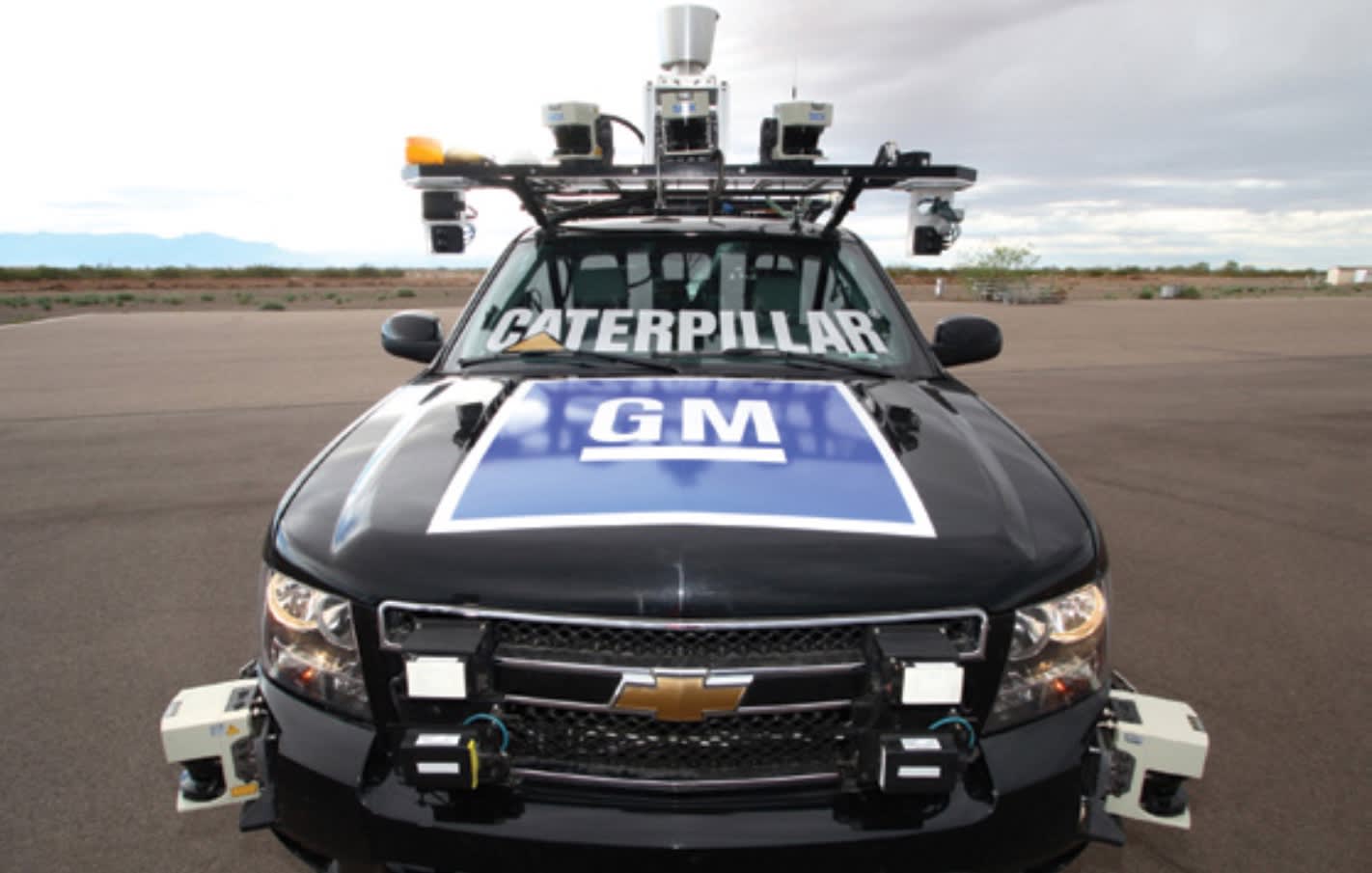
Ten years ago, as General Motors’ Corporate VP of R&D and Strategic Planning, I watched Carnegie Mellon University’s Team Tartan win the 2007 DARPA Urban Challenge — a contest staged by the U.S. Department of Defense that established the technical feasibility of autonomous vehicles. As Team Tartan’s lead sponsor, I was thrilled that our team won. I was even more excited by the promise of driverless cars.
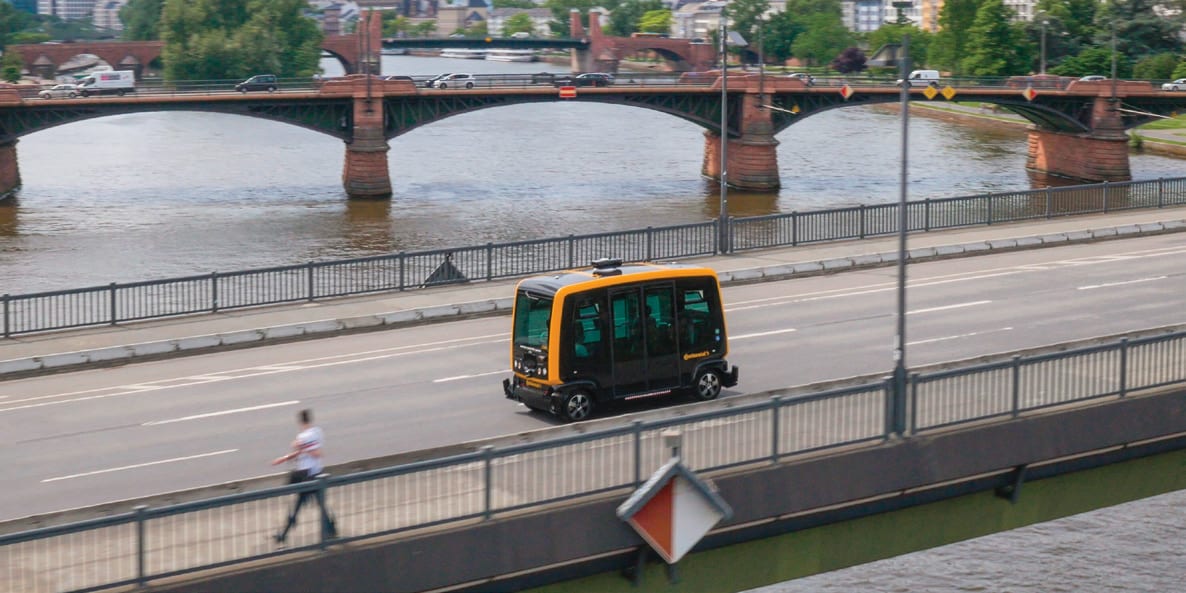
Just a decade later, much sooner than I or anyone else might have imagined, the freedom and independence provided by today’s automobiles is being redefined. This new “autonomy” promises better mobility and safety for more people at lower cost. The implications for the automobile industry are profound.
If you own an automobile, you appreciate being able to go where you want, when you want. But you also put up with a lot of hassles to realize this benefit. You must shop for your car, finance and insure it, drive it, refuel it, clean it, maintain it, park it and sit in it when you’re stuck in traffic. This is all about to change for the better.
A $4 trillion disruption
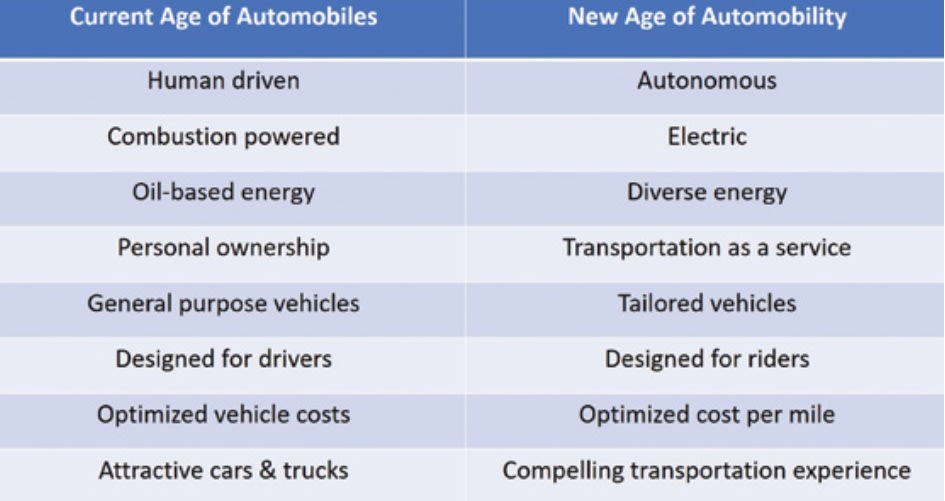
For more than a century, car companies have taken for granted that vehicles will be driven by people, powered by combustion engines and owned primarily by individuals. These presumptions now are being challenged by a stunning convergence of new technology and innovative business models. Soon after the DARPA Challenge, a remarkable series of events set the stage for the revolution to come. Google gathered together the brightest engineering talent from that event and launched its Self-Driving Car Project. Upstart Tesla delivered its first Roadster in 2008, highlighting the promise of electric vehicles with outstanding performance using lithium-ion batteries.
And shortly after that, scrappy start-ups Uber, Lyft and others established an enormous market for ride sharing and began the decoupling of people from personal ownership of automobiles.
These milestones occurred during the darkest days of the auto industry. While GM and Chrysler were going bankrupt and others were fighting for their lives, the seeds of the mobility revolution were being planted by companies from outside the industry. These were new players in the transportation space. But they possessed a “bone-deep” understanding of digital technology and a passion for designing and delivering compelling transportation experiences — not just attractive cars.
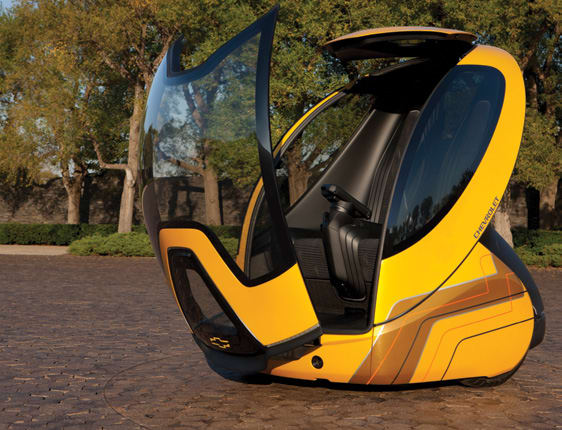
Now, merely ten years after Team Tartan’s Chevrolet ‘Boss’ crossed the finish line, autonomous electric vehicles supplying transportation as a service are poised to usher-in a new age of automobility. This transformation promises more people greater freedom in how they move around and how they live their lives. Individually, each of the breakthroughs offer significant value. When combined, their benefits propel transportation autonomy to extraordinary heights.
The transportation-cost implications of this new era are profound. Supported by a team that included my colleague Bill Jordan, with funding provided through Jeff Sachs’ Earth Institute at Columbia University, I led a research effort that revealed for the first time the cost implications’ startling scale. Results suggested that driverless electric vehicles tailor-designed for shared transportation service in U.S. cities could reduce the out-of-pocket and time costs of conventional automobile travel by 80% (from $1.50 per mile to $0.25 per mile) — while providing safer and more convenient mobility.
Since Americans drive 3 trillion miles per year, this corresponds to nearly a $4 trillion disruption in the U.S. economy alone! The entire roadway transportation “ecosystem” will be disrupted.
Our Columbia University research also concluded that by drastically reducing the enormous waste inherent in today’s human-driven, combustion-powered, individually-owned automobiles, the new age of automobility is the key to sustainable mobility.
“Transportation as a Service” (TaaS) sells miles, trips and experiences instead of vehicles, gasoline, and insurance. It focuses vehicle design and engineering on delivering compelling riding experiences, on optimizing total cost per mile and on tailoring vehicles to the types of trips people take. TaaS vehicles will be the “ultimate riding machines.” They will have fewer parts because of the inherent simplicity of electric drive and because they do not require steering wheels and columns, brake and accelerator pedals, and instrument clusters.
As such, they will be significantly lighter, making them even more amenable to electric drive and more energy-efficient. And they can be tailored to different types of trips, especially one- and two-person trips, which account for 80% of U.S. auto travel today.
The new age of automobility includes both shared-use and personal-use transportation services. Shared-use entails fleets of vehicles that can be hailed by customers using their personal devices. Driverless vehicles arrive in a few minutes and transport the passengers door-to-door. The vehicle then gets assigned optimally to serve others.
Personal-use TaaS is akin to having your own vehicle and subscribing to a service that handles its parking, fueling and maintenance when you’re not riding in it. Think of your vehicle as a personal valet that not only takes you door-to-door when you want, but also can be dispatched by you to run errands or transport family and friends.
Automobility will integrate goods movement with people movement. Shared-use transportation services can pick-up and deliver small packages using the same vehicle fleets and service infrastructure (i.e., vehicle staging, fueling and maintenance) used to move people around, providing increased network scale and higher fleet and infrastructure utilization. And personal-use TaaS will let you send your vehicle to stores or fulfillment centers to pick-up goods, freeing you from the need to take shopping trips.
Just as new-car sales today depend on used-car sales, personal-use and shared-use transportation services are interdependent. When you are ready for a new personal-use vehicle, your current one can be deployed in a shared-use fleet to sell its remaining miles of life.
The financial implications are compelling. Today, the average net income per vehicle sold by most auto companies ranges from $1000 to $5000. In contrast, a transportation service vehicle with a 300,000-mile life earning just $0.10 per mile makes a lifetime profit of $30,000. Given that total travel cost per mile could potentially be reduced by over a dollar, a $0.10 per mile profit certainly appears within reach.
While today’s prototypes are expensive, the cost of autonomous driving systems on TaaS vehicles should be quite low compared to the cost of human drivers. Assuming that at scale and maturity the required sensors, processors and actuators cost less than $10,000 and last 300,000 miles, your virtual “chauffeur” will cost just $0.03 per mile. This is one-tenth the cost of a U.S. minimum-wage human driver making $7.50 per hour and averaging 25 mph.
And, the cost could be even lower after accounting for the parts no longer needed on vehicles that drive themselves.
The implications for long-haul trucking are as significant as those for light-duty vehicles and package delivery. A typical over-the-road trucker makes about $0.50 per mile. But the savings from autonomous tractors go well beyond labor. Consider the tractor parts that are no longer needed when drivers are removed: windshields, doors, seats, human controls, HVAC and sleeper cabs, for example. These will eventually cost more than the sensors, processors and actuators added to enable autonomous trucking.
Driverless tractors will operate nearly 24 hours per day, compared to about eleven hours with drivers due to safety regulations. My “farmer’s math” suggests the cost of long-haul trucking could decline by about 50% — a remarkable productivity improvement opportunity and amplifier of e-commerce growth.
The biggest development risk of autonomous vehicles is taking more time than needed to reach their full safety benefits. The World Health Organization estimates that 1.3 million people per year die on the world’s roadways and traffic safety experts predict that autonomous and connected vehicles will eliminate 90% of car crashes. This means that if we attain the full safety potential of autonomous and connected vehicles just one day sooner, we can save more than 3000 lives!
Impact on designers, engineers
Apple CEO Tim Cook calls autonomous vehicles the “mother of all artificial-intelligence applications.” In doing so, he implies that the future basis of competition in transportation will be quite different from that of the past. The new differentiating know-how includes machine learning, sensor fusion, perception, big-data, advanced analytics, sophisticated simulation, cybersecurity, total customer experience design and transportation service operations.

This is a far-cry from what auto companies are good at today: knowing how to integrate human drivers into vehicles, knowing how to develop efficient and low-emission combustion powertrains and knowing how to build, market and sell cars and trucks to individuals through franchised dealers.
The new age of automobility will free us from driving, looking for parking, and pumping gas. It will free us from shuttling our kids around and worrying about them as inexperienced drivers. It will free us from losing our independence when we reach an age where we are no longer able to drive safely. And, it will free future generations of the enormous and unsustainable waste of today’s automobile transportation system.
If you are an automobile designer or engineer with an open mind to the future, you should be excited and motivated by the new age of automobility. It will free you from the packaging constraints defined by current safety regulations, human factors for drivers and combustion powertrains. It will give you the opportunity to create compelling transportation experiences, not just compelling cars. CEO Rick Wagoner let me “play in this sandbox” when I led GM R&D for 12 years. Along with a team of GM designers and technologists, we created concepts like AUTOnomy and EN-V based on a “new DNA” for the automobile. It was exhilarating work.
Although I believe this exciting future is inevitable, I can’t predict exactly how and when the “tipping point” will occur. Players with strong vested interests in the current age of the automobile are adept at resisting change and powerful enough to influence the path forward. At the same time, new players with deep pockets and incredible technical capabilities have set their sights on accelerating change.
What’s certain is that getting to this future will be quite a ride. It’ll be thrilling for those who reach out and grasp what’s now possible, and terrifying for those who hesitate and cling to the past. It is a journey that will be led by those who get in front of the inevitable, by those who deeply understand the potential of digital technology, by those who know how to design compelling transportation experiences and by those who are capable of flawlessly operating transportation services. The destination is a new world of autonomy bringing unprecedented mobility to a lot more people.
More From SAE Media Group
Off-Highway Engineering
ZM Trucks Starts Production in Fontana, California
Autonomous Vehicle Engineering
Who’s Ahead in the Automated-Driving Race?
Autonomous Vehicle Engineering
Reinventing the Automobile’s Design
Automotive Engineering
Plotting the Vehicle Autonomy Revolution
Automotive Engineering
AVSC Develops Best Practices for Traceable AV Safety Inspection Protocols
Autonomous Vehicle Engineering
The Road to Automobility
Autonomous Vehicle Engineering
Truck Platoons on the Move
Automotive Engineering
Suppliers Struggling to Keep Pace with Faster Product Cycles, Says IHS
Autonomous Vehicle Engineering
AV Powers Bring May Flowers
Off-Highway Engineering
Digital Tech a Las Vegas Headliner

Automotive Engineering
Engineering ‘Electron Guzzlers’
Autonomous Vehicle Engineering
Road Tested
Automotive Engineering
CES 2019: Blueprint for Future Auto Shows?
Automotive Engineering
The Man From APPA-E
Off-Highway Engineering
Electrification’s Impact on Commercial-Vehicle Chassis Design
Power Electronics INSIDER
Highway Segment Charges Electric Vehicles
Automotive Engineering
Tension and the Electric Takeover
Autonomous Vehicle Engineering
Defanging Driverless Cars
Automotive Engineering
Riding Along With Mercedes and Its in-city Driver Assistance System
Tech Briefs
EVs Are Growing Up—and Getting Practical

Automotive Engineering
Welcome to the Automotive Engineering Podcast
Automotive Engineering
Hau Thai-Tang Is Engineering a New Ford

Autonomous Vehicle Engineering
Embracing the Challenge of Smart Cities
Automotive Engineering
Mobileye Ready to Meet FMVSS 127 with Vision-Only System
Automotive Engineering
Ideas for Multi-Modal Mobility
Autonomous Vehicle Engineering
GM’s Self-Driving Car Strategy: Vertical Integration
Automotive Engineering
Are EV Tires a Thing?
Top Stories
NewsSensors/Data Acquisition
 Microvision Aquires Luminar, Plans Relationship Restoration, Multi-industry Push
INSIDERRF & Microwave Electronics
 A Next Generation Helmet System for Navy Pilots
INSIDERWeapons Systems
 New Raytheon and Lockheed Martin Agreements Expand Missile Defense Production
NewsAutomotive
 Ford Announces 48-Volt Architecture for Future Electric Truck
INSIDERAerospace
 Active Strake System Cuts Cruise Drag, Boosts Flight Efficiency
ArticlesTransportation

Webcasts
Aerospace
 Cooling a New Generation of Aerospace and Defense Embedded...
Energy
 Battery Abuse Testing: Pushing to Failure
Power
 A FREE Two-Day Event Dedicated to Connected Mobility
Automotive
 Quiet, Please: NVH Improvement Opportunities in the Early Design Cycle
Electronics & Computers
 Advantages of Smart Power Distribution Unit Design for Automotive &...
Unmanned Systems
 Sesame Solar's Nanogrid Tech Promises Major Gains in Drone Endurance