




Development of Adaptive and Reflective Middleware
A report describes Phase II of the Adaptive and Reflective Middleware Systems (ARMS) program, which was focused on developing an adaptive and reflective network Quality-of-Service (QoS) infrastructure for the Total Ship Computing Environment (TSCE). Conceived for the next generation of Navy surface ships, the TSCE is associated with a computing architecture characterized by modularity, extensibility, scalability, and amenability to upgrading of all software and hardware systems. A major feature of the ARMS approach is the use of a bandwidth broker that provides admission control and leverages differentiated-services and class-of-service functionalities of high end routers and switches in order to guarantee end-to-end QoS in a heterogeneous computing environment. Building upon the Phase I product, the Phase II development (1) provides continued assurance of network QoS for mission- critical tasks in the presence of single mode faults and such catastrophic faults as the loss of an entire data center, and (2) improves timely adaptation to network performance using probes and instrumentation to measure delay. The ARMS development also raises the level of abstraction in the use of model-driven development software tools for configuring, deploying, and achieving QoS in distributed real-time embedded systems.
This work was done by Balakrishnan Dasarathy of Telcordia Technologies, Inc. for the Defense Advanced Research Projects Agency.
This Brief includes a Technical Support Package (TSP).

Development of Adaptive and Reflective Middleware
(reference DARPA-0003) is currently available for download from the TSP library.
Don't have an account?
More From SAE Media Group
Aerospace & Defense Tech Briefs
Deterministic and Modular Architecture for Embedded Vehicle Systems
Air Force Research Laboratory Technology Horizons
A Concept for Information Extraction From Remote Wireless Sensor Networks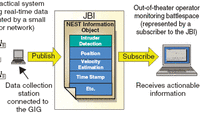
Tech Briefs
Software for Managing Distributed Real-Time Data
Aerospace & Defense Tech Briefs
Software Virtual Networks Integrate Training and Operation of Wireless Net-Centric Warfare Systems

Tech Briefs
Open Software Options for Automation
Tech Briefs
DSN Beowulf Cluster-Based VLBI Correlator
Tech Briefs
Streaming Software Speeds Apps
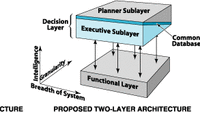
Aerospace & Defense Tech Briefs
FPGA-Based System for Tracking Digital Information Transmitted Via Peer-to-Peer Protocols
Aerospace & Defense Tech Briefs
5G OSIRIS Testing
Aerospace & Defense Tech Briefs
Two-Processor Autopilot System for a UAV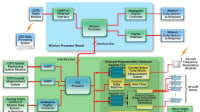
Aerospace & Defense Tech Briefs
Adamant: A Soon-to-be Open Source, Mission-Critical Flight Software Framework Written in Ada
Sensor Technology
O-RAN Redefining the Future of Wireless Connectivity
Photonics & Imaging Technology
Total Versatility: Flexible Test Station With a Cobot and Camera
Software Tech Briefs
Policy-Based Negotiation Engine for Cross-Domain Interoperability


Aerospace & Defense Tech Briefs
FACE Technical Standard Offers MOSA Lessons for Safety-Critical Software in Any Sector
Aerospace & Defense Tech Briefs
Future-Proofing the Tactical Edge: Converging AI, Edge Processing, and Hybrid Cloud for Modern Battlefield Operations
Tech Briefs
Robust Software Architecture for Robots

Automotive Engineering
NXP S32 CoreRide Platform Simplifies Development of Software-Defined Vehicles
Aerospace & Defense Tech Briefs
Thwarting Code-Injection Attacks Using SDT-Based ISR
Aerospace & Defense Tech Briefs
Overcoming Obstacles to DoD Software Technology Transition


Tech Briefs
6G: Will It Trigger a Manufacturing Revolution?
Overview
The document is a final technical report on the DARPA Adaptive and Reflective Middleware Systems (ARMS) Program, specifically detailing Phase II of the initiative. Conducted by Telcordia Technologies, the report outlines advancements in adaptive and reflective network Quality of Service (QoS) technologies aimed at enhancing mission-critical applications, particularly in military environments.
In Phase I, the groundwork was laid for an adaptive QoS technology utilizing a Bandwidth Broker. This system provides admission control and enforcement through Differentiated Services (DiffServ) and Class of Service (CoS) functionalities, enabling the network to adapt to varying mission requirements and workloads. The Bandwidth Broker employs discovery algorithms to maintain an updated view of resource availability and uses traffic probes to monitor the needs of high-priority flows.
Phase II builds upon these foundations, focusing on ensuring continued network QoS even in the presence of faults, such as the loss of a data center. Key objectives include improving the timely adaptation to network performance through enhanced monitoring of delay, jitter, and available bandwidth, as well as increasing flexibility in delay guarantees by incorporating deadline support in flow admission decisions.
The report highlights several software deliverables, including a Network Performance Monitor for measuring latency with micro-second accuracy and a Network Fault Monitor designed to detect and restore QoS during network faults. Additionally, a fault-tolerant implementation of the Bandwidth Broker and Flow Provisioner is discussed, utilizing MySQL Cluster technology, which requires further enhancement for hostile military environments.
The document emphasizes that while DiffServ and CoS features are essential, they alone are insufficient for guaranteeing end-to-end network QoS. The traffic presented to the network must align with its capacity to ensure effective performance.
Overall, the report illustrates the collaborative efforts of various program participants to push middleware technologies beyond current commercial capabilities, aiming to create a more adaptive and resilient network infrastructure suitable for dynamic military applications. The findings and methodologies discussed are intended to inform future developments in network QoS assurance and resource management.
Top Stories
INSIDERManufacturing & Prototyping
 How Airbus is Using w-DED to 3D Print Larger Titanium Airplane Parts
NewsAutomotive
 Microvision Aquires Luminar, Plans Relationship Restoration, Multi-industry Push
INSIDERAerospace
 A Next Generation Helmet System for Navy Pilots
INSIDERDesign
 New Raytheon and Lockheed Martin Agreements Expand Missile Defense Production
ArticlesAR/AI
 CES 2026: Bosch is Ready to Bring AI to Your (Likely ICE-powered) Vehicle
Road ReadyDesign

Webcasts
Semiconductors & ICs
 Advantages of Smart Power Distribution Unit Design for Automotive...
Unmanned Systems
 Quiet, Please: NVH Improvement Opportunities in the Early Design...
Electronics & Computers
 Cooling a New Generation of Aerospace and Defense Embedded...
Power
 Battery Abuse Testing: Pushing to Failure
AR/AI
 A FREE Two-Day Event Dedicated to Connected Mobility
