




Thwarting Code-Injection Attacks Using SDT-Based ISR
This method offers advantages of security and practicality.
An improved method has been devised for defending a server or other computer against a code-injection attack, in which an attacker exploits a hardware or software vulnerability to inject harmful or otherwise unwanted code into an application program that is being executed and then causes the injected code to be executed. The present improved defense method provides for a secure and efficient implementation of instruction-set randomization (ISR), incorporating several advances beyond related prior methods that utilize ISR.
ISR is a theoretically strong approach to defending against a code-injection attack, irrespective of the nature of either the attack or the vulnerability that the attacker exploits. In a computer defended by ISR, an instruction set for the desired application program is created by a randomization algorithm. The encrypted instruction set is sent to an emulator for execution. The emulator is augmented to decrypt the instructions before execution. When an attacker exploits a vulnerability to inject code, the injected code is also subjected to the decryption process. Unless the injected code has been encrypted by means of the same key as that used in the defending computer (in effect, unless the attacker knows the encryption key), the decryption process transforms the injected code into, in essence, a random stream of bytes that give rise to an exception (e.g., invalid operation code or invalid address) when execution is attempted.

In the present method, ISR is implemented by software dynamic translation (SDT) using the Advanced Encryption Standard (AES), which has been approved by the United States government for protecting information classified at the SECRET level with a 128-bit key and at the TOP SECRET level with either a 192- or 256-bit key. The method does not require storage of the encryption key on the hard disk of the defending computer: the key is generated dynamically when the program is loaded. A further security benefit of this method is that a different key is used for each execution of an application program.
The SDT system used in this method provides a small, robust virtual execution environment for ensuring safe execution. The SDT system loads and encrypts the application program, decrypts the application-program instructions in preparation for execution, and determines whether the decrypted instructions are valid application instructions prior to execution. Hence, unlike related prior methods, this method does not involve reliance on detection of an exception during attempted execution of randomized injected code: instead, injected code is detected as it is prepared for execution.
In tests of the security of this method, vulnerabilities of various types were seeded into several popular server application programs and then attempts were made to exploit the vulnerabilities to inject code. In every test case, the injected code was detected and execution of the detected code was prevented.
The method has also been shown to be efficient enough (and, hence, practical) to be useful in protecting critical server application programs that are often targets of attacks. Measurements on an Apache Web server protected by this method showed a performance loss of only 5 to 15 percent relative to a natively executing Apache web server (see figure). Similar measurements on a domain name server protected by this method showed a performance loss between 5 and 10 percent.
This work was done by Wei Hu, Jason Hiser, Dan Williams, Adrian Filipi, Jack W. Davidson, David Evans, John C. Knight, Anh Nguyen- Tuong, and Jonathan Rowanhill of the University of Virginia for the Defense Advanced Research Projects Agency.
This Brief includes a Technical Support Package (TSP).
Thwarting Code-Injection Attacks Using SDT-Based ISR
(reference DARPA-0005) is currently available for download from the TSP library.
Don't have an account?
More From SAE Media Group

Aerospace & Defense Tech Briefs
Deterministic and Modular Architecture for Embedded Vehicle Systems
Medical Design Briefs
Securing the Future of Healthcare through the Right Cybersecurity Architecture

Aerospace & Defense Tech Briefs
Developing and Validating Statistical Cyber Defenses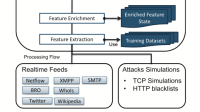
Aerospace & Defense Tech Briefs
A Formal Model of the Attack Surface of a Software System
Sensing Technology
IoT Threat Protection Is a Shared Ecosystem Responsibility
Tech Briefs
A ‘Smarter’ Way to Protect an Electric Grid
Tech Briefs
Software for Managing Distributed Real-Time Data
Electronics & Sensors INSIDER
This Chip Safeguards User Data While Enabling Efficient Computing on a Smartphone
Tech Briefs
Streaming Software Speeds Apps
Tech Briefs
Open Software Options for Automation
Sensor Technology
The Industrial Nervous System: IIoT and PLCs
Medical Design Briefs
From the Editor - More Connected Devices Means More Cyberattacks

Air Force Research Laboratory Technology Horizons
A Concept for Information Extraction From Remote Wireless Sensor Networks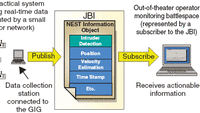
Aerospace & Defense Tech Briefs
Software Virtual Networks Integrate Training and Operation of Wireless Net-Centric Warfare Systems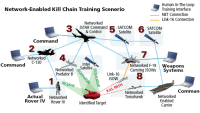
Aerospace & Defense Tech Briefs
Adamant: A Soon-to-be Open Source, Mission-Critical Flight Software Framework Written in Ada

Aerospace & Defense Tech Briefs
Future-Proofing the Tactical Edge: Converging AI, Edge Processing, and Hybrid Cloud for Modern Battlefield Operations
Software Tech Briefs
Cloud Computing for Science Data Processing in Support of Emergency Response
Aerospace & Defense Tech Briefs
The Next Generation of Mission-Critical Communications Infrastructure is Here
Aerospace & Defense Tech Briefs
Revolutionizing Electronic Warfare: Unleashing the Power of High-Performance Software-Defined Radios

Tech Briefs
Designing Application Software for DSP Chips

Defense INSIDER
Special Forces Get a Small, Powerful Cyber Support Device
Photonics & Imaging Technology
Total Versatility: Flexible Test Station With a Cobot and Camera
Overview
This document presents a comprehensive study on a secure and efficient implementation of instruction-set randomization (ISR) aimed at defending against code-injection attacks, a prevalent form of security threat. The authors propose a method that utilizes the Advanced Encryption Standard (AES) for randomizing the instruction set of applications, thereby creating a unique execution environment for each instance of the application. This approach ensures that any injected code, which an attacker cannot predict due to the randomization, will be invalid and unable to execute.
The implementation is designed to address both security and practicality. It dynamically generates encryption keys when the program is loaded, eliminating the need to store keys on disk, which enhances security. Each execution of the application uses a different key, further complicating potential attacks. The ISR mechanism is robust, as it only allows code from the original application to execute, effectively blocking any unauthorized code from running.
To validate the effectiveness of their implementation, the authors conducted tests by seeding various known vulnerabilities into popular server applications and attempting to exploit them. The ISR implementation successfully blocked all attempts to exploit these vulnerabilities, demonstrating its effectiveness in real-world scenarios.
In terms of practicality, the authors highlight that their ISR implementation does not rely on emulation or hardware extensions, but instead employs a software dynamic translation (SDT) system. Performance measurements indicated that the runtime overhead of the ISR was modest, with a 17% increase for SPEC CPU2000 benchmarks, 5-10% for a domain name server, and 2-15% for a web server. The space overhead was also deemed reasonable, with the disk image of a protected web server being 77% larger than its unprotected counterpart.
The document also discusses the relevance of ISR in embedded systems, which often lack memory management hardware. Given the increasing connectivity of embedded systems in critical services, the authors argue that an efficient software-based ISR could be particularly beneficial, although challenges related to size constraints remain.
In summary, this paper outlines a significant advancement in security against code-injection attacks through a practical and effective ISR implementation, leveraging AES for strong encryption and demonstrating its efficacy through rigorous testing.
Top Stories
INSIDERDefense
 New Raytheon and Lockheed Martin Agreements Expand Missile Defense Production
NewsAutomotive
 Ford Announces 48-Volt Architecture for Future Electric Truck
INSIDERManufacturing & Prototyping
 Active Strake System Cuts Cruise Drag, Boosts Flight Efficiency
ArticlesTransportation
 Accelerating Down the Road to Autonomy
INSIDERMaterials
 How Airbus is Using w-DED to 3D Print Larger Titanium Airplane Parts
Road ReadyTransportation

Webcasts
Electronics & Computers
 Cooling a New Generation of Aerospace and Defense Embedded...
Power
 Battery Abuse Testing: Pushing to Failure
Connectivity
 A FREE Two-Day Event Dedicated to Connected Mobility
Automotive
 Quiet, Please: NVH Improvement Opportunities in the Early Design Cycle
Transportation
 Advantages of Smart Power Distribution Unit Design for Automotive &...
Aerospace
 Sesame Solar's Nanogrid Tech Promises Major Gains in Drone Endurance