




Laboratory Test Requirements for Marine Shock Isolation Seats
Establishing practical testing procedures, instrumentation system guidance, data processing requirements, and test criteria to demonstrate the effectiveness of a passive seat in reducing simulated wave impact loads in a laboratory before installation in a high-speed planing craft.

This research provides preliminary guidance for laboratory testing of marine shock isolation seats. The purpose of the test is to demonstrate the effectiveness of a passive seat in reducing simulated wave impact loads in a laboratory before installation in a high-speed planing craft.
Small craft that operate at high speeds in rough seas subject the crew and passengers to wave impacts that may cause extreme discomfort. Craft designers therefore often include shock isolation seats to mitigate these negative effects. Current design practice is to install seats that employ springs and dampers (i.e., shock absorber) or leaf-spring assemblies as protection mechanisms. They are referred to as passive seats because the spring-damper assembly responds to individual wave impacts with no active elements that change in real time to adapt to the environment.
Spring-damper assemblies are also employed as protection mechanisms on land vehicles (e.g., tractors, trucks, automobiles, buses) and on-board larger ships for mine blast protection. Experience has demonstrated that dynamic environments are different, and that seats designed for land vehicle or mine blast applications may not protect against the unique characteristics of wave impacts on small highspeed craft. Seats have been installed in craft only to find out during subsequent seakeeping trials that they provide little to no protection or amplify base input motions. There is, therefore, a need to provide guidance on how to simulate these unique wave impacts in a laboratory test that will demonstrate the mitigation performance of passive shock isolation seats prior to installation in a high-speed craft.
High-speed craft motions include all six degrees of freedom: three translational (i.e., heave, surge, sway) and three rotational (i.e., pitch, roll, and yaw). During severe wave impacts in head seas the largest accelerations are in the vertical (i.e., heave) direction, but the other response degrees of freedom are just as important for people. Feedback from personal experiences indicates that any force out of plane with the vertical axis of standing or sitting that induces body torque or bending can be just as punishing as the vertical shock input. Simulation of fore-aft accelerations during a laboratory test is recommended herein as a test option achieved by an angle insert below the seat. Specific guidance for required off-axis testing (i.e., not just vertical testing) will be included in future revisions as data becomes available.
This guide is applicable to shock isolation seats used in high-speed planing craft. The test criteria presented herein are intended for planing craft ranging from 7-meters to 30-meters in length. The test procedures are intended only for passive seats with no active sensors or mechanisms for real-time adaptation to the dynamic environment, and no use of the occupants’ legs to mitigate an impact. In addition to protection mechanisms, shock isolation seats universally offer ergonomic features that provide differing degrees of comfort. This test standard addresses only the protection characteristics of seats; seat ergonomics is not addressed.
This work was performed by Michael R. Riley, Kelly D. Haupt, Dr. H. C. Neil Ganey, and Dr. Timothy W. Coats for the Naval Surface Warfare Center. For more information, download the Technical Support Package (free white paper). NSWC-0004
This Brief includes a Technical Support Package (TSP).

Laboratory Test Requirements for Marine Shock Isolation Seats
(reference NSWC-0004) is currently available for download from the TSP library.
Don't have an account?
More From SAE Media Group
Aerospace & Defense Tech Briefs
Inter-Laboratory Combat Helmet Blunt Impact Test Method Comparison
Aerospace & Defense Tech Briefs
Waveform Synthesis for Shock Response Spectrum Replication, Applied to Ground Vehicle Component Testing
Aerospace & Defense Tech Briefs
Process for Testing Aeromedical Equipment
Automotive Engineering
Tenneco Opens Engineering, Simulation Center in Poland
Aerospace Manufacturing and Machining INSIDER
Virtual Flight-Test Campaign Paving Way for A321XLR’s First Flight
Tech Briefs
Facility Focus: Georgia Tech Research Institute
Aerospace & Defense Tech Briefs
Blast Mitigation Seat Testing
Tech Briefs
Facility Focus: Army Test and Evaluation Command
NASA Spinoff
Shuttle Tire Sensors Warn Drivers of Flat Tires
Aerospace & Defense Tech Briefs
Confidence Through Testing: How to Design a Practical Structural Test Program
Automotive Engineering
Nissan Opens New Vehicle-Safety Lab in Michigan
Automotive Engineering
Soft Tests for Autonomous Vehicles
Aerospace & Defense Tech Briefs
Testing EMI Materials for Battlefield Applications

Aerospace Manufacturing and Machining
Does Your Coating Thickness Meet Spec?
Tech Briefs
New Approach to Reducing EV Battery Testing Time
Aerospace & Defense Tech Briefs
Multi-Agent RF Propagation Simulator

Off-Highway Engineering
Transmission Talk: Eaton Discusses Its Portfolio of Commercial Gearboxes
Tech Briefs
Foot Pedal Controller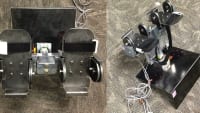


Automotive Engineering
Autonomous Vehicles Present Passive-Safety Challenges
Overview
The document titled "Laboratory Test Requirements for Marine Shock Isolation Seats" (NSWCCD-80-TR-2015/010) is a technical report published by the Naval Surface Warfare Center Carderock Division on May 30, 2015. It serves as a comprehensive guide for the testing and evaluation of marine shock isolation seats, which are critical for ensuring the safety and comfort of personnel in naval vessels subjected to harsh marine environments and shock loads.
The report covers the period from June 2014 to February 2015 and outlines the necessary laboratory test requirements that should be adhered to when assessing the performance of these seats. It emphasizes the importance of shock isolation in protecting occupants from the potentially harmful effects of sudden impacts and vibrations that can occur during naval operations.
Key components of the report include detailed test procedures and specifications that can be referenced in procurement documents. These specifications are designed to standardize testing methods, ensuring consistency and reliability in the evaluation of shock isolation seats. The report aims to provide a framework that can be utilized by manufacturers and procurement agencies to ensure that the seats meet the required safety and performance standards.
The document also highlights the significance of rigorous testing in the development and selection of marine shock isolation seats, as these seats play a vital role in enhancing crew survivability and operational effectiveness. By establishing clear testing protocols, the report seeks to facilitate the procurement of high-quality seats that can withstand the rigors of marine environments.
Overall, this technical report is an essential resource for stakeholders involved in the design, manufacturing, and procurement of marine shock isolation seats. It not only outlines the necessary testing requirements but also underscores the critical role these seats play in ensuring the safety and well-being of personnel aboard naval vessels. The report serves as a foundational document that can guide future research and development efforts in this area, ultimately contributing to improved safety standards in naval operations.
Top Stories
INSIDERDefense
 New Raytheon and Lockheed Martin Agreements Expand Missile Defense Production
NewsAutomotive
 Ford Announces 48-Volt Architecture for Future Electric Truck
INSIDERManufacturing & Prototyping
 Active Strake System Cuts Cruise Drag, Boosts Flight Efficiency
ArticlesTransportation
 Accelerating Down the Road to Autonomy
INSIDERMaterials
 How Airbus is Using w-DED to 3D Print Larger Titanium Airplane Parts
Road ReadyTransportation

Webcasts
Electronics & Computers
 Cooling a New Generation of Aerospace and Defense Embedded...
Power
 Battery Abuse Testing: Pushing to Failure
Connectivity
 A FREE Two-Day Event Dedicated to Connected Mobility
Automotive
 Quiet, Please: NVH Improvement Opportunities in the Early Design Cycle
Transportation
 Advantages of Smart Power Distribution Unit Design for Automotive &...
Aerospace
 Sesame Solar's Nanogrid Tech Promises Major Gains in Drone Endurance