




Automotive Engineering - February 2015
Inside this issue
Overview
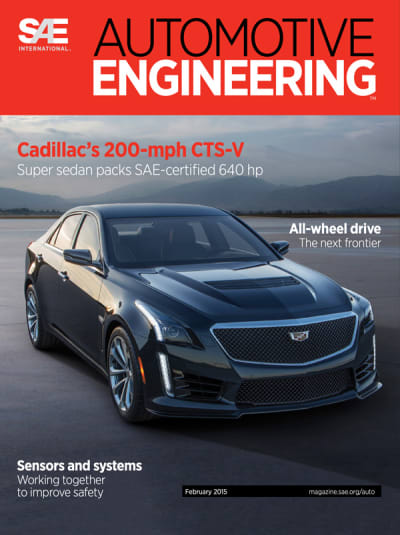
The February 2015 issue of Automotive Engineering presents a comprehensive overview of the latest trends, technologies, and innovations in the automotive industry. This edition features a blend of editorial insights, technology reports, and product briefs that highlight the ongoing evolution of vehicle design and engineering.
Editorial Insights: The issue opens with an editorial by Kevin Jost, the Editorial Director, who emphasizes the importance of staying informed in a rapidly changing industry. The editorial team, including Managing Editor Jean L. Broge and Senior Editor Lindsay Brooke, sets the tone for the issue by discussing the significance of technological advancements and their impact on automotive engineering.
Key Features:
-
Cadillac CTS-V Unveiling: The cover story showcases the third-generation Cadillac CTS-V, unveiled at the 2015 North American International Auto Show. This high-performance sedan is equipped with a supercharged 6.2-liter LT4 V8 engine, delivering an impressive 640 horsepower and 630 lb-ft of torque. The CTS-V is designed to reach speeds of 200 mph, showcasing Cadillac's commitment to performance and luxury.
-
All-Wheel Drive (AWD) Efficiency: A feature article delves into the benefits and challenges of all-wheel drive systems. While AWD enhances safety and performance, it also introduces complexities such as added weight and friction losses. The article discusses innovative solutions like clever axle disconnects and electric axles (E-axles) that are driving future developments in AWD technology.
-
Sensor Fusion in Autonomous Vehicles: Another significant topic covered is the integration of multiple sensor inputs to enhance vehicle safety systems. The article explains how sensor fusion is becoming a cornerstone of autonomous vehicle technology, providing a comprehensive understanding of the vehicle's surroundings and improving decision-making capabilities.
-
Lightweighting Challenges: The issue also addresses the trend of lightweighting in automotive design, particularly the use of aluminum and mixed-material structures. While these materials contribute to fuel efficiency and performance, they pose challenges for assembly and repair processes. The article highlights the need for innovative approaches to address these challenges as automakers increasingly adopt lightweight strategies.
Technology Reports: The technology report section features insights into various advancements in the automotive sector. Notable highlights include:
-
Fuel Cell Electric Vehicles (FCEVs): The report discusses the strategies targeting 2017 for the development of FCEVs, emphasizing the industry's push towards cleaner energy solutions.
-
3-D Tools for Collaboration: The use of 3-D modeling tools is explored, showcasing how they facilitate collaboration among development teams and streamline the design process.
-
Flexible Assembly Lines: The popularity of flexible, "invisible" assembly lines is examined, highlighting their role in improving manufacturing efficiency and adaptability.
Product Briefs: The product briefs section introduces several innovative technologies and solutions:
-
MapleSim 7: The latest release of MapleSim from Maplesoft enhances modeling and simulation capabilities, allowing engineers to explore designs and manage custom component libraries more effectively.
-
Aluminum Cooling Solutions: Dana Holding Corp. presents new aluminum cooling technology for electric and hybrid vehicles, designed to optimize heat transfer in power electronics. This technology addresses the high-heat demands of electrified vehicles while maintaining a compact and lightweight design.
Industry Trends: The issue also touches on broader industry trends, including the regulatory push for cleaner transportation solutions and the growing consumer demand for enhanced connectivity and entertainment features in vehicles. These megatrends are shaping the future of automotive engineering, prompting manufacturers to innovate and adapt to changing market expectations.
Conclusion: Overall, the February 2015 issue of Automotive Engineering provides a rich tapestry of information, showcasing the dynamic nature of the automotive industry. From high-performance vehicles like the Cadillac CTS-V to advancements in sensor technology and lightweight materials, the issue highlights the critical developments that are driving the future of automotive engineering. As the industry continues to evolve, staying informed and engaged with these trends will be essential for engineers and stakeholders alike.
Features
-
Articles
2015 F-150 Aluminum Body Creates Challenge for Auto Body Shops
Regulars
-
Global Vehicles
-
Technology Reports
3-D Tools Help Development Teams Collaborate
-
Product Briefs
Aluminum Cooling Solutions for EV Power Electronics
Modeling and Simulation Platform
High-Current Chokes for 48-V Systems
LIN Family for In-Vehicle Networking
Book Focuses on Use of CAE in Analysis of Automotive Composites
Electric Vehicle Interface Controller
Actuator Sensor Manipulation Box
Stories
-
News
3M, GM Collaborate on Aftermarket Adhesive for Multi-Material Structures
SAE Committee Busy Developing Standards to Confront the Cybersecurity Threat
Mercedes-Benz Debuts 'Car of the Future' at CES
Toyota Announces Access to Fuel-Cell Patents at CES
Book Offers Engineering Trends of 2014 Concept Cars, 2015 New Passenger Cars
Audi A3 Sportback E-Tron Swells VW’s Plug-In Hybrid Choices
Most Powerful Production Mini Shows in Detroit
Johnson Controls Unveils New Start-Stop Battery System
2016 Toyota Tacoma Debuts at 2015 NAIAS
Shelby Cobra Puts Sporty Face on 3-D Printing Technology
Maruti Suzuki Refines Swift Engine for 10% FE Gain
Infiniti Q60 Concept Previews Next Coupe
High-Performance Otto-To-Atkinson V8 Edition of Lexus GS Introduced at NAIAS
Tech Mahindra Launches Aftermarket Platform for Predictive Maintenance
2015 Chrysler 300 Gets Upgrades
Taking Hydraulics and Weight out of Active Aerodynamics
KSPG Automotive Is on the Fast Track Globally
Nissan Arms Its 2016 Titan with Diesel V8, HD Capability
SAE Eye on Engineering Quick Take: NAIAS Begins
2015 Mondeo Launch Shows Flexibility, Challenges of One Ford Strategy
Top Stories
INSIDERManufacturing & Prototyping
 How Airbus is Using w-DED to 3D Print Larger Titanium Airplane Parts
INSIDERManned Systems
 FAA to Replace Aging Network of Ground-Based Radars
NewsTransportation
 CES 2026: Bosch is Ready to Bring AI to Your (Likely ICE-powered) Vehicle
NewsSoftware
 Accelerating Down the Road to Autonomy
EditorialDesign
 DarkSky One Wants to Make the World a Darker Place
INSIDERMaterials
 Can This Self-Healing Composite Make Airplane and Spacecraft Components Last...
Webcasts
Defense
 How Sift's Unified Observability Platform Accelerates Drone Innovation
Automotive
 E/E Architecture Redefined: Building Smarter, Safer, and Scalable...
Power
 Hydrogen Engines Are Heating Up for Heavy Duty
Electronics & Computers
 Advantages of Smart Power Distribution Unit Design for Automotive...
Unmanned Systems
 Quiet, Please: NVH Improvement Opportunities in the Early Design...
