




The GE T901 Will Be the U.S. Army’s Next Gen Helicopter Engine
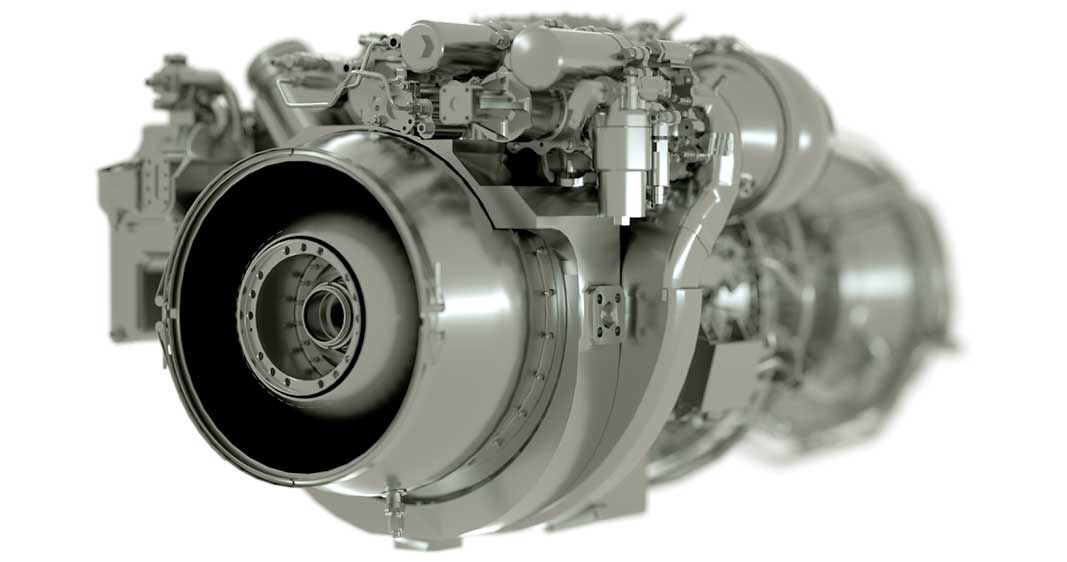
While GE Aviation ’s T700 turboshaft engine has powered the U.S. Army ’s Boeing AH-64 Apache attack helicopters and Sikorsky UH-60 Black Hawk utility helicopters for more than 46 years, the U.S. Army will replace the T700 with GE Aviation’s fully modular T901-GE-900 engine as part of the Engineering and Manufacturing Development (EMD) phase of the U.S. Army’s Improved Turbine Engine Program (ITEP).
With the new T901 engine, Evendale, Ohio-based GE Aviation, a subsidiary of General Electric, chose to maintain certain design aspects of the T700 engine; namely, a “single-spool” core architecture. The choice to use a single spool – a combination of engine compressor and high-pressure turbine – and limit the number of rotating assemblies within the engine was to maintain low cost, reliability, and maintainability while allowing for growth and reduced life-cycle costs.
According to GE, the T700 engine accumulated more than 100 million flight hours. Over the lifetime of the T700 family, GE doubled the power of derivative engines and reduced its cost to the government by 50 percent through continuous incremental upgrades and technology advancements.
GE plans to do the same with the T901 - the modularity allows for maintainers to swap out parts of the engine in the field and travel with fewer full-sized spare engines, simplifying logistical footprints and supply lines. It also allows for the potential of increased power and efficiency though lower cost incremental improvements to engine modules, which GE sees as a significant advantage to meet the Army’s Future Vertical Lift (FVL) requirements.
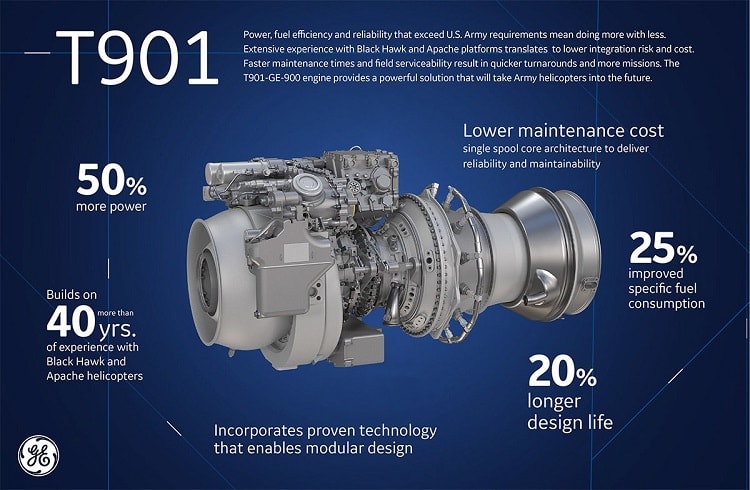
The U.S. Army expects the ITEP engine to be a drop-in replacement for the T700. The service also expects the engine to meet Future Attack Reconnaissance Aircraft requirements for FVL.
GE’s T901 was selected over Advanced Turbine Engine Company’s (ATEC’s) dual-spool T900. ATEC is a joint venture between Honeywell and United Technologies’ Pratt & Whitney military engines unit.
“We are honored to be chosen by the Army to continue powering their Black Hawks and Apaches for decades to come,” says Tony Mathis, president and CEO of GE Aviation’s military business. “We’ve invested in the resources and infrastructure to execute immediately, and our team is ready to get to work on delivering the improved capabilities of the T901 to the warfighter.”
Additive Manufacturing for Designers: A Primer
GE has invested $9 billion in maturing technologies applicable to the T901 and more than $300 million to develop and test turboshaft-specific technologies. Additionally, GE has invested more than $10 billion in their supply chain over the past decade, including expanding its additive manufacturing (AM) production capabilities to prepare for the additional AM components in the T901. The engine will also incorporate advanced hot section materials such as Ceramic Matrix Composites (CMCs).
William Kucinski is content editor at SAE International, Aerospace Products Group in Warrendale, Pa. Previously, he worked as a writer at the NASA Safety Center in Cleveland, Ohio and was responsible for writing the agency’s System Failure Case Studies. His interests include literally anything that has to do with space, past and present military aircraft, and propulsion technology.
Contact him regarding any article or collaboration ideas by e-mail at
More From SAE Media Group
Aerospace & Defense Tech Briefs
GE Aviation Delivers Improved Turbine Engine During U.S. Army Preliminary Design Review
Aerospace & Defense Tech Briefs
Sikorsky-Boeing’s FVL Contender Takes Flight
Aerospace & Defense Tech Briefs
Boeing to Modernize Spanish Chinook Fleet with Autonomous-Ready Avionics and Flight Control Systems

Aerospace & Defense Tech Briefs
Sikorsky, Boeing Debut Future Vertical Lift Dual-Rotor Design with SB>1 DEFIANT Helicopter
Aerospace & Defense Tech Briefs
Sikorsky’s Autonomous Black Hawk Helicopter Takes Flight
Aerospace & Defense Tech Briefs
SES to Outfit Sikorsky UH-60A Black Hawk Helicopters with Unitech Composites Weapons Pylons
Aerospace & Defense Tech Briefs
Lockheed Martin’s Next-Gen, 360-Degree Vision System Flies on the Bell V-280 Valor
Aerospace & Defense Tech Briefs
Ceramic Matrix Composites in Aircraft Engines Projected to Double over Five Years, Stratview Research Predicts
Aerospace & Defense Tech Briefs
Bell V-280 Valor, V-247 Vigilant Will Be Engined by Rolls-Royce
Aerospace & Defense Tech Briefs
AIA Predicts Flying Air Taxis, Supersonic Air Travel, and Space Industry for 2050
Aerospace & Defense Tech Briefs
Dart Aerospace’s Latest Emergency Float System Receives Certification in the U.S. and Europe
Aerospace INSIDER
Army Delivers First T901 ITEP Engines for FARA Prototype Helicopters
Aerospace & Defense Tech Briefs
Air Force Begins 3D Printing Nonstructural Aircraft Parts
Aerospace & Defense Tech Briefs
Attack Reconnaissance Helicopter
Aerospace & Defense Tech Briefs
Parker Aerospace and GKN Aerospace to Develop Passive Cooling Solutions for Next-Generation Aircraft Engines
Aerospace & Defense Tech Briefs
MTSI’s Latest Project Gives Fixed-Wing Aircraft Vertical Cargo Lift Capabilities
Aerospace & Defense Tech Briefs
Light Attack Reconnaissance Helicopter Secures Vertical Lift Dominance
Aerospace & Defense Tech Briefs
Airbus Helicopters VSR700 Makes First Fully Autonomous Flight
Aerospace & Defense Tech Briefs
Vertical Flight Society Applauds EVTOL Innovation, Bell Nexus UAM Concept
Aerospace & Defense Tech Briefs
Poland’s PGZ to Collaborate on New Leonardo Attack Helicopter
Aerospace & Defense Tech Briefs
Curtiss-Wright Black Boxes Receive European Approval
Aerospace & Defense Tech Briefs
New Boeing Facility Will Improve V-22 Quality, Safety
Aerospace & Defense Tech Briefs
Phase Three of DARPA’s ALIAS Aircraft Automation System Continues
Aerospace & Defense Tech Briefs
GE Aviation and DM3D to Ramp up 3D-Printed Fan Blade Production for GE9X Engine
Aerospace & Defense Tech Briefs
BendixKing and Airwork Are Developing Cockpit Upgrades for the Often Overlooked Small- and Medium-Sized Helicopter Market
Aerospace & Defense Tech Briefs
Future Vertical Lift Aircraft
Automotive Engineering
Subaru’s New ‘Souped Up’ Vehicle Is a Bell Helicopter
Aerospace & Defense Tech Briefs
First Airbus Helicopters H160 Takes Flight
Aerospace & Defense Tech Briefs
Gaming Tech Helps Apache Maintainers Reduce Training Time
Transcript
00:00:07 You can't manufacture trust. Nearly 40 years ago the army needed a more survivable maintainable better performing helicopter engine ge answered the call our engines powered every Blackhawk and Apache mission since 1979 through every imaginable scenario every conceivable environment abroad and at home we didn't just deliver an engine we enabled four decades of mission success for decades improving adapting gaining invaluable insight and GE is ready to answer the call again from the company who engineered the Army's most proven helicopter engines comes the all-new t 901 the result of unparalleled insight intelligently designed from four decades of experience to be the last thing on a pilot's mind because designing the future demands you understand the past.
00:01:22 Trust is a manufactured it's earned.
Top Stories
NewsSensors/Data Acquisition
 Microvision Aquires Luminar, Plans Relationship Restoration, Multi-industry Push
INSIDERRF & Microwave Electronics
 A Next Generation Helmet System for Navy Pilots
INSIDERWeapons Systems
 New Raytheon and Lockheed Martin Agreements Expand Missile Defense Production
NewsAutomotive
 Ford Announces 48-Volt Architecture for Future Electric Truck
INSIDERAerospace
 Active Strake System Cuts Cruise Drag, Boosts Flight Efficiency
ArticlesTransportation

Webcasts
Aerospace
 Cooling a New Generation of Aerospace and Defense Embedded...
Energy
 Battery Abuse Testing: Pushing to Failure
Power
 A FREE Two-Day Event Dedicated to Connected Mobility
Automotive
 Quiet, Please: NVH Improvement Opportunities in the Early Design Cycle
Electronics & Computers
 Advantages of Smart Power Distribution Unit Design for Automotive &...
Unmanned Systems
 Sesame Solar's Nanogrid Tech Promises Major Gains in Drone Endurance