




Airbus Helicopters VSR700 Makes First Fully Autonomous Flight

The Airbus Helicopters VSR700 demonstrator – a light military tactical unmanned aerial system (UAV) developed by Airbus Helicopters SAS (formerly Eurocopter) of Marignane, France and Paris-based Naval Group – took off for a fully unmanned autonomous flight at the Istres-Le Tubé military air base northwest of Marseille , France.
The flight established compliance with demanding regulatory and safety systems necessary for future unmanned flight in France. During the exercise the VSR700 demonstrator performed a 30-minute flight, successfully executing a variety of flight patterns before landing in an autonomous mode. The UAV was piloted and monitored from the ground station located at the base.
The Airbus Helicopters has been operating the VSR700 – which stands for “700 kilogram Vertivision Surveillance Rotorcraft” – autonomously with a safety pilot onboard since May 2017 as part of its accelerated development program.

The VSR700 is light, single-engine, diesel-powered helicopter based on the civil Cabri G2 developed by Hélicoptères Guimbal , based in Aix-en-Provence, France. The new VSR700 solution is tailored to the new medium-sized frigate requirements of the French Navy.
The payload of around 250 kg is intended for optical reconnaissance instruments and radar and the diesel engine has been fine-tuned to military and naval requirements.
Additionally, the automatic flight control systems have been developed to meet the new regulatory standards for this new type of critical operational capability.
The UAV has an endurance of around 8 hours at 100 nautical miles. The system will initially offer extended surveillance capabilities for navies, allowing them to preserve manned helicopter flights for critical missions.
“The Earth’s curvature means a frigate can survey an area of about 100 km,” says Régis Antomarchi, who heads the VSR700 program. “With the VSR700, this radius is multiplied many times over.” Antomarchi adds: “Ship-borne UAVs are already available, but they are either lightweight, and therefore not powerful enough to carry the necessary instruments, or they are relatively large, making operation more complex. The VSR700 fills this gap.”
Users will benefit from the system’s low operational cost thanks to its proven civil certified Cabri G2 platform and its low consumption diesel engine. The ideal size, it is designed to complement manned helicopters, without replacing them, on ships ranging from small corvettes to major warships.
The prototype will be rolled out in 2019.
William Kucinski is content editor at SAE International, Aerospace Products Group in Warrendale, Pa. Previously, he worked as a writer at the NASA Safety Center in Cleveland, Ohio and was responsible for writing the agency’s System Failure Case Studies. His interests include literally anything that has to do with space, past and present military aircraft, and propulsion technology.
More From SAE Media Group
Aerospace & Defense Tech Briefs
MTSI’s Latest Project Gives Fixed-Wing Aircraft Vertical Cargo Lift Capabilities
Aerospace & Defense Tech Briefs
Boeing to Modernize Spanish Chinook Fleet with Autonomous-Ready Avionics and Flight Control Systems
Aerospace & Defense Tech Briefs
Curtiss-Wright Black Boxes Receive European Approval
Aerospace & Defense Tech Briefs
Sikorsky’s Autonomous Black Hawk Helicopter Takes Flight
Aerospace & Defense Tech Briefs
NASA and AeroVironment Are Building a Helicopter for Mars
Aerospace & Defense Tech Briefs
Like a Good Neighbor, Impossible Aerospace Flew over to a Nearby Construction Fire to Help Locate Hotspots for First Responders
Aerospace & Defense Tech Briefs
Bell V-280 Valor, V-247 Vigilant Will Be Engined by Rolls-Royce
Aerospace & Defense Tech Briefs
Transport Canada Grants Astro Aerospace a Flight Test Certificate for Autonomous Urban Air Mobility Vehicle
Tech Briefs
Anti-Phase Noise Suppression Rotor Technologies
Aerospace & Defense Tech Briefs
Lockheed Martin’s Next-Gen, 360-Degree Vision System Flies on the Bell V-280 Valor
Aerospace & Defense Tech Briefs
MUSHER Demonstrates Manned-Unmanned Aircraft Teaming Applications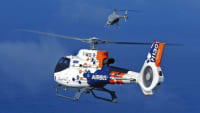
Aerospace & Defense Tech Briefs
CityAirbus Urban Air Mobility Vehicle Completes First Flight
Aerospace & Defense Tech Briefs
First Airbus Helicopters H160 Takes Flight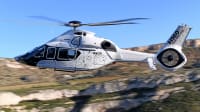
Aerospace & Defense Tech Briefs
LIFT Aircraft Unveils Personal Multirotor Aircraft for Experiential Entertainment
Aerospace & Defense Tech Briefs
Paterson Composites to Build Components for Astro Aerospace Autonomous Passenger Drone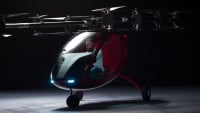
Aerospace & Defense Tech Briefs
Boeing’s CAV Makes First Outdoor Flight
Aerospace & Defense Tech Briefs
Dart Aerospace’s Latest Emergency Float System Receives Certification in the U.S. and Europe
Aerospace & Defense Tech Briefs
Sikorsky-Boeing’s FVL Contender Takes Flight
Aerospace & Defense Tech Briefs
Poland’s PGZ to Collaborate on New Leonardo Attack Helicopter
Aerospace & Defense Tech Briefs
Textron Systems, Textron Aviation Defense Demonstrate Simulated Manned-Unmanned Teaming Capability
Aerospace & Defense Tech Briefs
Honeywell Targets Urban Air Mobility Market with New Hybrid Turboshaft Engine
Aerospace & Defense Tech Briefs
Impossible Aerospace US-1 Makes Long-Distance Flight over Nevada Salt Flats
Aerospace & Defense Tech Briefs
Raytheon, UTC Merger Will Direct $8B R&D Budget Toward Hypersonics, Cybersecurity, AI, and Next-Gen Connected Aircraft
Aerospace & Defense Tech Briefs
Vertical Flight Society Applauds EVTOL Innovation, Bell Nexus UAM Concept
Aerospace & Defense Tech Briefs
Sikorsky, Boeing Debut Future Vertical Lift Dual-Rotor Design with SB>1 DEFIANT Helicopter
Aerospace & Defense Tech Briefs
Martin UAV VTOL Unmanned Aircraft Taps Persistent Systems Wave Relay Data Link Technology
Aerospace & Defense Tech Briefs
Jetoptera, GE Aviation Collaborate On, Demonstrate Hover with Fluidic Propulsion
Aerospace & Defense Tech Briefs
Airbus Zephyr S Breaks World Flight Endurance Record During Maiden Flight
Aerospace & Defense Tech Briefs
Deloitte Issues Report on Viability of EVTOL UAM Transportation
Aerospace & Defense Tech Briefs
Alakai Technologies Unveils the World’s First Hydrogen-Powered Urban Air Mobility Vehicle
Transcript
00:00:01 From the design of the H160, every effort was made to make it the market’s acoustic benchmark. The H160 Fenestron and the future... All available technologies were used to reduce its sound footprint: - a variable rotation speed - Blue Edge blades, which are particularly effective in in the approach phase and which remove the impulsive nature of the noise, which is the most bothersome - a Fenestron which reduces the sound level of the tail rotor, making it possible to guarantee an exceptional safety level for
00:00:42 ground operations, which is vital for a multi-mission aircraft. The Fenestron concept is valid up to 5 - 6 tons in the H160 category. New architectural constraints were therefore taken into account so that it may receive the most powerful Fenestron on the market. It took advantage of the latest technologies to guarantee a minimal sound level and ensure manoeuvrability that is worthy of its legendary ancestor, the Dauphin. Finally, it was also tilted to improve performance and ensure exceptional riding comfort at low speeds. The results are now in: the H160 offers excellent flight qualities and a sound level which currently makes it the quietest twin-engine aircraft on the market.
00:02:00 Test pilots and customers who have tried it are unanimous… Far from having had its last whirl, the Fenestron is now on the VSR700, which is derived from the Cabri by Guimbal Hélicoptères, and, in some ways, from the City Airbus concept, which is based on the use of shrouded rotors. The adventure continues…
Top Stories
NewsRF & Microwave Electronics
 Microvision Aquires Luminar, Plans Relationship Restoration, Multi-industry Push
INSIDERAerospace
 A Next Generation Helmet System for Navy Pilots
INSIDERDesign
 New Raytheon and Lockheed Martin Agreements Expand Missile Defense Production
INSIDERMaterials
 How Airbus is Using w-DED to 3D Print Larger Titanium Airplane Parts
NewsPower
 Ford Announces 48-Volt Architecture for Future Electric Truck
ArticlesAR/AI

Webcasts
Electronics & Computers
 Cooling a New Generation of Aerospace and Defense Embedded...
Automotive
 Battery Abuse Testing: Pushing to Failure
Power
 A FREE Two-Day Event Dedicated to Connected Mobility
Unmanned Systems
 Quiet, Please: NVH Improvement Opportunities in the Early Design Cycle
Automotive
 Advantages of Smart Power Distribution Unit Design for Automotive &...
Energy
 Sesame Solar's Nanogrid Tech Promises Major Gains in Drone Endurance