




Phase Three of DARPA’s ALIAS Aircraft Automation System Continues
Through the DARPA ALIAS program, Sikorsky is developing an approach it describes as pilot directed autonomy that will give operators the confidence to fly aircraft safely, reliably, and affordably in optimally piloted modes enabling flight with two, one, or zero crew on commercial and military aircraft.
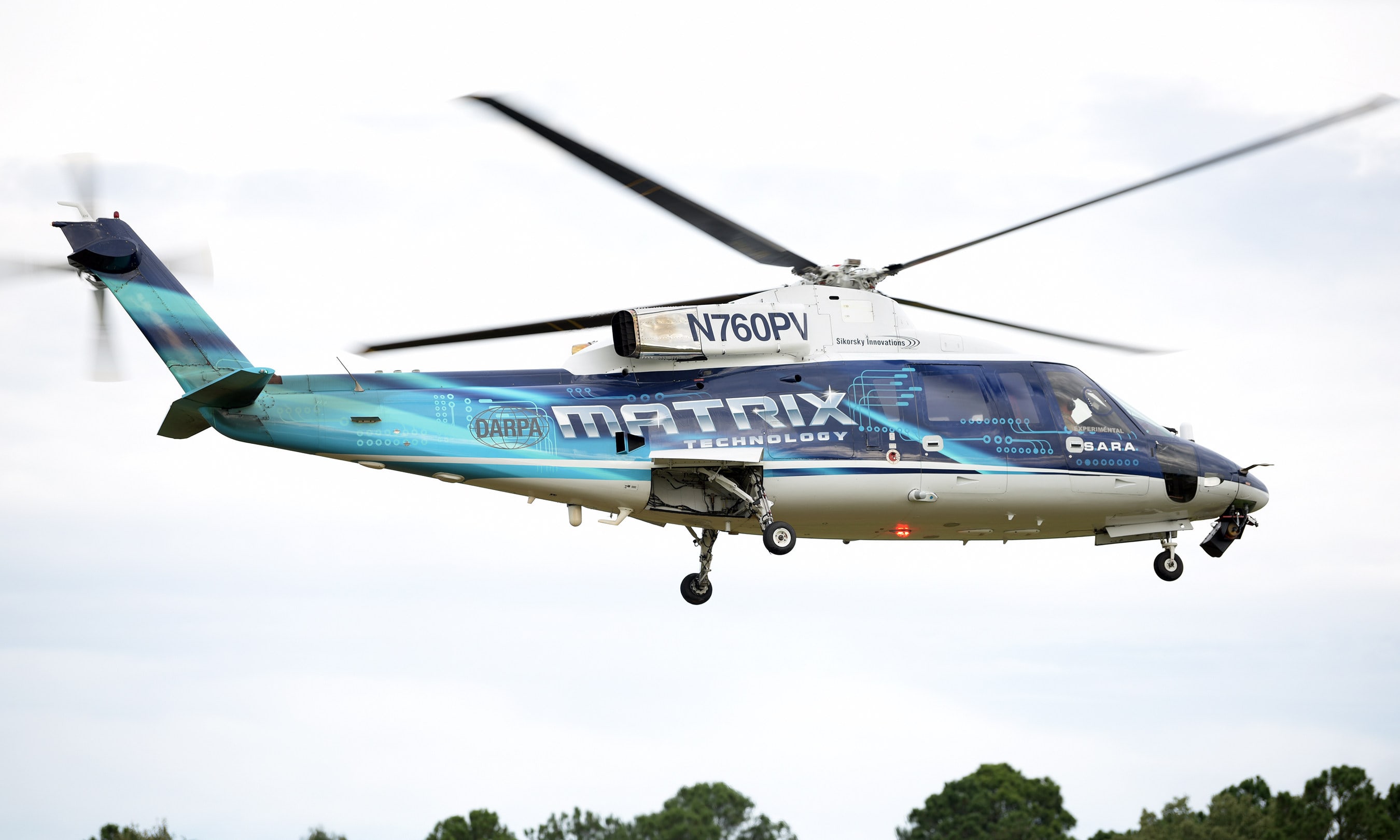
United States Army pilots directed an optionally-piloted helicopter (OPV) through a series of missions to demonstrate technology developed by Lockheed Martin Corporation subsidiary Sikorsky Aircraft and the Defense Advanced Research Projects Agency (DARPA). The series of flights marked the first time that non-Sikorsky pilots operated the Sikorsky Autonomy Research Aircraft (SARA), a modified S-76B medium-size commercial helicopter, as an OPV aircraft.
SARA, which has more than 300 hours of autonomous flight, successfully demonstrated the advanced capabilities developed as part of the third phase of DARPA's Aircrew Labor In-Cockpit Automation System (ALIAS) program. The aircraft was operated at different times by pilots on board and pilots on the ground. Sikorsky's MATRIX autonomous software and hardware, which is installed on SARA, executed various scenarios including automated takeoff and landing, LIDAR- and camera-based obstacle avoidance, LIDAR-based automatic landing zone selection, and low-level contour flying.
The Army and DARPA are working with Sikorsky to improve and expand ALIAS capabilities developed as a tailorable autonomy kit for installation in both fixed wing airplanes and helicopters. The kit consists of a tailorable, drop-in, removable system with in-cockpit machine vision, robotic components to actuate the flight controls, an advanced tablet-based user interface, speech recognition and synthesis, and a knowledge-acquisition process for adapting the automation system to an aircraft.
Developers are also working on a version of the system without robotic actuation that instead aims to support the pilot by tracking aircraft physical, procedural, and mission states, increasing safety by actively updating pilot situational awareness.
Over the next few months, Sikorsky’s next steps will be to fly a twin-engine, medium-lift utility UH-60 Black Hawk helicopter equipped with ALIAS for the first time. The company is working closely with the Federal Aviation Administration to certify ALIAS and MATRIX technology so that it will be available on current and future commercial and military aircraft.

“Future vertical lift aircraft will require robust autonomous and optimally-piloted systems to complete missions and improve safety,” says Chris Van Buiten, vice president, Sikorsky Innovations. “We could not be more thrilled to welcome Army aviators to the cockpit to experience first-hand the reliability of optimally-piloted technology developed by the innovative engineers at Sikorsky and DARPA. These aviators experienced the same technology that we are installing and testing on a Black Hawk that will take its first flight over the next several months.”
“We're demonstrating a certifiable autonomy solution that is going to drastically change the way pilots fly,” says Mark Ward, Sikorsky Chief Pilot, Stratford, Conn. Flight Test Center. “We're confident that MATRIX technology will allow pilots to focus on their missions. This technology will ultimately decrease instances of the number one cause of helicopter crashes: Controlled Flight Into Terrain (CFIT).”
Through the DARPA ALIAS program, Sikorsky is developing an OPV approach it describes as pilot directed autonomy that will give operators the confidence to fly aircraft safely, reliably, and affordably in optimally piloted modes enabling flight with two, one, or zero crew. The program will improve operator decision aiding for manned operations while also enabling both unmanned and reduced crew operations.
Lockheed Martin recently won a gold Edison Award in April for the Sikorsky MATRIX technology.
William Kucinski is content editor at SAE International, Aerospace Products Group in Warrendale, Pa. Previously, he worked as a writer at the NASA Safety Center in Cleveland, Ohio and was responsible for writing the agency’s System Failure Case Studies. His interests include literally anything that has to do with space, past and present military aircraft, and propulsion technology.
Contact him regarding any article or collaboration ideas by e-mail at
More From SAE Media Group
Aerospace & Defense Tech Briefs
LIFT Aircraft Unveils Personal Multirotor Aircraft for Experiential Entertainment
Aerospace & Defense Tech Briefs
Honeywell Targets Urban Air Mobility Market with New Hybrid Turboshaft Engine
Aerospace & Defense Tech Briefs
Transport Canada Grants Astro Aerospace a Flight Test Certificate for Autonomous Urban Air Mobility Vehicle
Aerospace & Defense Tech Briefs
CityAirbus Urban Air Mobility Vehicle Completes First Flight
Aerospace & Defense Tech Briefs
Dart Aerospace’s Latest Emergency Float System Receives Certification in the U.S. and Europe
Aerospace & Defense Tech Briefs
Boeing’s CAV Makes First Outdoor Flight
Aerospace & Defense Tech Briefs
Like a Good Neighbor, Impossible Aerospace Flew over to a Nearby Construction Fire to Help Locate Hotspots for First Responders
Aerospace & Defense Tech Briefs
Deloitte Issues Report on Viability of EVTOL UAM Transportation
Aerospace & Defense Tech Briefs
Alakai Technologies Unveils the World’s First Hydrogen-Powered Urban Air Mobility Vehicle
Aerospace & Defense Tech Briefs
MTSI’s Latest Project Gives Fixed-Wing Aircraft Vertical Cargo Lift Capabilities
Aerospace & Defense Tech Briefs
Lockheed Martin and Drone Racing League Pit AI-Enabled UAS Against Human Pilots
Aerospace & Defense Tech Briefs
AIA Predicts Flying Air Taxis, Supersonic Air Travel, and Space Industry for 2050
Aerospace & Defense Tech Briefs
Vertical Aerospace Is Honeywell’s Latest Partner in the UAM Industry
Aerospace & Defense Tech Briefs
Sikorsky’s Autonomous Black Hawk Helicopter Takes Flight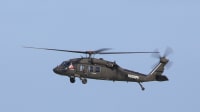
Aerospace & Defense Tech Briefs
NASA and AeroVironment Are Building a Helicopter for Mars
Aerospace & Defense Tech Briefs
Aitech Defense Will Provide Data Interface Technology for Boeing’s Unmanned MQ-25 Refueling Platform
Aerospace & Defense Tech Briefs
Sikorsky, Boeing Debut Future Vertical Lift Dual-Rotor Design with SB>1 DEFIANT Helicopter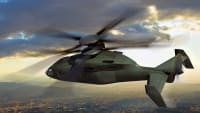
Aerospace & Defense Tech Briefs
Astro’s Elroy Urban Air Mobility Vehicle to Get a New Stablemate This Summer
Aerospace & Defense Tech Briefs
Boeing to Modernize Spanish Chinook Fleet with Autonomous-Ready Avionics and Flight Control Systems
Aerospace & Defense Tech Briefs
General Atomics Moves Toward Global RPA Flight Certification for MQ-9B SkyGuardian
Aerospace & Defense Tech Briefs
Boeing Aerospace & Autonomy Center to Focus on Designing, Building, Flying Autonomous Aircraft
Aerospace & Defense Tech Briefs
Impossible Aerospace US-1 Makes Long-Distance Flight over Nevada Salt Flats
Aerospace & Defense Tech Briefs
Air Force Tests Fully Autonomous UAS Control System
Aerospace & Defense Tech Briefs
BAE Systems Will Supply Flight Control and Target Identification Systems for Boeing’s Carrier-Based MQ-25
Aerospace & Defense Tech Briefs
Sikorsky-Boeing’s FVL Contender Takes Flight
Aerospace & Defense Tech Briefs
Lockheed Martin’s Next-Gen, 360-Degree Vision System Flies on the Bell V-280 Valor
Aerospace & Defense Tech Briefs
Boeing Unveils New Unmanned Cargo Air Vehicle Prototype
Aerospace & Defense Tech Briefs
GE Aviation’s AiRXOS Launches New Air Mobility Portfolio and Management Tools Purpose Built for the Urban Air Mobility Market
Aerospace & Defense Tech Briefs
AirMap and Skyguide Deploy Swiss National Flight Information Management System for Drones
Transcript
No transcript is available for this video.
Top Stories
NewsRF & Microwave Electronics
 Microvision Aquires Luminar, Plans Relationship Restoration, Multi-industry Push
INSIDERAerospace
 A Next Generation Helmet System for Navy Pilots
INSIDERDesign
 New Raytheon and Lockheed Martin Agreements Expand Missile Defense Production
INSIDERMaterials
 How Airbus is Using w-DED to 3D Print Larger Titanium Airplane Parts
NewsPower
 Ford Announces 48-Volt Architecture for Future Electric Truck
ArticlesAR/AI

Webcasts
Electronics & Computers
 Cooling a New Generation of Aerospace and Defense Embedded...
Automotive
 Battery Abuse Testing: Pushing to Failure
Power
 A FREE Two-Day Event Dedicated to Connected Mobility
Unmanned Systems
 Quiet, Please: NVH Improvement Opportunities in the Early Design Cycle
Automotive
 Advantages of Smart Power Distribution Unit Design for Automotive &...
Energy
 Sesame Solar's Nanogrid Tech Promises Major Gains in Drone Endurance