




Zwick Roell Provides Flexible Materials Testing over a Wide Temperature Range
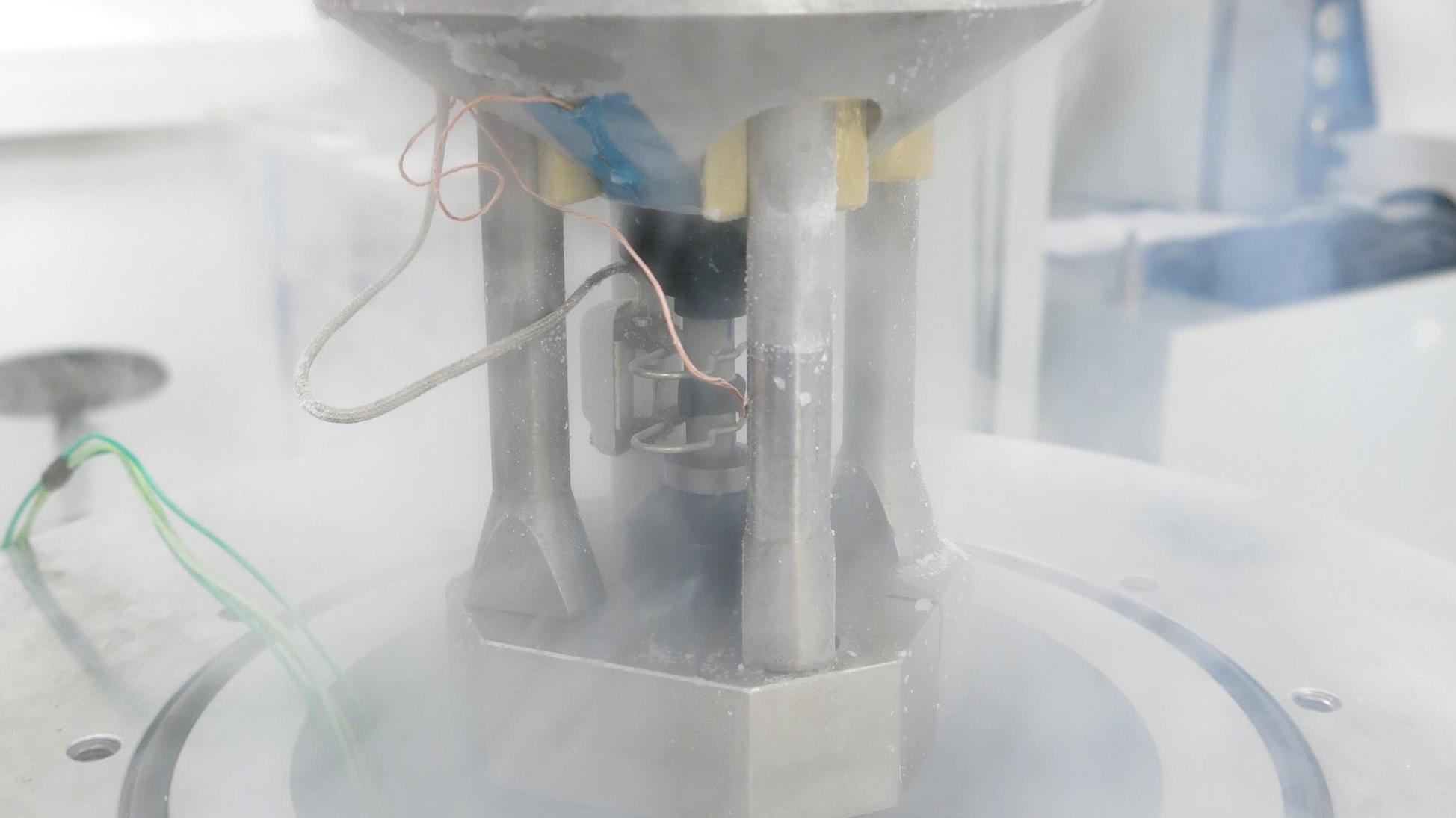
Materials research and development frequently require materials to be tested at different temperatures, in line with their eventual area of use. For aerospace materials, that could mean a wide range of operational temperatures.
To enable the tests required for development work to be performed with maximum efficiency, the Zwick Roell Group (ZwickRoell) – a global supplier of materials testing machines based out of Ulm, Germany – developed a materials testing machine that can be equipped with both a temperature chamber and a high-temperature furnace.
The ZwickRoell AllroundLine testing machine operates with an alternating current drive that requires extremely low maintenance when compared to large hydraulic drives and associated fluids. The AllroundLine attains maximum forces up to 250 kilonewtons in the tensile and compression directions and constant velocity characteristics at very low speeds.
The temperature chamber is designed for temperatures between -80°C and +300°C, but can be used down to -150°C with liquid nitrogen to simulate the below-freezing-temperatures found at commercial airline cruising heights. The high-temperature furnace operates from 200°C to 1,600°C, with is a choice between one- and three-zone versions and an air or vacuum environment. Temperature this high could reflect the temperatures that occur in and around aerospace turbines.
Strain measurement for all the above temperature ranges is handled by a non-contact laserXtens extensometer consisting of two measuring heads with digital cameras and laser light sources mounted on motorized carriages. This laser-optical method eliminates the need for material specimen marking in tensile tests, and instead uses light-generated virtual gauge marks on the material, the movement of which is tracked in real time.
This testing envelope is suitable for a wide variety of applications, such as tensile, compression, and flexure testing to determine aerospace material heat resistance, re-crystallization temperature, and thermo-elastic behavior.
Flexible testing stretched beyond original limits
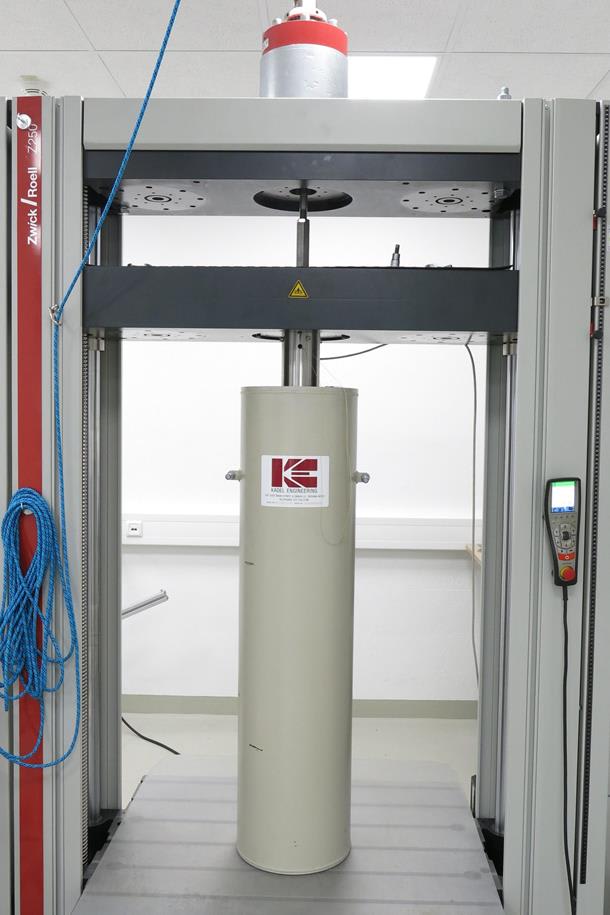
Among the organizations taking advantage of this flexible testing system is KRP Mechatec GmbH of Munich, Germany. KRP Mechatec uses a ZwickRoell AllroundLine testing machine for testing additive manufactured aluminum and titanium structures for space launch vehicles at temperatures as low as -269°C.
The liquid hydrogen fuel tanks aboard launch vehicles need to hold fuel at a stable temperature of -253°C while being subjected to extremely high loads during take-off. Additive manufacturing methods such as laser melting afford a great amount of design freedom and therefore offer huge potential for weight minimization – one of the most important issues regarding launch vehicles.
The objective of the test program at KRP Mechatec is to maximize the potential of lightweight construction for additive manufacturing while maintaining fuel tank structural integrity.
Because of the limited amount of material quantity, ZwickRoell readily helped KRP Mechatec develop a special fixture, which pushed past the original equipment’s limit of -150°C and allowed simultaneous materials testing to be performed efficiently and economically.
Tensile, compression, shear, and hole-widening tests were all performed in a cryostat pre-cooled to -196°C using liquid nitrogen and then cooled to a final temperature of -269°C with liquid helium.
William Kucinski is content editor at SAE International, Aerospace Products Group in Warrendale, Pa. Previously, he worked as a writer at the NASA Safety Center in Cleveland, Ohio and was responsible for writing the agency’s System Failure Case Studies. His interests include literally anything that has to do with space, past and present military aircraft, and propulsion technology.
Contact him regarding any article or collaboration ideas by e-mail at
More From SAE Media Group
Aerospace & Defense Tech Briefs
SAE International Extends Call for Abstracts, Seeks Submissions for AeroTech Conference
Aerospace & Defense Tech Briefs
Orbex Debuts Innovative Smallsat Launch Vehicle

Off-Highway Engineering
NASA Highlights Material and Coating Technology Ready for Commercial Applications
Aerospace & Defense Tech Briefs
SAE International Issues, Revises Technical Reports for Aerospace Engineering
Aerospace & Defense Tech Briefs
Industry Invited to Participate in AeroTech Aerospace and Defense Technical Program
Aerospace & Defense Tech Briefs
SAE International Issues First Technical Standards for Aerospace Additive Manufacturing
Off-Highway Engineering
Bosch Invested in Large-Scale Metal 3D Printing
Aerospace & Defense Tech Briefs
FAA, SAE International Focus on Engine Fire Protection System Standards for Aerospace
Aerospace & Defense Tech Briefs
Three Stages of Separation: Bidding Farewell to the Delta II Launch Vehicle
Tech Briefs
Using 3D Printing to Strengthen Jet Engines
Aerospace & Defense Tech Briefs
NASA Budget Amendment to Help Send Americans to Moon by 2024, Then Mars
Automotive Engineering
Hydrogen Storage Tank Options: Not Everything Need Look like a Sausage
Aerospace & Defense Tech Briefs
Lockheed Martin and Arconic Collaborate on 3D Printing and Advanced Aerospace Materials

Aerospace & Defense Tech Briefs
Limiting Creep in Aerospace Materials
Aerospace & Defense Tech Briefs
JAXA Launches HTV7 Unmanned Cargo Spacecraft on Resupply Mission to ISS
Aerospace & Defense Tech Briefs
Advances in Adhesive Joining of Structural Components Focus of New Book from SAE International
Tech Briefs
Nanotechnology Repairs Engine Damage in Cars
Aerospace & Defense Tech Briefs
‘First of Its Kind’ Composite Material to Help Space Vessels Travel Longer Distances
Aerospace & Defense Tech Briefs
Aircraft Maintenance Technicians Seek Simplified, Portable, Fast Aviation Eddy Current Testing
Off-Highway Engineering
Mahle Advances 3D Printing Capabilities

Aerospace & Defense Tech Briefs
Engineering an Aircraft Hydrogen Powertrain
Aerospace & Defense Tech Briefs
Generation Orbit’s GOLauncher1 Is Officially the Air Force’s X-60A Hypersonic Flight Research Vehicle
Tech Briefs
High-Temperature Ni-Based Superalloy Composition

Off-Highway Engineering
EOS Releases Four New Metal Materials for Series Additive Manufacturing
Top Stories
NewsSensors/Data Acquisition
 Microvision Aquires Luminar, Plans Relationship Restoration, Multi-industry Push
INSIDERRF & Microwave Electronics
 A Next Generation Helmet System for Navy Pilots
INSIDERWeapons Systems
 New Raytheon and Lockheed Martin Agreements Expand Missile Defense Production
NewsAutomotive
 Ford Announces 48-Volt Architecture for Future Electric Truck
INSIDERAerospace
 Active Strake System Cuts Cruise Drag, Boosts Flight Efficiency
ArticlesTransportation

Webcasts
Aerospace
 Cooling a New Generation of Aerospace and Defense Embedded...
Energy
 Battery Abuse Testing: Pushing to Failure
Power
 A FREE Two-Day Event Dedicated to Connected Mobility
Automotive
 Quiet, Please: NVH Improvement Opportunities in the Early Design Cycle
Electronics & Computers
 Advantages of Smart Power Distribution Unit Design for Automotive &...
Unmanned Systems
 Sesame Solar's Nanogrid Tech Promises Major Gains in Drone Endurance