




DARPA Subject Controls Multiple Simulated Aircraft with Brain-Computer Interface
Or, how I learned to stop worrying and love mind-controlled UAV swarms
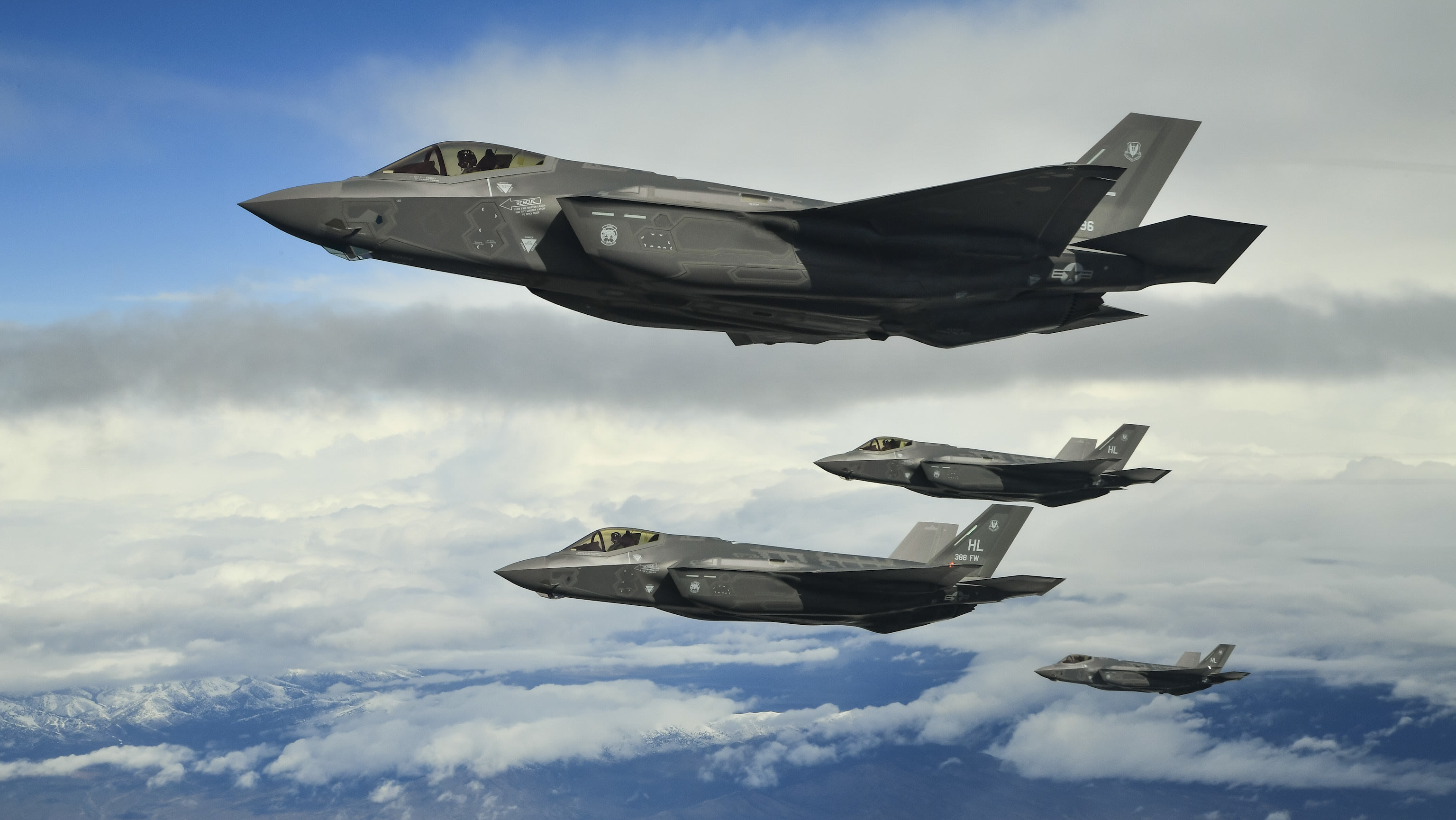
Defense Advanced Research Projects Agency (DARPA) officials confirmed that an individual equipped with an experimental brain-computer interface (BCI) was able to successfully command and control multiple simulated jet aircraft.
This latest work expanded on a joint DARPA and University of Pittsburgh Human Engineering Research Laboratories experiment from 2015 where a paralyzed individual used a BCI (in this case, a surgically-implanted microchip) connected to a flight simulator to steer a virtual Lockheed Martin F-35 Lighting II. However, this time, a paralyzed individual was able to control three aircraft of different type simultaneously.
While the complexity of increased number of aircraft is noteworthy, the most important achievement was that DARPA bioengineers enabled the operator to not only control the virtual aircraft, but to receive sensory signals from them as well – where the operator can perceive the aircrafts’ surroundings, including potential threats over the horizon.
Although the notion of mind-controlled drone swarms may seem startling and very sci-fi, DARPA has been actively pursuing BCI technology since the 1970s, with potential applications ranging from “synthetic telepathic communication” and prosthetic limb control to memory reconstruction for individuals suffering brain damage.
The news broke during an announcement at the D60 symposium in National Harbor, Maryland, which celebrated DARPA’s 60th anniversary.
William Kucinski is content editor at SAE International, Aerospace Products Group in Warrendale, Pa. Previously, he worked as a writer at the NASA Safety Center in Cleveland, Ohio and was responsible for writing the agency’s System Failure Case Studies. His interests include literally anything that has to do with space, past and present military aircraft, and propulsion technology.
Contact him regarding any article or collaboration ideas by e-mail at
More From SAE Media Group
Aerospace & Defense Tech Briefs
When It Comes to Fifth-Generation Assets, Air Force Values Virtual Training over Live Flying
Aerospace & Defense Tech Briefs
A-10C Pilots Will Get 3D-Audio to Increase Situational Awareness
Aerospace & Defense Tech Briefs
GoFly Prize Invites Innovators to Shape Future of Flight, Compete for $1.8M in Prizes
Aerospace & Defense Tech Briefs
Beyond Catch and Release
Aerospace & Defense Tech Briefs
Unleashing AI in Aviation Will Accelerate Move to Zero-Pilot Cargo and Passenger Aircraft
Aerospace & Defense Tech Briefs
Connected Aircraft Technologies Benefit Manufacturers, Airlines, and Travelers
Aerospace & Defense Tech Briefs
Industry Invited to Participate in AeroTech Aerospace and Defense Technical Program
Automotive Engineering
Airbus’ Connected Cabin Concept Is Materializing with First Round of Partnerships
Aerospace & Defense Tech Briefs
UAV Ground Control Station
Aerospace & Defense Tech Briefs
AFRL Demos Advanced Multipurpose Robotics for Aerospace
Aerospace & Defense Tech Briefs
SAE International Issues, Revises Technical Reports for Aerospace Engineering
Aerospace & Defense Tech Briefs
SAE International Extends Call for Abstracts, Seeks Submissions for AeroTech Conference
Aerospace INSIDER
Air Force Researchers Design, Build and Fly Drone in 24 Hours
Aerospace & Defense Tech Briefs
The Air Force’s New Unmanned Wingmate Completes Inaugural Flight
Aerospace & Defense Tech Briefs
Lockheed Martin’s Next-Gen, 360-Degree Vision System Flies on the Bell V-280 Valor
Aerospace & Defense Tech Briefs
L3 Makes Its C-130 Modernization Package Available to Global Operators
Aerospace & Defense Tech Briefs
Lockheed Martin Announces Latest Hypersonic Progress at Le Bourget
Aerospace & Defense Tech Briefs
Textron Systems, Textron Aviation Defense Demonstrate Simulated Manned-Unmanned Teaming Capability
Autonomous Vehicle Engineering
The Future of Automated Vehicle Cabins
Aerospace & Defense Tech Briefs
The F-35 Is Getting Life-Saving Automatic Ground Collision Avoidance Systems from the F-16
Aerospace & Defense Tech Briefs
Artificial Intelligence Could Reduce CV-22 Osprey Maintenance
Aerospace INSIDER
Anduril Completes First Semi-Autonomous Flight of CCA Prototype
Aerospace INSIDER
F-22 Pilot Controls Drone With Tablet
Aerospace & Defense Tech Briefs
NASA Crash Landing Is a Complete Success
Autonomous Vehicle Engineering
GM Announces Door-To-Door Ultra Cruise ADAS
Aerospace Manufacturing and Machining INSIDER
Small Low-Cost Engines for Drones and Collaborative Combat Aircraft
Automotive Engineering
McLaren Applied Technologies’ All-Electric, AI-Infused Vision of Formula 1 Racing
Aerospace & Defense Tech Briefs
Like a Good Neighbor, Impossible Aerospace Flew over to a Nearby Construction Fire to Help Locate Hotspots for First Responders
Aerospace & Defense Tech Briefs
Curtiss-Wright Will Provide Data Technology Support for Boeing’s MQ-25 Unmanned Air Refueling Platform
Top Stories
INSIDERManufacturing & Prototyping
 How Airbus is Using w-DED to 3D Print Larger Titanium Airplane Parts
INSIDERManned Systems
 FAA to Replace Aging Network of Ground-Based Radars
NewsTransportation
 CES 2026: Bosch is Ready to Bring AI to Your (Likely ICE-powered) Vehicle
NewsSoftware
 Accelerating Down the Road to Autonomy
EditorialDesign
 DarkSky One Wants to Make the World a Darker Place
INSIDERMaterials
 Can This Self-Healing Composite Make Airplane and Spacecraft Components Last...
Webcasts
Defense
 How Sift's Unified Observability Platform Accelerates Drone Innovation
Automotive
 E/E Architecture Redefined: Building Smarter, Safer, and Scalable...
Power
 Hydrogen Engines Are Heating Up for Heavy Duty
Electronics & Computers
 Advantages of Smart Power Distribution Unit Design for Automotive...
Unmanned Systems
 Quiet, Please: NVH Improvement Opportunities in the Early Design...
Power

Similar Stories
NewsDesign
 X-Ray Testing for Large Composites
Application BriefsSoftware
 The World’s Largest Real Time EW Test Range
INSIDERDefense
 Algorithms for Autonomous Marine Vehicles
NewsDesign

NewsDesign
 USAF Works Toward Smoother Landings, No Plane Required
INSIDERPropulsion
 DARPA Completes Key Milestone on Hypersonic Air-breathing Weapons Program