




JAXA Establishes New Aircraft Electrification Consortium
Japan’s industrial heavy-hitters join to improve electric propulsion and eliminate aerospace emissions
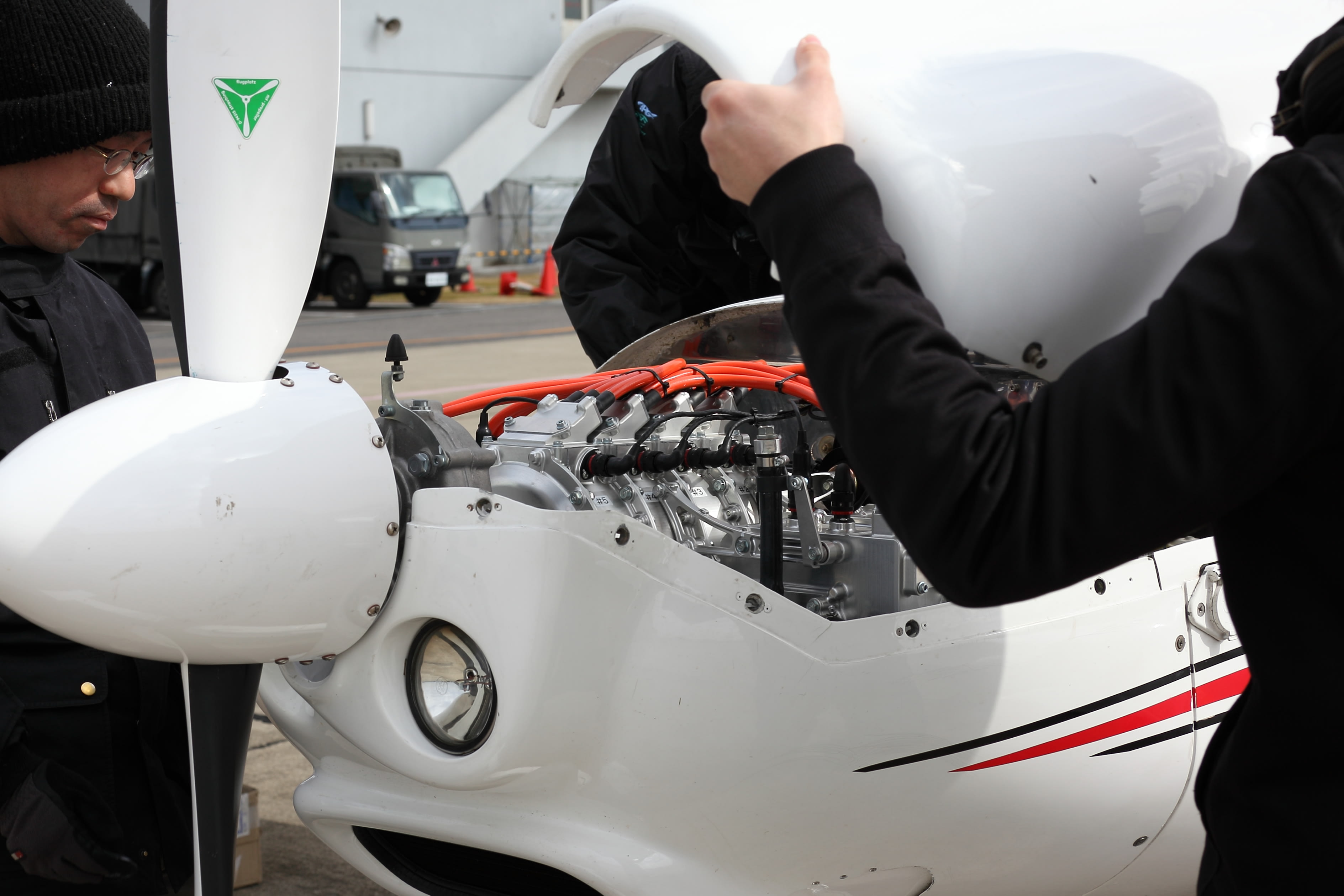
The Japan Aerospace Exploration Agency (JAXA) launched the Electrification Challenge for Aircraft (ECLAIR) consortium in collaboration with IHI Corporation ; Kawasaki Heavy Industries, Ltd. ; Subaru Corporation , Hitachi, Ltd. ; Mitsubishi Heavy Industries Aero Engines, Ltd. ; Mitsubishi Electric Corporation ; and the Japanese Ministry of Economy, Trade and Industry (METI).
Established on July 1, the ECLAIR consortium will focus on reducing greenhouse gas emissions and other negative environmental impacts of the aerospace industry by developing innovative electric technologies. The consortium will operate as an aerospace industry incubator for Japan and foster cross-industry collaboration to spur growth in the country’s aerospace sector.
While hybrid and all-electric propulsion systems in automotive vehicles are becoming commonplace, battery, inverter, and electric motors performance only recently improved to the point of incorporation in aircraft. The Next-Generation Astronautical Innovation Hub Center of the JAXA Astronautical Technology Directorate will lead the ECLAIR consortium, which will serve as an open platform where government, academia, and industry collaborate on cutting-edge electric motorization and aerospace technology innovation.
The consortium’s ultimate goal is development of emission-free aircraft or extremely low emission, purely electrical aircraft. The first steps include creating a shared vision of future electric aircraft on which to develop and improving current relevant Japanese electrical and aerospace technology.
An open forum is scheduled for December 2018 to publicize the initiatives taken by the consortium.
To ensure that the innovations that come out of the ECLAIR consortium are applied, the group will work in close cooperation with METI, which supervises Japan's aerospace industry policies. METI plans to use the consortium to raise the competitiveness of Japanese businesses which have great growth potential concerning electric motorization.
William Kucinski is content editor at SAE International, Aerospace Products Group in Warrendale, Pa. Previously, he worked as a writer at the NASA Safety Center in Cleveland, Ohio and was responsible for writing the agency’s System Failure Case Studies. His interests include literally anything that has to do with space, past and present military aircraft, and propulsion technology.
Contact him regarding any article or collaboration ideas by e-mail at
More From SAE Media Group
Aerospace & Defense Tech Briefs
Bye Aerospace’s Sun Flyer Is Now the “EFlyer”
Aerospace & Defense Tech Briefs
Airbus Zephyr S Breaks World Flight Endurance Record During Maiden Flight
Aerospace & Defense Tech Briefs
SAE International Launches Aerospace Technology Symposium at Japan Aerospace 2018
Aerospace & Defense Tech Briefs
Boeing and NASA Unveil Lightweight, Ultra-Thin, More Aerodynamic Transonic Truss-Braced Wing Concept
Tech Briefs
Propelling the Future of Sustainable Aviation
Aerospace & Defense Tech Briefs
Rolls-Royce to Work with Airframe Manufacturers, Seek Partners for EVTOL Project
Automotive Engineering
SAE International Releases New Process for Measuring Aerosols in Aircraft Exhaust
Aerospace & Defense Tech Briefs
Boeing Reports on Its Environmental Efforts
Aerospace & Defense Tech Briefs
SAE International’s Fundamentals of Electric Aircraft Takes Deep Dive on Aircraft Electrification Paradigm Shift, Innovation
Aerospace & Defense Tech Briefs
Vibration Testing NASA’s X-57 Maxwell Electric Aircraft
Off-Highway Engineering
Addressing Electromagnetic Compatibility in the Context of Aircraft Electrification
Aerospace & Defense Tech Briefs
Researchers Work to Uncover Turboelectric Propulsion’s Unknown Challenges
Aerospace & Defense Tech Briefs
SAE International Extends Call for Abstracts, Seeks Submissions for AeroTech Conference
Aerospace & Defense Tech Briefs
Rolls-Royce’s Race to Develop the World’s Fastest All-Electric Aircraft
Aerospace & Defense Tech Briefs
Air Racing Is Going Electric

Aerospace & Defense Tech Briefs
Aircraft, Engine Orders Reach $98B, Focus on Flying Farther, Faster, Greener at Farnborough Airshow
Aerospace & Defense Tech Briefs
Lockheed Martin and Arconic Collaborate on 3D Printing and Advanced Aerospace Materials

Aerospace & Defense Tech Briefs
AIA Predicts Flying Air Taxis, Supersonic Air Travel, and Space Industry for 2050
Off-Highway Engineering
Cummins and Isuzu Announce Battery-electric Truck Collaboration
Automotive Engineering
Bye Aerospace’s Solar-Electric Prototype Completes First Flight
Aerospace & Defense Tech Briefs
Battery Technology Is Still the Key Barrier to Better Urban Air Mobility
Aerospace & Defense Tech Briefs
Boeing’s CAV Makes First Outdoor Flight
Aerospace & Defense Tech Briefs
BlackBird to Purchase 110 All-Electric Bye Aerospace EFlyer Aircraft
Aerospace & Defense Tech Briefs
AVIC Subsidiary Continental Aerospace Will Power the Upcoming Diamond DA50, Expands into Electric Propulsion
Aerospace & Defense Tech Briefs
Air Mobility Innovations Take Center Stage at Aerospace Systems and Technology Conference
Aerospace & Defense Tech Briefs
Alakai Technologies Unveils the World’s First Hydrogen-Powered Urban Air Mobility Vehicle
Aerospace & Defense Tech Briefs
Industry Invited to Participate in AeroTech Aerospace and Defense Technical Program
Aerospace & Defense Tech Briefs
Hybrid Air Vehicles, Collins Aerospace, and University of Nottingham to Develop Electric Propulsion for Airlander 10
Top Stories
NewsSensors/Data Acquisition
 Microvision Aquires Luminar, Plans Relationship Restoration, Multi-industry Push
INSIDERRF & Microwave Electronics
 A Next Generation Helmet System for Navy Pilots
INSIDERWeapons Systems
 New Raytheon and Lockheed Martin Agreements Expand Missile Defense Production
NewsAutomotive
 Ford Announces 48-Volt Architecture for Future Electric Truck
INSIDERAerospace
 Active Strake System Cuts Cruise Drag, Boosts Flight Efficiency
ArticlesTransportation

Webcasts
Aerospace
 Cooling a New Generation of Aerospace and Defense Embedded...
Energy
 Battery Abuse Testing: Pushing to Failure
Power
 A FREE Two-Day Event Dedicated to Connected Mobility
Automotive
 Quiet, Please: NVH Improvement Opportunities in the Early Design Cycle
Electronics & Computers
 Advantages of Smart Power Distribution Unit Design for Automotive &...
Unmanned Systems
 Sesame Solar's Nanogrid Tech Promises Major Gains in Drone Endurance