




Software Makes Solid Impact
Programs are helping hydraulic systems do more while reducing operator workloads.
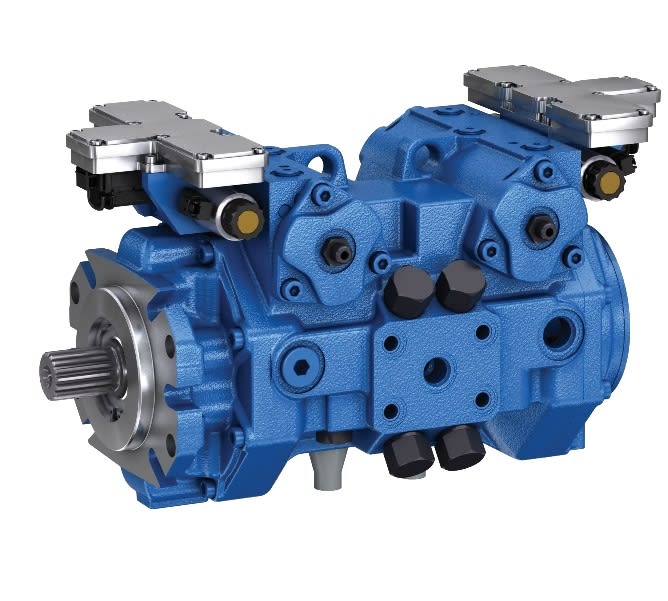
Digital controls continue to expand their reach, impacting everything from the intricacies of engine operations to the interactions between operator and machine. This takeover has driven an explosion in the amount of software running on all types of electronic control units (ECUs).
Electrohydraulic systems have seen significant growth as most vehicles’ overall volume of software soared. Programs control valves and other equipment, interact with operators, and ensure that safety regulations are met.
Managing software has become one of the major challenges facing electronic development teams. Once developers decide which functions can be managed by software, they have to determine how to create and verify code that improves the efficiency of electrohydraulic systems.
Growth spurt
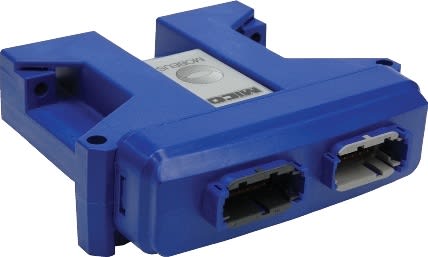
During the past five years, there has been a rapid expansion of software’s role in the operation of equipment. For example, most hydraulic functions are now controlled by software that manages minute internal actions as well as the link between operators and equipment.
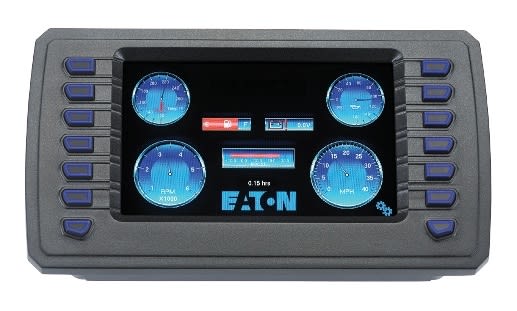
“In the past, the software focus was mostly upon core work and drive functions essential for the success of the machine in the market while auxiliary functions remained hardwired,” said David Eckerd, Product Management Director at Bosch Rexroth. “Now, many toolboxes contain equipment to diagnose machines electronically. Integrating more functions into the electronics controls increases the diagnostic coverage of the machine while improving overall reliability by utilizing solid-state switches instead of contacts and/ or diodes.”
Regulations also play a role in the expansion of software. An increased demand for safety is a key factor, and the drive to meet tighter emissions and fuel consumption laws is also fueling the growth of software.
“With the change of regulations like the European Union’s requirement for ABS on faster moving vehicles, and new types of transmissions such as hybrids with regen braking, there is a steady increase on software in hydraulic controls,” said Manfred Maiers, EH Group Director at Mico Inc.
The human touch
As programs control more electrohydraulic functions, software is the de facto link between equipment and operators. Digital displays, touch panels, and electronic buttons and joysticks all run code that lets operators do more tasks with less effort. Some observers feel growth in human-machine interface (HMI) software is just beginning.
“The automation of certain functions requires more HMI application software as well as control software,” said Eddie Phillips, Marketing Manager, Electronic Controls and Software, at Eaton’s Hydraulics Business. “In the next five years, I expect to see an increase in human interface controls that’s greater than the growth we have experienced in microcontroller applications in the past couple of years.”
When this increased usage of HMIs instead of gauges and push buttons is combined with globalism, designers can leverage software’s ability to transcend national borders. It is easier to translate text displayed on a screen than to alter printing on a physical gauge. There are also a number of visual cues and images that can easily be understood without words.
“Since messages can be displayed in the local language, or status can be displayed via warning symbols, graphical indicators, or gauges, this increases the operator’s understanding of the system by allowing him to quickly understand the message,” said Kirk Lola, Business Development Manager at Parker Hannifin Electronic Controls Division. “A display that shows operating condition, as well as error and status messages, greatly reduces operator confusion.”
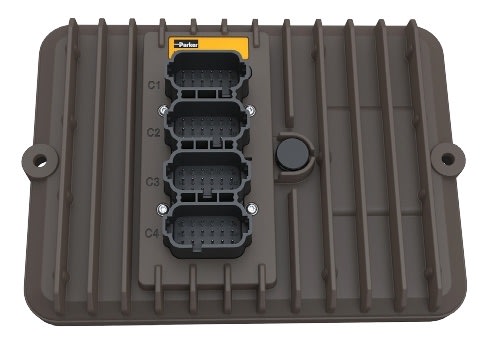
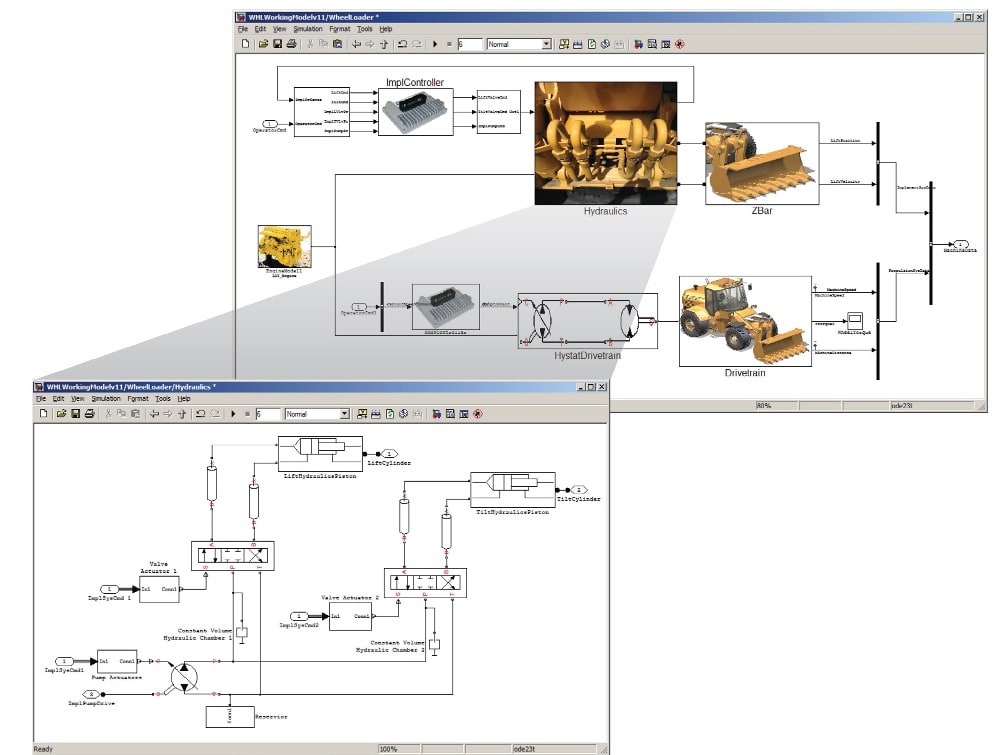
The expanded role of software is driving a change in the way code is developed. Many design teams employ automatic code generators, which create programs in a more systematic style than human programmers. This method is faster and it makes debugging more straightforward.
“After design verification is carried out at the model level, engineers use automatic code generation to implement the software,” said Wensi Jin, Automotive Industry Manager at MathWorks. “Code generation allows for faster implementation and eliminates coding error. With model-based design (MBD), people commonly get time and cost savings of 40% or more compared to traditional development methods.”
Software teams are also benefiting from the trend to visual programming languages. These development tools help engineers focus on system challenges rather than figuring out how to create code.
“A major change in the development of application software is the advent of graphical programming tools,” Lola said. “The advanced programming tools are becoming more popular as they reduce development time and expense, as well as allow system engineers to focus on the system design rather than the minutiae of embedded software development.”
Doing it all
Many new functions are coming as programmers figure out ways to automate tasks. Some of this automation improves vehicle efficiency. For example, software can change fan speeds or turn them off to reduce power demands. Other programs make life easier for operators.

“In many cases, the machine software can semi-automate a task so that the coordination and training required of the operator is significantly less,” Lola said. “A good example of this is a side loader refuse truck. By allowing the arm lift and retraction to be automatically coordinated, operator training can be reduced and productivity can be increased. In addition, when the control system coordinates the two functions, the operator can concentrate on other aspects of operating the truck.”
Hardware and software are also being used to improve safety. Putting safety-related functions under software control requires developers to ensure that code will run without any glitches. That means verification, validation, and testing play a critical role in safety.
“Many features and functions have arisen in the areas of functional safety,” said Bosch Rexroth’s Eckerd. “High reliability design principles such as redundancy and diversity are used in interconnecting controllers into machines, which requires the development of new software functions. To support demanding functional safety requirements, software must be coded and verified in a very specific manner to assure a predictable response in detecting and reacting to trigger conditions.”
Regulations are another factor that shine the spotlight on software reliability. Product design teams must show that they have gone through several iterations to reduce the potential for errors before many products can be sold internationally.
“Legislation has also driven additional safety requirements, which increased the need for — and complexity of — software,” Eaton’s Phillips said.
More From SAE Media Group
Automotive Engineering
Picturing a Brighter Future
Sensor Technology
What Will 5G Do for the IoT/IIoT?

Off-Highway Engineering
Gearshift Actuator Dynamics in a Dual Clutch Transmission
Off-Highway Engineering
Systems That Talk Together, Are Efficient Together
Automotive Engineering
Managing the Deluge of Data
Automotive Engineering
Driver Distraction From Connectivity Poses Conflicting Challenges
Automotive Engineering
Ford and University of Michigan Unveil Automated-vehicle Testbed
Off-Highway Engineering
Screens, Cameras Provide New Look in Cabs
Automotive Engineering
Planning for a Digital World
Automotive Engineering
Accelerating Down the Road to Autonomy
Automotive Engineering
CES 2026: Qualcomm Expands Partnerships For More Snapdragons
Off-Highway Engineering
FPT’s Battery Pack Dives into Marine Market
Automotive Engineering
Securing the Software-Defined Vehicle
Aerospace Manufacturing and Machining INSIDER
Army Launches CMOSS Prototyping Competition for Computer Chassis and Cards
Automotive Engineering
Company Says Tiny Motions Can Predict Big Problem: Impaired Driving

Motion Design INSIDER
Improving Traffic Signal Timing with a Handful of Connected Vehicles
Off-Highway Engineering
The Role of a Cloud-based Server in Service Workshops

Motion Design INSIDER
Physics-Aware Neural Networks Improve Camera-Based Machines
Tech Briefs
How Much Do You Know About GPS and its History?
Aerospace & Defense Tech Briefs
SAE International Extends Call for Abstracts, Seeks Submissions for AeroTech Conference
Off-Highway Engineering
Freightliner’s Medium-Duty Makeover
Motion Design INSIDER
Charting a Safe Course Through a Highly Uncertain Environment
Battery & Electrification Technology
Ultracapacitor Solutions to Address Energy-Storage Needs of Vehicles
Battery & Electrification Technology
Micro-Supercapacitors Enable Fast Charging
Battery & Electrification Technology
The Rechargeable Renaissance
Autonomous Vehicle Engineering
Ensuring No Child Left Inside
Top Stories
INSIDERManufacturing & Prototyping
 How Airbus is Using w-DED to 3D Print Larger Titanium Airplane Parts
INSIDERManned Systems
 FAA to Replace Aging Network of Ground-Based Radars
NewsTransportation
 CES 2026: Bosch is Ready to Bring AI to Your (Likely ICE-powered) Vehicle
NewsSoftware
 Accelerating Down the Road to Autonomy
EditorialDesign
 DarkSky One Wants to Make the World a Darker Place
INSIDERMaterials
 Can This Self-Healing Composite Make Airplane and Spacecraft Components Last...
Webcasts
Defense
 How Sift's Unified Observability Platform Accelerates Drone Innovation
Automotive
 E/E Architecture Redefined: Building Smarter, Safer, and Scalable...
Power
 Hydrogen Engines Are Heating Up for Heavy Duty
Electronics & Computers
 Advantages of Smart Power Distribution Unit Design for Automotive...
Unmanned Systems
 Quiet, Please: NVH Improvement Opportunities in the Early Design...
