




Screens, Cameras Provide New Look in Cabs
Video inputs are another option showing up on displays that increasingly offer touch control.
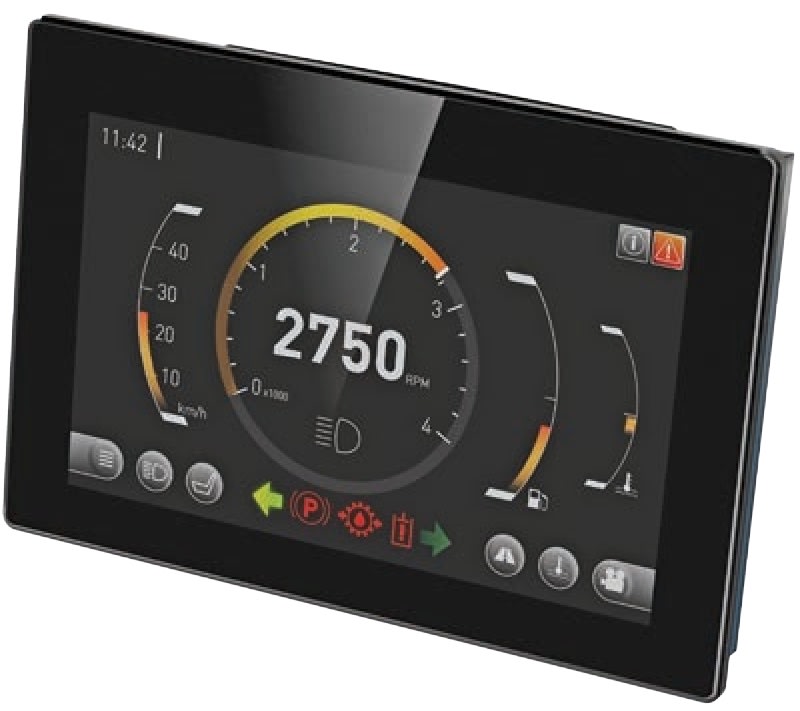
Liquid crystal displays have rapidly gone from limited usage to mainstream, transforming human-machine interfaces (HMIs). Video images are being added to the diverse list of functions for these displays, which are also becoming input devices as touch technology gains acceptance.
Diversity is one of the key reasons displays are becoming a mainstay in HMI strategies. This versatility means that ease of use is a focal point for design teams.
“We’re integrating big screens into heavy equipment where operators haven’t used big screens or touch screens,” said Ingo Krueger, Business Unit Director, Cockpit & Mobility Systems at IAV. “It’s important to have operating menus set up in an intelligent way so operators can go through the settings and easily get what they need. Different modes can be set for different types of operations, such as when the vehicle’s in the field or on the highway.”
When multifunction displays are augmented with touch input, users can look at settings and adjust them or set points when alarms will sound. That helps protect vehicles as well as operators.
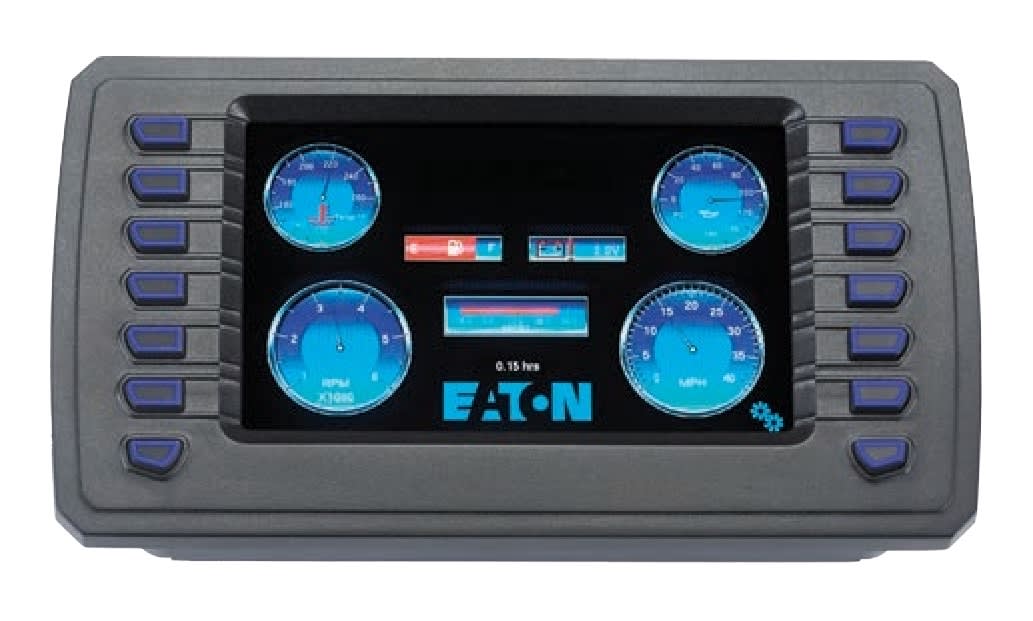
“For hydraulic functions, displays often are used to select or adjust the amount of power used during operation while providing information regarding fluid levels, temperatures, and pressures important for service diagnostics and maintenance,” said David Eckerd, Director, Product Management Director for Mobile Electronics at Bosch Rexroth. “Configurable messages or warning alarms may be triggered to warn an operator of pending problems and provide instructions regarding how to manage them.”
Picture this
Video images are the newest inputs being integrated into these displays. Pricing for rugged and compact cameras has declined rapidly as more passenger cars employ them. That’s helping video gain rapid adoption in large equipment where it’s hard to see some areas.
“We have found significant improvements in machine safety through the use of large display screens,” said Kirk Lola, Business Development Manager at Parker Hannifin’s Electronic Controls Division. “The addition of video input into the HMI screens has made a significant impact in machine safety. This allows the operator to see the area around the machine to help ensure that the area around them is clear.”
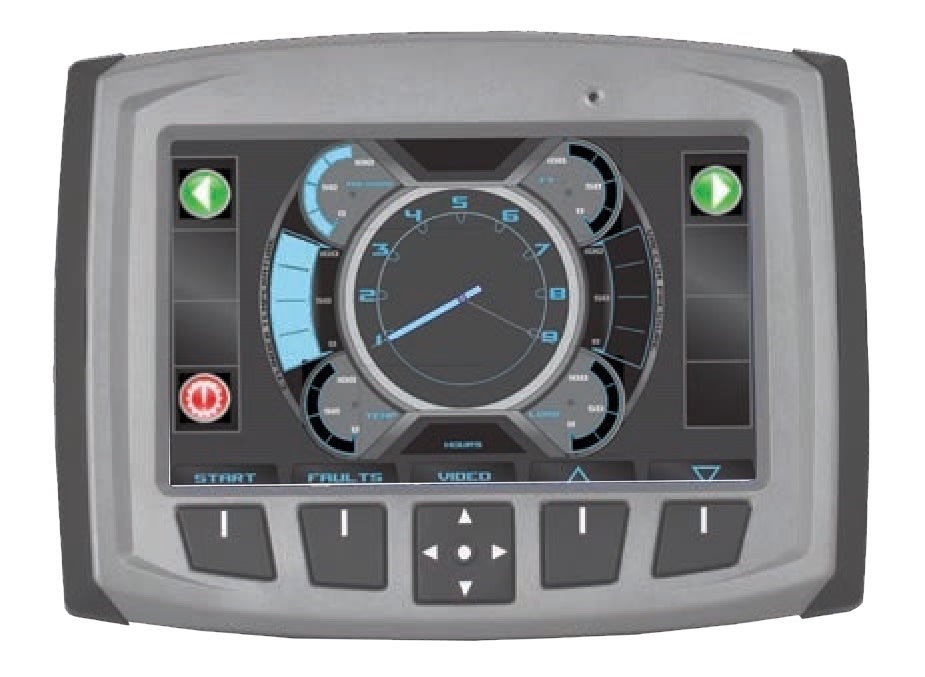
Going forward, more video functions will pop up automatically. Just as backup camera data is displayed when the vehicle is shifted into reverse, a crane or loader can be shown on the display when certain actions are being taken or when loads hit predetermined levels.
“As the sophistication of HMI technology increases, it is now possible to automate the way camera feeds are shown, ensuring the operator sees visual information that is critical to the task they are performing,” said Eddie Phillips, Marketing Manager of Electronic Controls & Software for Eaton’s Power and Controls Business.
Cameras can be especially helpful for hydraulic-powered operations, since actuators are often obscured from the operator’s view. Cameras are likely to play a major role in the drive to reduce accidents and injuries.
“When a hydraulic function is being operated that is not in clear view of the operator, a camera feed can be displayed so the operator can safely operate the vehicle,” said Christopher Kolbe, Sales & Marketing Vice President at HED Inc. “In addition, the display can show if the vehicle is on the edge of stability. For example, on an aerial work platform, the display can warn the operator that they are reaching an unsafe condition.”
Display and camera systems are evolving in other ways as well. Increased microprocessor capabilities make it possible to show information from a range of inputs, switching quickly when necessary. At the same time, these displays are being upgraded so LCDs can be used in even more environments.
“High processing power allows displays to increase graphics capabilities and show video, vehicle operator manuals, and split screen videos,” Kolbe said. “Sunlight readability is improving by integrating anti-reflective glass. More displays are IP67-rated/waterproof, allowing them to be mounted outside the cab.”
It’s polite to point
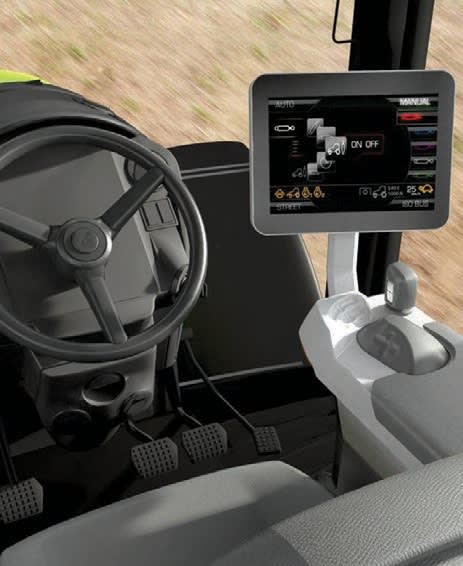
Displaying more information isn’t the only way displays are extending their influence. They’re quickly becoming a central element in control strategies. Touch technologies used on smart phones and tablets are being added to cabin displays.
“Projected capacitive touch technology is now being incorporated into equipment designed for the off-highway market,” Phillips said. “Our VFX72 display uses the latest in projected capacitive touch technology as well as optical bonding to provide sunlight viewability.”
The ability to program display inputs is a significant benefit for equipment that is shipped globally. It’s fairly simple to do translations for anything seen on the screen, whether that’s a touch target, an alert, or the operator’s manual.
“One of the most significant changes in HMI software is the advent of the touch screen for operator interface and ability to support multiple languages,” Lola said. “The IQAN MD4 7-in display offers a touch screen display as well as the ability for the operator to select their language of choice if that language has been programmed into the display. This improves operator efficiency by presenting messages and information about adjustments and faults in their native language.”
Many designers are taking another step to link consumer technologies and off-highway equipment. Some developers plan to provide connections between smart phones and the vehicle’s display. That lets operators see what’s on the in-cab display while they’re making adjustments to engines, PTOs, or other systems.
“Suppliers want to integrate with smart phones, but only for very specific tasks,” Krueger said. “On a large machine, where the operator’s often alone, it’s very helpful when they need to do something on the back of the machine. They can use the smart phone to see the information that’s on the dashboard display.”
More From SAE Media Group

Automotive Engineering
Nissan's ProPILOT Assist Is More Than Lane-Keeping
Off-Highway Engineering
Caterpillar Equipment Gets Smarter for Productivity Results
Automotive Engineering
CES 2025 Preview: All the Tech That’s Fit to Print
Automotive Engineering
AVSC Develops Best Practices for Traceable AV Safety Inspection Protocols
Off-Highway Engineering
Daimler Truck and Torc Intensify Pursuit of Autonomous Trucks
Automotive Engineering
Ford Approved for Hands-Off Driving on German Autobahn
Automotive Engineering
Autonomous Transit Bus Nears Its First Year of Operation
Autonomous Vehicle Engineering
Making the Strategic Move into AV Testing
Autonomous Vehicle Engineering
Purpose, Perceptions for Driver-Assist Tech Solidify
Autonomous Vehicle Engineering
'Level 2+': Making Automated Driving Profitable, Mainstream
Autonomous Vehicle Engineering
Platform-Agnostic Interface Aims to Accelerate Truck Autonomy
Sensor Technology
The Sensing Systems That Make ADAS Work
Autonomous Vehicle Engineering
Continental's Lidar in a Flash
Autonomous Vehicle Engineering
‘Software, Start Your Engines’
Autonomous Vehicle Engineering
ZF’s Autonomous Systems Head Takes a Pragmatic View of the ‘Levels’ Playing Field
Off-Highway Engineering
Forward-Looking Lidar Can Revolutionize Driver-Assistance Systems
Autonomous Vehicle Engineering
Predicting the Road to Efficiency
Off-Highway Engineering
Design Tools Ensure Component Compatibility, Create Autonomous Driving Tests
Automotive Engineering
Department of Transportation Asks for Public Input Regarding Relaxing AV Regulations
Off-Highway Engineering
Commercial Vehicle ADAS: Testing, Testing and More Testing
Automotive Engineering
Chassis Brakes International Debuts First NA-Produced Products
Aerospace & Defense Tech Briefs
SAE International Extends Call for Abstracts, Seeks Submissions for AeroTech Conference
Automotive Engineering
BorgWarner Prepares Manual Gearchange for ADAS Vehicles
Automotive Engineering
Artificial Intelligence Becomes a Reality
Off-Highway Engineering
Level 1 Automated Driving Coming to Class 8 Truck Fleets
Automotive Engineering
Nader: Are Glitch-Free Autonomous Vehicles Possible?
Automotive Engineering
Intel Inside the Cloud-Based Data Future
Automotive Engineering
Cameras Are Focal Point at ZF TRW's New Global Tech Center in Michigan
Automotive Engineering
Harman Advanced Concept Brings Intuitive HMI to Automated Driving
Top Stories
INSIDERManufacturing & Prototyping
 How Airbus is Using w-DED to 3D Print Larger Titanium Airplane Parts
INSIDERManned Systems
 FAA to Replace Aging Network of Ground-Based Radars
NewsTransportation
 CES 2026: Bosch is Ready to Bring AI to Your (Likely ICE-powered) Vehicle
NewsSoftware
 Accelerating Down the Road to Autonomy
EditorialDesign
 DarkSky One Wants to Make the World a Darker Place
INSIDERMaterials
 Can This Self-Healing Composite Make Airplane and Spacecraft Components Last...
Webcasts
Defense
 How Sift's Unified Observability Platform Accelerates Drone Innovation
Automotive
 E/E Architecture Redefined: Building Smarter, Safer, and Scalable...
Power
 Hydrogen Engines Are Heating Up for Heavy Duty
Electronics & Computers
 Advantages of Smart Power Distribution Unit Design for Automotive...
Unmanned Systems
 Quiet, Please: NVH Improvement Opportunities in the Early Design...
