




Autonomous Vehicle Challenges Span Many Fields
Many of the challenges faced by military and commercial design teams are similar.

Engineers from fields as diverse as military, agricultural, and mining who are racing to craft autonomous vehicles share many similar technical challenges. Distributed architectures, networking, and redundancy are universal challenges for design teams tasked with creating vehicles that drive themselves.
Autonomous vehicles are leveraging radar, lidar, and camera systems used for safety and other functions. Data from these sensors is pulled together and analyzed to steer, slow, and stop the vehicle. Some vendors note that autonomous technology is now being used in various fields, proving that the systems work, though it is still sometimes necessary to convince potential customers that the vehicles can operate safely.
“It’s moving away from the technology being a bottleneck and into the next stage of integrating this into the way organizations operate,” said Bryan Everett, Engineering Specialist, Design, at Caterpillar. “The pace of adopting and instituting autonomous machine operation is just part of the journey.”
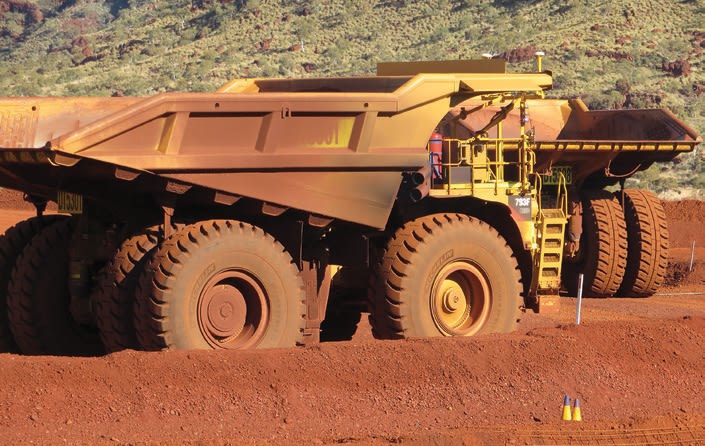
Most autonomous vehicles today are used in fields like mining and military where costs aren’t as critical as in other areas. Still, customers in every field are asking for less costly systems, making cost effectiveness one of the issues design teams must address.
“The biggest bottlenecks are related to proving the reliability/safety of automated vehicle systems and the ability to align a solid business case against an affordable set of capabilities,” said Greg Hudas, Chief Engineer/Technologist, Robotics at U.S. Army RDECOM-TARDEC. “Without a set of well-defined requirements and a technique to validate intended function against requirements, it is hard to really understand what other parts of the system is lacking.”
Once the technology is in place, it’s comparatively easy to expand its use to new fields. Military technologies can be used by first responders, for example.
“We are expanding the potential role of our Squad Mission Support System with a firefighting version of SMSS,” said David Simon, Applique Programs Manager at Lockheed Martin Missiles and Fire Control. “It is outfitted with a 250-gallon tank that can spray water or foam, and it can operate autonomously or by remote control.”
Artful architectures

In the safety systems that are considered the predecessors of autonomous driving, intelligence was centralized to minimize the system complexity. But the overall amount of data has grown exponentially as multiple high-resolution sensors create vast volumes of data. All this data can overwhelm networks and make it difficult to analyze all relevant input using a single processor, making distributed architectures more attractive.
As microcontrollers shrink in size and cost, it’s become easier to embed them in the sensor. When sensor data can be processed remotely by these embedded processors, there’s less data to transmit and less work for the central controller. Most system architects now distribute intelligence throughout the system.
“We are seeing an increase of distributed-based hardware development allowing for a higher degree heterogeneous computational environment on the vehicle platform,” Hudas said. “For instance, the newer sensors are being designed with computational/memory ability on the board, thus leading to a decrease in data volume that needs to be transferred to a central processing unit.”
Most engineers feel that distributed architectures will see widespread usage in autonomous vehicles. That’s true in commercial products as well as military vehicles.
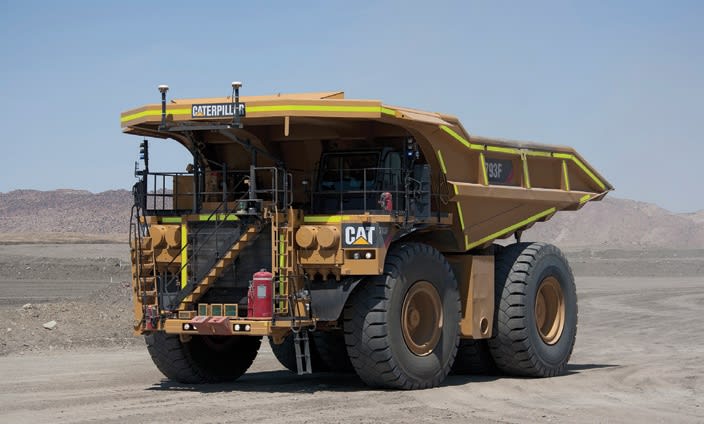
“The advanced processing of this high-speed data cannot be processed in a timely manner when done centrally,” said Michael Olson, Engineering Manager, Electronic Components, at Danfoss Power Solutions. “Processing must take place in the sensor, thus offloading processing from the central controls software. This trend will continue as more and more information is used to further improve future control systems.”
Distributing intelligence requires a strategy that ensures that data is processed reliably and is transmitted in a timely fashion. Most data will be sent to a central system, though sometimes data will be shared by other distributed modules.
“We necessarily distribute our intelligence between several processors,” Simon said. “This necessitates sharing data. We have various strategies using a publish-subscribe architecture that is optimized to take advantage of bottle-necks in the communications bus. We are using multiple networks and data buses and are following the lead of the commercial automotive sector.”
Maximum reliability
Reliance on communications makes networks a critical element of all autonomous vehicles. Some design teams may augment CAN technology with networks that offer more performance. Time-triggered architectures provide determinism, making them an attractive solution.
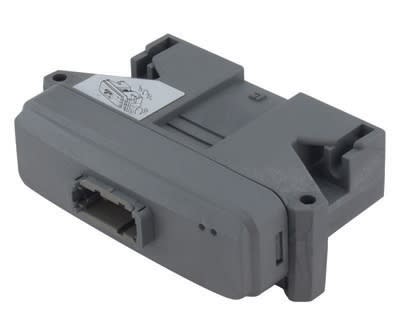
“High-speed drive-by-wire and collision avoidance have very time-sensitive performance requirements,” Hudas said. “Likewise, the results of multi-sensor fusion is very dependent on minimal jitter between modules. Time-triggered data buses like TTEthernet and FlexRay are an elegant solution to ensuring temporal synchronicity between modules.”
Real-time networks are quite viable in low-volume military markets, but commercial suppliers consider alternatives whenever possible. Deterministic networks often cost more and are more complex to develop.
“As systems become more complex and include more data sources, we will need to increase our bus speeds,” Olson said. “There are three strategies available: create local CAN networks combined with central CAN networks; use high-speed Ethernet for the central communication buses with local CAN networks; or use wireless networks to collect data for the central communication bus. Time-triggered protocols are a significant factor in our wireless communication network strategy.”
Delivering data on time doesn’t help much if the controller that receives the message isn’t working correctly. When controllers are making driving decisions that impact safety, architectures must ensure that a failure with one component doesn’t shut down the autonomous control system. Over the past couple years, safety integrity levels, functional safety requirements, and machine directives have become common guidelines for designing systems that don’t have single points of failure.
“Double redundancy is important to follow for our critical machine safety requirements, which are becoming a requirement of many of our applications,” Olson said. “We follow the appropriate machine safety directives.”
In very high reliability systems, complete duplication of components isn’t enough for some systems. That’s especially true in military vehicles, where some modules will have three or four backups.
“General consensus is that primary controls like steering and braking need at least one backup system,” Hudas said. “Safety critical processing is often arrayed in a triple module redundancy or in fail-silent pairs.”
More From SAE Media Group
Automotive Engineering
Toyota Stretches SUV Line-Up with World Debut of Grand Highlander
Automotive Engineering
2019 Chevrolet Silverado 2.7L
NASA Spinoff
Home-Grown Housing
Off-Highway Engineering
Freightliner’s Medium-Duty Makeover
Automotive Engineering
Ford Refines Interior, Exterior on 2025 Explorer
NASA Spinoff
NASA ‘RAMPT’ Up 3D Printed Engine Size
Off-Highway Engineering
Systems That Talk Together, Are Efficient Together
Automotive Engineering
2020 Chevrolet Corvette Stingray Coupe
Automotive Engineering
Ford Unveils 2019 Mustang Bullitt, Promises Performance EV
NASA Spinoff
View from the Sky Helps Predict Crop Yields
NASA Spinoff
Innovation Comes Out of the Wool Work
NASA Spinoff
Better Data for Bodies in Motion
Automotive Engineering
2021 Toyota Supra 2.0
Automotive Engineering
NAIAS 2022: Seventh-Generation of Ford Mustang Is Highest Performer Yet
Automotive Engineering
Creating Chrysler 200's Interior Identity
Automotive Engineering
SAE Eye on Engineering: Ford's New Cop Pickup
Automotive Engineering
Ford Approved for Hands-Off Driving on German Autobahn
Automotive Engineering
Engineering Ford’s Jumbo SUV for Off-Roading
Automotive Engineering
GM Announces SAE Level 3 Autonomy and SDV Technology
Automotive Engineering
Cadillac Reveals 2025 CT5-V and CT5-V Blackwing with More Tech
Automotive Engineering
SAE Eye on Engineering Quick Take: 10-Speed Transmissions
Automotive Engineering
All-New 2015 Chrysler 200 Debuts in Detroit
Automotive Engineering
GM Announces LT1 Crate Engine Availability at 2014 SEMA Show
Off-Highway Engineering
College Students Design Lightweight Steel Wheels
Autonomous Vehicle Engineering
AV Powers Bring May Flowers
Off-Highway Engineering
Caterpillar Equipment Gets Smarter for Productivity Results
Automotive Engineering
Kia’s PBV Concepts Expand Commercial Possibilities
Automotive Engineering
2026 Nissan Sentra Review: Putting the Pieces Together
Automotive Engineering
2026 Nissan Leaf First Drive: Fun and More Efficient
Automotive Engineering
Ford F-150 Raptor
Top Stories
INSIDERManufacturing & Prototyping
 How Airbus is Using w-DED to 3D Print Larger Titanium Airplane Parts
INSIDERManned Systems
 FAA to Replace Aging Network of Ground-Based Radars
NewsTransportation
 CES 2026: Bosch is Ready to Bring AI to Your (Likely ICE-powered) Vehicle
NewsSoftware
 Accelerating Down the Road to Autonomy
EditorialDesign
 DarkSky One Wants to Make the World a Darker Place
INSIDERMaterials
 Can This Self-Healing Composite Make Airplane and Spacecraft Components Last...
Webcasts
Defense
 How Sift's Unified Observability Platform Accelerates Drone Innovation
Automotive
 E/E Architecture Redefined: Building Smarter, Safer, and Scalable...
Power
 Hydrogen Engines Are Heating Up for Heavy Duty
Electronics & Computers
 Advantages of Smart Power Distribution Unit Design for Automotive...
Unmanned Systems
 Quiet, Please: NVH Improvement Opportunities in the Early Design...
