




Faraday Future Unveils Exotic “Testbed” for New Range of EVs

Faraday Future, the start-up Chinese EV maker that has been compared to Tesla Motors, at the 2016 CES in Las Vegas on January 5 unveiled its first concept vehicle that company executives called “a testbed for vehicles we’re working on.”
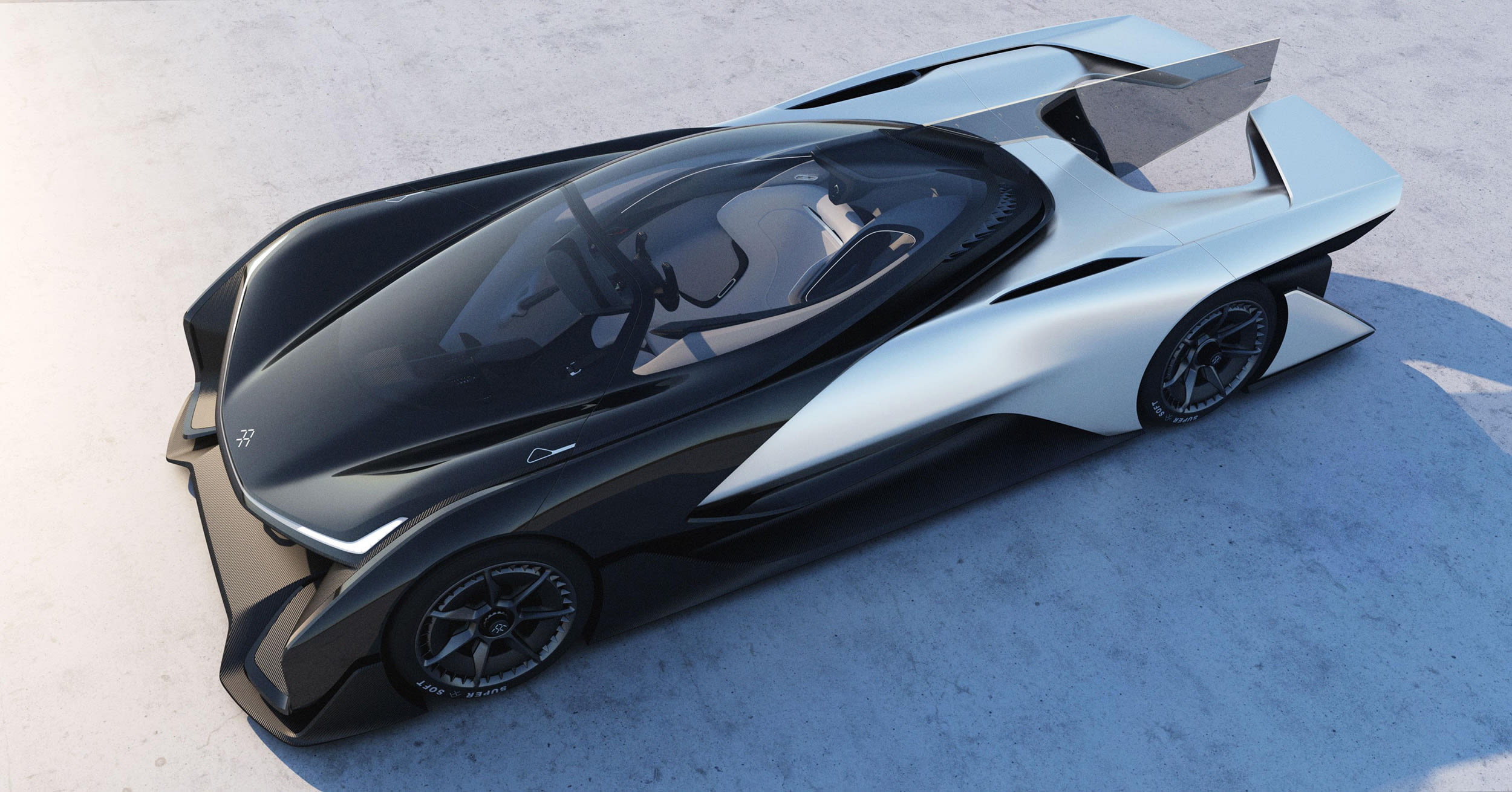
Called the FFZero1, the exotically styled, carbon-fiber-bodied machine—a “high performance electric dream car,” as it was presented to the audience—features interesting battery-pack design and capability to package one to four electric traction motors, delivering up to 1000 hp (746 kW) to two or four drive wheels, depending on configuration. An extended-range powertrain, with a combustion engine and hybrid drive, is also under consideration.
Connected-car and HMI technologies include broad use of gesture controls, augmented reality (AR), and integrated head-neck protection in the cockpit, which features two NASA “zero gravity” seats as pioneered in the auto industry by Nissan. The vehicle is designed for autonomous operation, the executives noted, although the concept is fitted with a conventional steering wheel and electric steering.
The FFZero1 is based on a VPA (Variable Platform Architecture) that Nick Sampson, the company’s Senior Vice President of R&D and Engineering, said will be used for Faraday’s entire model range. In the media conference prior to the FFZero1’s debut, a video showed wireframe-like renderings of an SUV, sedan, people mover, and sports car.
The VPA features what appear to be identical front and rear suspension modules, each mounted on a lightweight cradle. Sampson, who led Tesla Model S development before joining Faraday, said the modular approach enables “larger and more protective” front and rear crush zones.
“VPA is a designer’s dream,” noted Richard Kim, Faraday’s Chief Designer who previously led BMW’s i Design Group on the i3 and i8 projects.
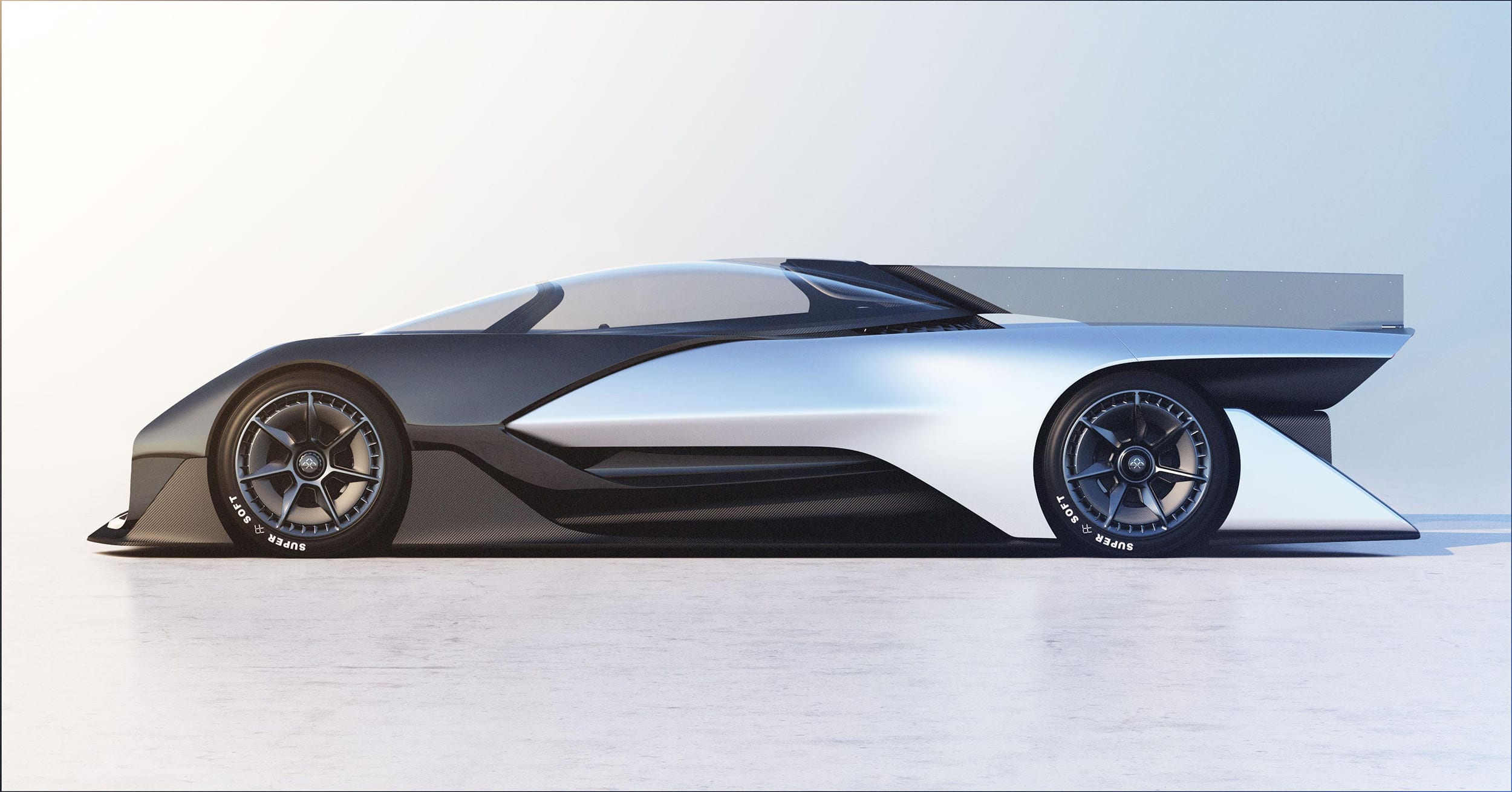
The battery technology consists of cell modules joined like a string—“like a set of Christmas tree lights,” Sampson said. By adding or subtracting strings of cell modules, and engineering in one, two, three, or four traction motors, Faraday planners can tailor a vehicle’s performance and efficiency characteristics, faster than achieved by traditional vehicle powertrain architectures, Sampson indicated.
Founded in 2014, Faraday Future has more than 500 employees working in various locations on a range of new EVs. Late last year the company selected a site in North Las Vegas, NV, for a new $1B manufacturing plant for a luxury electric car that would compete with the Tesla Model S and the upcoming wave of high-end EVs (see "China’s New “Automotive Dragons” Faraday and Baidu Target EV, Autonomous Leadership").
More From SAE Media Group
Automotive Engineering
Engineering ‘Electron Guzzlers’
Battery & Electrification Technology
Putting a New ‘Charge’ in EV Recharging
Automotive Engineering
Tesla's "Affordable" Model 3 Brings Technology Questions
Automotive Engineering
Making over the World’s Leading Hybrid
Tech Briefs
Videos of the Month
Automotive Engineering
BMW I3 Battery Replacement Is $16,000
Automotive Engineering
GM Pushes for Industry Standards as It Readies More EVs, AVs
Off-Highway Engineering
Cummins and Isuzu Announce Battery-electric Truck Collaboration

Automotive Engineering
Nissan Sees 2023 "Tipping Point" for EV Costs
Automotive Engineering
Ford Pumps $4.5B into Electrifying 40% of Its Global Product Line by 2020
Automotive Engineering
Diesel and Electrified Vehicles from German OEMs Enjoying Increased Popularity in U.S.
Automotive Engineering
GM’s Barra: Electric Vehicles Are Still the Future
Autonomous Vehicle Engineering
Volvo Leads the Shift to ‘Driver Understanding’
Automotive Engineering
Dana Inaugurates Tech Center in India
Automotive Engineering
The Soft Underbelly of The EV Transition
Automotive Engineering
VinFast Brings New EVs, Assembly Plans to U.S.
Tech Briefs
Are In-Wheel Motor Systems Catching On?
Automotive Engineering
Lotus Breaks out with New Eletre Electric SUV
Automotive Engineering
Volvo’s Electric High-Wire Act
Automotive Engineering
Battery Leasing Spurs VinFast’s EV Offensive
Automotive Engineering
Electrifying GM
Automotive Engineering
All-Electric Nissan Ariya Handles Ultra-Cold Temps on Pole to Pole Trek
Automotive Engineering
Ford C2 Is Model for EV Scale, Lower Costs
Automotive Engineering
BEV Streamliner Tops 350 Mph for U.S. Speed Record
Automotive Engineering
IAA Munich and the Future of ‘Mobility’ Shows
Automotive Engineering
Preparing for the New, Faster EV Product Cadence

Automotive Engineering
FEV to Open "Mission-Critical" Test Facility in 2018
Top Stories
INSIDERManufacturing & Prototyping
 How Airbus is Using w-DED to 3D Print Larger Titanium Airplane Parts
INSIDERManned Systems
 FAA to Replace Aging Network of Ground-Based Radars
NewsTransportation
 CES 2026: Bosch is Ready to Bring AI to Your (Likely ICE-powered) Vehicle
NewsSoftware
 Accelerating Down the Road to Autonomy
EditorialDesign
 DarkSky One Wants to Make the World a Darker Place
INSIDERMaterials
 Can This Self-Healing Composite Make Airplane and Spacecraft Components Last...
Webcasts
Defense
 How Sift's Unified Observability Platform Accelerates Drone Innovation
Automotive
 E/E Architecture Redefined: Building Smarter, Safer, and Scalable...
Power
 Hydrogen Engines Are Heating Up for Heavy Duty
Electronics & Computers
 Advantages of Smart Power Distribution Unit Design for Automotive...
Unmanned Systems
 Quiet, Please: NVH Improvement Opportunities in the Early Design...
