




GM Pushes for Industry Standards as It Readies More EVs, AVs
General Motors’ electrified, autonomous vehicle future is about to hit overdrive—with related industry standards playing a vital role in the transformation.

“The Chevrolet Bolt EV cracked the code—long range and affordability—and proves that we have the capability to bring electric vehicles to life faster than anyone else,” asserted Ken Kelzer, GM’s Vice President of Global Vehicle Components and Subsystems, during a keynote address on the opening day of SAE’s 2018 WCX conference in Detroit.
Kelzer said that SAE is a great forum for members to learn and collaborate on new technologies as well as navigate a consistent approach to standardization. “As we look toward the future challenges of new technologies, it is critical that we are unified in the development and application of standards,” he said.
Kelzer encouraged the WCX audience and engineers in general to get involved with SAE’s standards committees, which are the backbone of global mobility standards development.
In the next 18 months, GM will introduce two new all-electric vehicles based off the lessons learned from the 2017 battery-electric Bolt. They are part of a stream of “at least 20” all-new, all-electric vehicles that GM will launch by 2023.
“General Motors believes in an all-electric future and a world with zero emissions,” Kelzer said, noting that drivers of the Bolt and the Chevrolet Volt range-extender hybrid have logged more than 2.6 B miles (4.2 B km) of all-electric operation.
The automaker’s move toward electrified vehicles dovetails with its work on autonomous vehicles, which is production-exemplified by the Super Cruise hands-free driving technology (SAE Level 2) that debuted on the 2018 Cadillac CT6 sedan.
On the testing side, GM has autonomous vehicle fleets on public roads in metro Detroit, Phoenix, and San Francisco. Urban environments are especially relevant with challenging self-driving situations occurring up to 46 times more often than other testing scenarios. Kelzer said that every minute of testing in San Francisco is as valuable as an hour of testing in the suburbs.
“We plan to commercially launch our self-driving Cruise AVs in dense urban environments in 2019,” Kelzer said about the all-electric vehicles.
The automaker’s new mobility business, Maven, has a prime role in the electrified, autonomous vehicle of tomorrow. It is “helping GM prepare for the future by gaining real-world insights into fleet management, public sector partnerships, mobile transactions, infrastructure development, and EV charging patterns,” he said.
GM’s ongoing work with hydrogen fuel-cell stack development, in collaboration with Honda Motor Co., is being used in prototype and concept vehicles, including the Chevrolet Colorado ZH2 pickup currently being evaluated by the U.S. Army, and the SURUS (Silent Utility Rover Universal Superstructure) heavy truck platform with four-wheel steering and modular design. Kelzer claims the production stack, due in 2020, “will lead the industry when it comes to cost, power, and compactness.”
More From SAE Media Group
Automotive Engineering
Extending the ICE Age: GM’s Ken Morris Lives the Real Pace of the Powertrain Revolution
Automotive Engineering
GM’s Cruise Unveils Dedicated Self-Driving Vehicle Built for Upgradable Hardware
Off-Highway Engineering
GM Defense Adapts Hummer EV for Military Concept Vehicle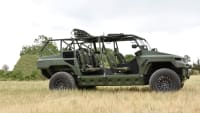
Automotive Engineering
GM Confirms Cause of Bolt Battery Fires, Rolls out New Monitoring Software
Automotive Engineering
Nissan’s Reed Is Not Your Typical R&D Boss
Automotive Engineering
A Week with the Hyundai Way
Off-Highway Engineering
Arctic Autonomy
Automotive Engineering
NAIAS 2019: Infiniti Debuts QX Inspiration SUV Concept
Automotive Engineering
New Ultium Battery System Underpins GM’s EV Future
Automotive Engineering
Cadillac Reveals Lyriq Electric Vehicle
Automotive Engineering
Engineering ‘Electron Guzzlers’
Automotive Engineering
Honda and Nissan Merger Plans Could Accelerate EV R&D
Off-Highway Engineering
F-150 and Mustang Hybrids Part of Ford's Global Electrified Vehicles Plan
Automotive Engineering
SAE WCX 2022: Driveline Flexibility Is Key for Electrification
Battery & Electrification Technology
Putting a New ‘Charge’ in EV Recharging
Automotive Engineering
Hyundai Breaks Ground for Safety Test and Investigation Lab
Automotive Engineering
New GM, LG Chem Joint Venture to Build EV Battery Plant in U.S.
Automotive Engineering
Preview: SAE 2021 WCX
Automotive Engineering
WCX 2024: The Technologies That Will Define Future Mobility
Automotive Engineering
Electric-Vehicle Legislation in California – Third Time the Charm?
Automotive Engineering
Suppliers Prepare for a Drop in EV Market Share
Off-Highway Engineering
Allison Builds a Testing Powerhouse
Automotive Engineering
GM CEO Barra Promises $30K EV SUV by Fall 2023; Automated Driving by Mid-Decade
Automotive Engineering
Slate and SK Executives on Bringing the Inexpensive EV to Market
Automotive Engineering
Battery Leasing Spurs VinFast’s EV Offensive
Automotive Engineering
GM and Honda to Jointly Develop Honda’s Electric Vehicles
Automotive Engineering
Delay and Extend and Rescope
Automotive Engineering
AVSC Develops Best Practices for Traceable AV Safety Inspection Protocols
Automotive Engineering
ICE and Hybrid-Electric Propulsion Show Staying Power
Off-Highway Engineering
ACT Expo 2022: Production ECascadia Ready for 230 Miles of ‘Typical Range’
Top Stories
INSIDERDefense
 New Raytheon and Lockheed Martin Agreements Expand Missile Defense Production
NewsAutomotive
 Ford Announces 48-Volt Architecture for Future Electric Truck
INSIDERManufacturing & Prototyping
 Active Strake System Cuts Cruise Drag, Boosts Flight Efficiency
ArticlesTransportation
 Accelerating Down the Road to Autonomy
INSIDERMaterials
 How Airbus is Using w-DED to 3D Print Larger Titanium Airplane Parts
Road ReadyTransportation
Webcasts
Electronics & Computers
 Cooling a New Generation of Aerospace and Defense Embedded...
Power
 Battery Abuse Testing: Pushing to Failure
Connectivity
 A FREE Two-Day Event Dedicated to Connected Mobility
Automotive
 Quiet, Please: NVH Improvement Opportunities in the Early Design Cycle
Transportation
 Advantages of Smart Power Distribution Unit Design for Automotive &...
Aerospace
 Sesame Solar's Nanogrid Tech Promises Major Gains in Drone Endurance