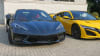
GM’s Barra: Electric Vehicles Are Still the Future
In an interview marking the company’s first day in its new headquarters, GM’s CEO talked about tariffs, regulatory changes, competition from China, her daily driver and more.

On the eve of the Detroit Auto Show, and on “move-in day” for the company’s new downtown Detroit headquarters, CEO Mary Barra said that despite the headwinds that have built up against EVs in America, an all-electric future is still at the end of the company’s long-term roadmap.
“Our destination is to get to the all-EV future we've been talking about,” she said. “Once we have a robust charging infrastructure, I think people are naturally going to pick EVs because instant torque, it opens up new design language and never having to go to the gas station.”
She said that most one- or two-vehicle families are very rational about their vehicle decisions, and that the lack of infrastructure is still a pain point. “It will take longer without the incentives,” she said, referring to the former federal tax rebates for purchasing EVs. “But I still think we’ll get there over time.
Responding to a question from Reuters reporter Kalea Hall, who facilitated the chat, about the hybrid and plug-in hybrid technology being rapidly pursued by other companies, Barra said the company was exploring all its options while trying to discern what the environment will be like after the next U.S. presidential election in 2028. She sounded skeptical of HEV and PHEV technology, saying EVs will always be the goal. “You probably remember a decade ago, hybrids went up in sales, but almost as fast as (market) share grew, it went back down. And we also know today with plug-in hybrids is most people don’t plug them in,” she said.
Unlike some executives, Barra did not shy away from talking about the Trump administration’s see-saw tariff policy that has befuddled an industry for whom regulatory stability is a building block for steady growth. In fact, she said she was proud of how flexible the company has been.
“The minute we heard the word tariff (in 2024), we started planning and looked at what were no-regret moves that we could do depending on what happened,” she said. “And so, the day the tariffs were announced, we already had a playbook that we had done quite a bit of work on. With the tariffs and the administration, we ask for clarity.”
Barra said that despite the changes, the administration was willing to listen. “They worked really hard to understand the auto industry, to do what is right to help us get to a more level playing field globally,” she said.
On the prospect of Chinese EVs competing in the U.S. market, Barra said GM isn’t more or less concerned than it is about any competitor. “As we look at competing with any auto company – Chinese, European, Korean, Japanese – we're always looking to say, how do we drive the most innovation, the right technology, the right package that's affordable?” She said she liked what GM President Mark Reuss, who she lauded as an executive with excellent sense of product, had said on the topic. “We’re not going to just copy. We’re going to innovate our way into a leading position,” she said, citing the affordability of the Chevy Bolt and Equinox EVs.
She said the company is working to be more efficient and quick-to-market with software architecture improvements, and that getting the vehicle and tech sides of the company to understand each other has been key. “It's spending time together and recognizing, whether you’re brilliant at software or a designer, a healthy respect,” for how difficult the other person’s job is. “Together, we can do something great. We’re always working on having a culture where everybody values that work.”
Asked what vehicle she drives the most at present, Barra said she really likes her Hummer EV SUV. “Four-wheel steer is just one of the greatest features,” she said. “That vehicle’s pretty big, but we can just turn on a dime and park anywhere. I always say I feel a little bit like a badass soccer mom.”
Barra was promoted to CEO in 2014 and has had the second-longest tenure since the first CEO, Alfred P. Sloan, had the job for 23 years until 1946. She said that as an electrical engineer by training, she is interested every day in what the company is doing. “From a software perspective, it’s a lot of fun,” she said. “I think we’re just getting started.”
More From SAE Media Group
Automotive Engineering
EV Confidence
Automotive Engineering
VinFast Brings New EVs, Assembly Plans to U.S.
Automotive Engineering
Battery Leasing Spurs VinFast’s EV Offensive
Automotive Engineering
GM Confirms Cause of Bolt Battery Fires, Rolls out New Monitoring Software
Automotive Engineering
New GM, LG Chem Joint Venture to Build EV Battery Plant in U.S.
Automotive Engineering
New Ultium Battery System Underpins GM’s EV Future
Automotive Engineering
GM Pushes for Industry Standards as It Readies More EVs, AVs
Automotive Engineering
Electrifying GM
Automotive Engineering
Making the BEV Commitment
NASA Spinoff
NASA ‘RAMPT’ Up 3D Printed Engine Size
Automotive Engineering
Pickup Shocker!
Automotive Engineering
Tenured Production CEO Leading VW’s U.S. Electrified Manufacturing Push

Automotive Engineering
Ford Pumps $4.5B into Electrifying 40% of Its Global Product Line by 2020
Automotive Engineering
The Haters Go After Toyota
Automotive Engineering
Cadillac Lyriq Spearheads GM’s EV Assault
Automotive Engineering
Cadillac Reveals Lyriq Electric Vehicle
Automotive Engineering
Mercedes-Benz Product Boss: Europe, North America EVs, EV Charging to Rapidly Get Better
NASA Spinoff
Scaling Up Hydrogen
Automotive Engineering
Engineering ‘Electron Guzzlers’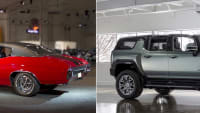
Automotive Engineering
Hercules Readies Alpha Electric Pickup Prototypes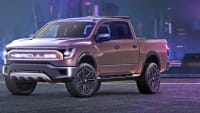
Automotive Engineering
The EV Tech of BMW’s Neue-Klasse IX3
Automotive Engineering
BMW Takes Multi-Modal Route to Manufacturing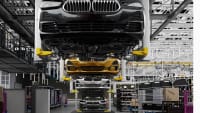
Automotive Engineering
Industry Vet: Rapid Change Required to Catch up to Chinese EV Maker

Automotive Engineering
GM’s Ultium Battery System Future-Proofed
Automotive Engineering
EV Battery Manufacturing Commitments Surge in U.S.

Top Stories
NewsRF & Microwave Electronics
 Microvision Aquires Luminar, Plans Relationship Restoration, Multi-industry Push
INSIDERAerospace
 A Next Generation Helmet System for Navy Pilots
INSIDERDesign
 New Raytheon and Lockheed Martin Agreements Expand Missile Defense Production
INSIDERMaterials
 How Airbus is Using w-DED to 3D Print Larger Titanium Airplane Parts
NewsPower
 Ford Announces 48-Volt Architecture for Future Electric Truck
ArticlesAR/AI

Webcasts
Aerospace
 Cooling a New Generation of Aerospace and Defense Embedded...
Automotive
 Battery Abuse Testing: Pushing to Failure
Transportation
 A FREE Two-Day Event Dedicated to Connected Mobility
Unmanned Systems
 Quiet, Please: NVH Improvement Opportunities in the Early Design Cycle
Transportation
 Advantages of Smart Power Distribution Unit Design for Automotive &...
Energy
 Sesame Solar's Nanogrid Tech Promises Major Gains in Drone Endurance
Similar Stories
NewsUnmanned Systems
 GM Deploying Electricals of the Future
Technology ReportAutomotive
 GM’s Nitz Gets New Dual Role of EV and Transmission Engineering Director
NewsManufacturing & Prototyping
 New Ultium Battery System Underpins GM’s EV Future
EditorialManufacturing & Prototyping
NewsPower
 New GM, LG Chem Joint Venture to Build EV Battery Plant in U.S.