




Piston Ring Coating for High-Output GTDI Engines
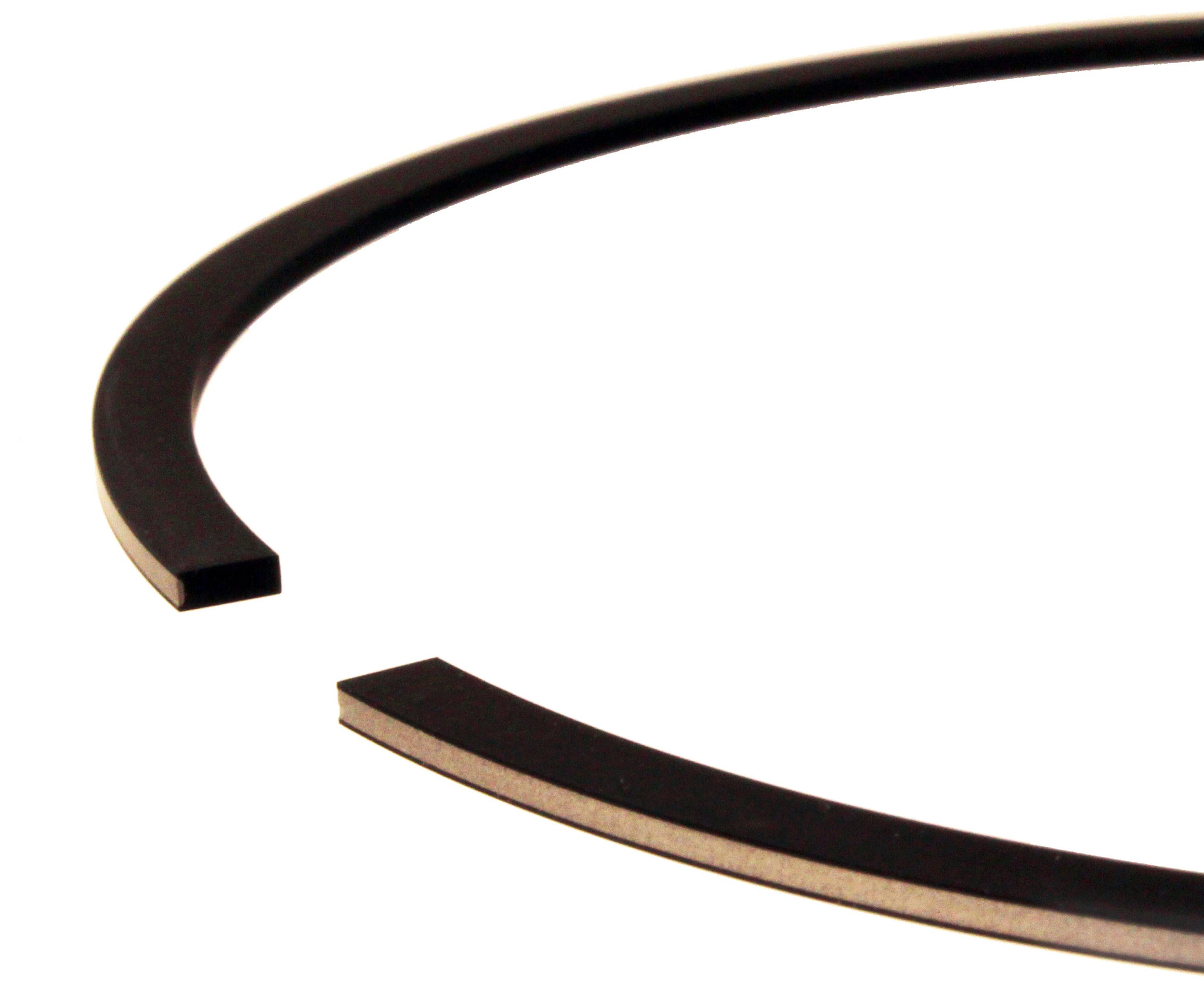
Mahle claims to deliver improved top piston rings using a new thermal spray coating for gasoline turbocharged direct injected engines. Under development since 2011 at Mahle’s thermal spray development labs in Muskegon and St. Johns, MI, the new process initially was designed for high-output GTDI engines currently in production by two U.S. domestic automakers. The new coating also was developed to help meet requirements for new production engines planned for 2018-2020, which call for less cylinder-bore friction and the use of lower-viscosity oils and alternative fuels. According to Mahle, the coating provides the performance of a more costly premium inlaid top ring. Referred to as MSC312, the new coating improves upon the scuff-and-wear capabilities of the supplier’s MSC385 coating because of its chromium nitride (CrN) composition, applied through a high-velocity oxygen fuel (HVOF) method. Tested against the MSC385 (chrome carbide HVOF) currently used in several North American production engines, MSC312 improves wear by up to 25%, the company claims. The thickness of the new coating can be adjusted to meet engine durability requirements. CrN coatings, which are common in the piston-ring industry when applied by physical vapor deposition, provide excellent wear resistance and low friction between piston ring and cylinder wall, and also resist scuffing at the ring-to-wall interface. Mahle claims that its new coating is the first thermally applied piston ring coating to use CrN in its formulation; the addition of molybdenum-chrome provides enhancements to pure CrN. In downsized GTDI engines, conventional top-ring plasma rings are not sufficiently robust to survive high levels of pre-ignition activity associated with low-speed, high-boost conditions, according to Mahle.
More From SAE Media Group

Off-Highway Engineering
Cummins New X15 Engine Meets Upcoming Regs While Boosting Efficiency
Automotive Engineering
2022 Nissan Rogue Gets a VC Turbo Triple
Automotive Engineering
Engine Researchers: 50% Gasoline-Engine Efficiency in Sight
Automotive Engineering
New Peugeot 3-Cylinder Gasoline Engine Family Optimizes Combustion
Off-Highway Engineering
Perkins Bets Big on Smaller Engine for Off-Highway Machines
Automotive Engineering
Chevrolet Delivers a Bombshell with First-Ever 4-Cylinder for Fullsize Pickups
Off-Highway Engineering
Could This Infinitely Variable Compression Mechanism Be the Next Piston Engine Game-Changer?
Off-Highway Engineering
Mahle, Liebherr Develop Active Pre-Chamber for Hydrogen ICE
Automotive Engineering
Optimizing Hybrids for Cost and Efficiency
Automotive Engineering
Mercedes-AMG Extracts World-Record Power from New Four-Cylinder Engine
Off-Highway Engineering
Cummins’ New Mid-Displacement Turbos Quieter and More Efficient
Aerospace & Defense Tech Briefs
X Marks the Spot
Automotive Engineering
V-Charging Aims to Add Muscle to Downsized Engines
Automotive Engineering
Supercharging Advances with Clutches
Automotive Engineering
Eaton Goes Internal with Its Next-Generation EGR Solution
Off-Highway Engineering
SwRI: CHEDE Consortium Closing in on 55% HD Diesel-Engine Efficiency
Automotive Engineering
GM details Corvette’s new and mighty LT6 V8
Automotive Engineering
Cooled EGR Shows Benefits for Gasoline Engines
Off-Highway Engineering
IAV Brings Variable Valvetrains to Heavy Duty
Off-Highway Engineering
Navistar Updates A26 Engine, Improves FE by 4%
Automotive Engineering
Mahle’s Pre-Chamber MJI Technology Is Sparking Ignition Advances
Automotive Engineering
Extending the ICE Age: Hyundai Optimizing Engines and Fuels
Automotive Engineering
Extending a Wankel Future on Hydrogen Fuel
Automotive Engineering
Targeting 40% BTE with Advanced VCR
Automotive Engineering
Achates Powers toward Production
Off-Highway Engineering
Isuzu Simplifies Fuel Changeovers
Automotive Engineering
German Spark-Ignited Compression-Ignition Research Paralleling Mazda’s SPCCI
Automotive Engineering
First Look: GM’s New Modular Ecotec Engines
Automotive Engineering
Audi Evolves the Miller Cycle in Its New 2.0-L Spark-Ignition Engine
Top Stories
INSIDERManufacturing & Prototyping
 How Airbus is Using w-DED to 3D Print Larger Titanium Airplane Parts
INSIDERManned Systems
 FAA to Replace Aging Network of Ground-Based Radars
NewsTransportation
 CES 2026: Bosch is Ready to Bring AI to Your (Likely ICE-powered) Vehicle
NewsSoftware
 Accelerating Down the Road to Autonomy
EditorialDesign
 DarkSky One Wants to Make the World a Darker Place
INSIDERMaterials
 Can This Self-Healing Composite Make Airplane and Spacecraft Components Last...
Webcasts
Defense
 How Sift's Unified Observability Platform Accelerates Drone Innovation
Automotive
 E/E Architecture Redefined: Building Smarter, Safer, and Scalable...
Power
 Hydrogen Engines Are Heating Up for Heavy Duty
Electronics & Computers
 Advantages of Smart Power Distribution Unit Design for Automotive...
Unmanned Systems
 Quiet, Please: NVH Improvement Opportunities in the Early Design...
