




Supercharging Advances with Clutches

For boosting an engine, exhaust gas turbochargers offer efficiency in scavenging waste heat and converting it for more power. Their problem is that they often lack advantage in low-speed conditions before the turbo has a chance to spin-up. Traditionally, superchargers, especially the Roots-type offered by Eaton, more easily provide that power at low-rpm, but at a cost to efficiency since they are mechanically driven by the engine crankshaft, not by its exhaust.

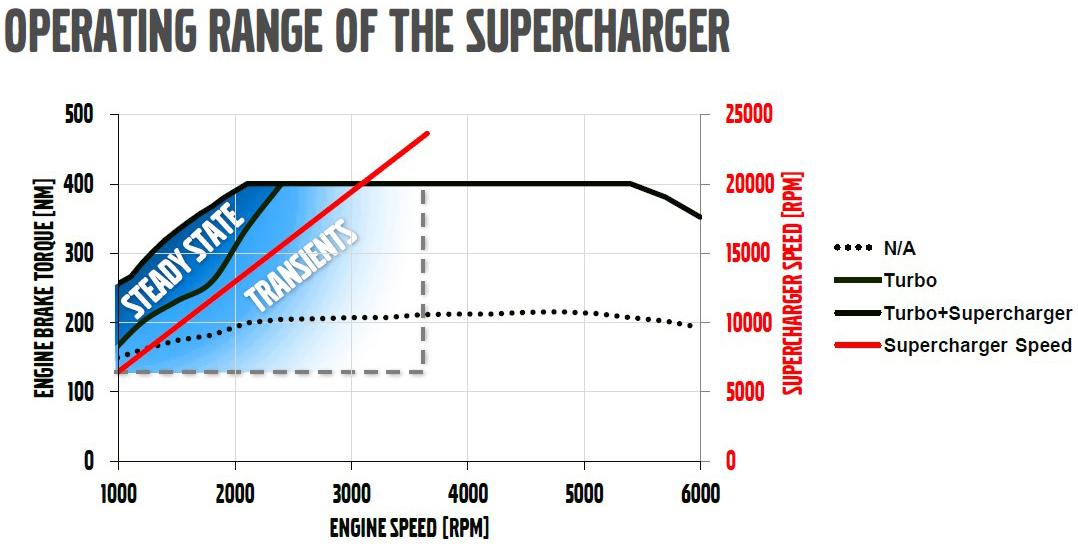
Eaton’s addition of a clutch to its TVS supercharger changes that equation a bit. According to company engineers, the clutched TVS features an integrated electromagnetic clutch located between the drive pulley, connected to the accessory drive, and the supercharger rotors. During idle, light throttle, and cruising situations, the supercharger is disengaged, and air bypasses the unit.
With this arrangement, "the supercharger becomes a true transient response device, providing boost when needed in high power, low engine speed situations,” explained Dan Ouwenga, Engineering Manager for superchargers. “When extra power is not required, the clutch decouples the supercharger from the engine, reducing friction and saving fuel.” OEMs can now select the portion of the engine speed range to operate the supercharger, enhancing control and efficiency.
Perhaps one of the more interesting applications, at the expense of engine complexity, is pairing a clutched supercharger with exhaust gas turbocharger to get the best of both. That is what Volvo did on its T6 Drive-E 2.0-L, direct-injected inline four that powers the 2015 XC90. The engine will transition the turbo for boosting at higher engine speeds, and the clutch disengages the Eaton supercharger to increase efficiency.
Does the clutch add packaging complexity? “The clutch itself is approximately 100 mm in diameter and 50 mm long and weighs 2 kg,” explained Ouwenga. “The impact to packaging is dependent on the size of the clutch but also the other components that may be added to the supercharger.”
It will also increase calibration complexity, since the clutch control has to be integrated into the ECU software strategy. Then, calibrators will need to set locations where and when the clutch should be engaged, and also manage how soft or hard the engagement of the clutch occurs.
“The clutch itself only requires a 12-V signal to activate, similar to any automotive electromagnetic clutch," he remarked. "The challenge is the modulation during the clutch engagement, which requires a modulated signal to allow the clutch to smoothly engage.”
More From SAE Media Group
Off-Highway Engineering
Cummins’ New Mid-Displacement Turbos Quieter and More Efficient
Off-Highway Engineering
Navistar Updates A26 Engine, Improves FE by 4%
Automotive Engineering
2022 Nissan Rogue Gets a VC Turbo Triple
Automotive Engineering
Engine Researchers: 50% Gasoline-Engine Efficiency in Sight
Automotive Engineering
Extending a Wankel Future on Hydrogen Fuel

Automotive Engineering
Unique Helmholtz Induction Feeds 2023 Corvette Z06
Off-Highway Engineering
Kohler Extends Its Hand in Off-Highway Diesels

Automotive Engineering
Cooled EGR Shows Benefits for Gasoline Engines
Off-Highway Engineering
Tier 4 Diesels
Off-Highway Engineering
Cummins New X15 Engine Meets Upcoming Regs While Boosting Efficiency
Automotive Engineering
Mercedes-AMG Extracts World-Record Power from New Four-Cylinder Engine
Off-Highway Engineering
Isuzu Simplifies Fuel Changeovers
Off-Highway Engineering
Caterpillar Unveils New Stage V, Tier 4 Final Industrial Engine
Automotive Engineering
V-Charging Aims to Add Muscle to Downsized Engines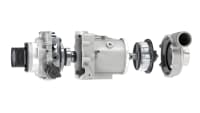
Automotive Engineering
New Peugeot 3-Cylinder Gasoline Engine Family Optimizes Combustion
Automotive Engineering
Frictionless Engine Seals
Automotive Engineering
Ferrari Massages 458 to Create 488 GTB
Off-Highway Engineering
MTU Training Facility Helps Keep Complex Engines up and Running
Off-Highway Engineering
Refining Heavy-Duty Diesel Fuel Systems
Off-Highway Engineering
Perkins Bets Big on Smaller Engine for Off-Highway Machines
Automotive Engineering
Targeting 40% BTE with Advanced VCR
Automotive Engineering
GM details Corvette’s new and mighty LT6 V8
Off-Highway Engineering
SwRI: CHEDE Consortium Closing in on 55% HD Diesel-Engine Efficiency
Automotive Engineering
Chevrolet Delivers a Bombshell with First-Ever 4-Cylinder for Fullsize Pickups
Automotive Engineering
Audi Evolves the Miller Cycle in Its New 2.0-L Spark-Ignition Engine
Automotive Engineering
Answering the Fuel-cell Compressor Question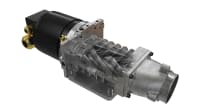
Automotive Engineering
SwRI’s D-EGR Demo Car Wows SAE Engines Symposium with 42% BTE
Automotive Engineering
Power Struggle Produces ESupercharger
Top Stories
INSIDERManufacturing & Prototyping
 How Airbus is Using w-DED to 3D Print Larger Titanium Airplane Parts
INSIDERManned Systems
 FAA to Replace Aging Network of Ground-Based Radars
NewsTransportation
 CES 2026: Bosch is Ready to Bring AI to Your (Likely ICE-powered) Vehicle
NewsSoftware
 Accelerating Down the Road to Autonomy
EditorialDesign
 DarkSky One Wants to Make the World a Darker Place
INSIDERMaterials
 Can This Self-Healing Composite Make Airplane and Spacecraft Components Last...
Webcasts
Defense
 How Sift's Unified Observability Platform Accelerates Drone Innovation
Automotive
 E/E Architecture Redefined: Building Smarter, Safer, and Scalable...
Power
 Hydrogen Engines Are Heating Up for Heavy Duty
Electronics & Computers
 Advantages of Smart Power Distribution Unit Design for Automotive...
Unmanned Systems
 Quiet, Please: NVH Improvement Opportunities in the Early Design...
