




Komatsu America Adds to Intelligent Machine Lineup
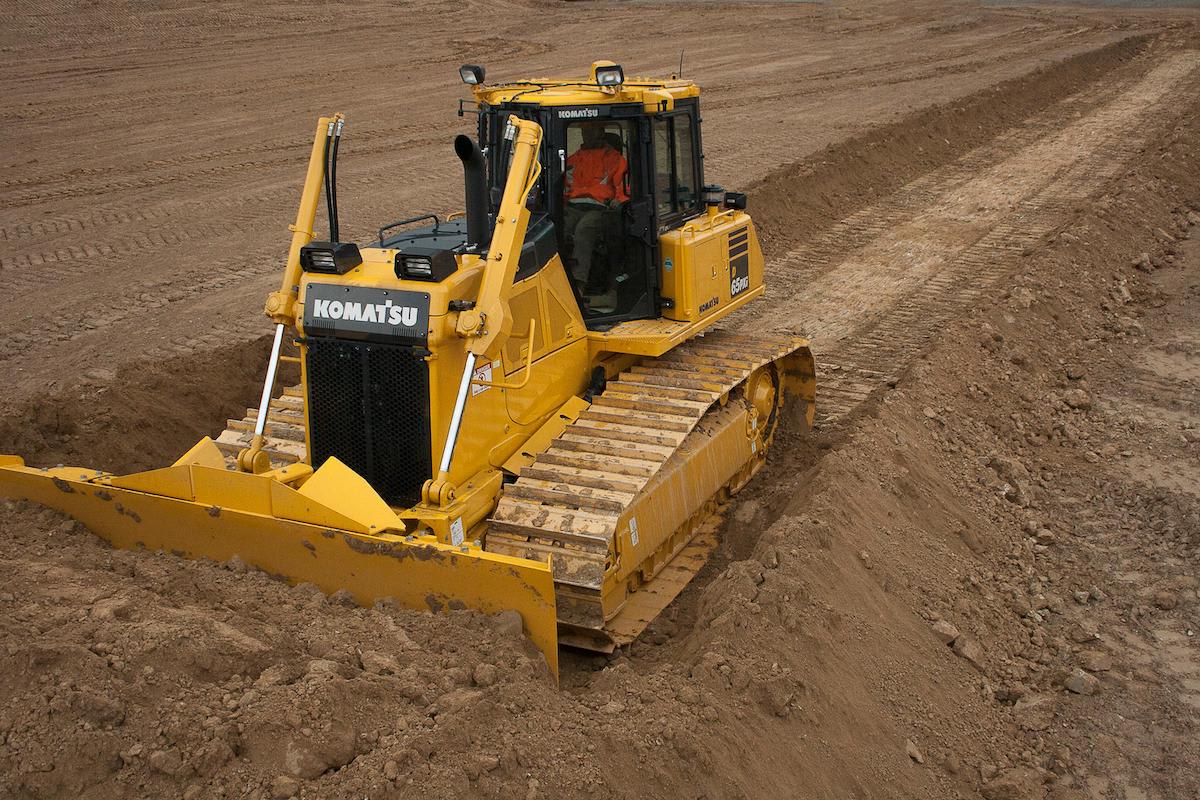
The long track, low ground pressure D65PXi-18 introduced recently by Komatsu America Corp. was designed specifically for functionality in soft or wet conditions, offering improved stability for finish grading applications. It is powered by a 217-hp (162-kW) SAA6D114E-6 Tier 4 Final emissions certified engine.

Highlights of the crawler dozer include next-generation intelligent machine control. “The machine senses blade load, minimizes track slip, and ensures operators get the most from every push,” said Jason Anetsberger, Komatsu product manager. “We believe the difference in dozing efficiency between conventional machine operation and intelligent machine control technology is exceptional.”
The intelligent machine control system on the D65PXi-18 allows automated operation from heavy dozing to fine grading, achieving up to 8% greater efficiency in moving material, based on start-to-finish grade testing of typical aftermarket machine control systems. By designing out blade-mounted sensors and components, operators no longer need to climb on the blade to install/remove GNSS antennas, eliminating the need to care for electrical connections. Komatsu emphasizes that by getting rid of such cables, and the climbing and connections common with aftermarket systems, operators save 15 minutes at the start and finish of each day. A 30-minutes-a-day savings for 20 days a month is 10 saved hours per month.
An automatic gearshift transmission and lock up torque converter selects the optimal gear range depending on jobsite conditions and load for maximum operation efficiency. This electronically controlled transmission locks up the torque converter to transfer engine power directly to the transmission, eliminating power loss and cutting fuel consumption by up to 10%.
D65PXi-18's ROPS (roll-over protection structure) certified, pressurized cab has wide, tall windows and properly sealed for increased visibility and less noise and dust inside the cab. The D65PXi-18 cab damper mounts isolate the cab from the machine frame, softening shocks and vibrations to the operator.
More From SAE Media Group
Off-Highway Engineering
FEV Simplifies Off-Highway Electrification
Off-Highway Engineering
Reshaping the Mobile-hydraulic Ecosystem
Off-Highway Engineering
Deere Tier 4 Final Construction-Class Dozers Feature New Electrohydraulic System
Off-Highway Engineering
Garrett Two-Stage Turbos Ramp up Off-Highway
Off-Highway Engineering
Komatsu Augments Intelligent Machine Control in New Excavator
Automotive Engineering
Gearing Dana for the EV Future
Off-Highway Engineering
Allison Purpose-Builds More Powerful TerraTran Transmission
Off-Highway Engineering
Komatsu Targets Productivity, Operator Comfort With New WA480-8 Wheel Loader
Off-Highway Engineering
Paccar Announces TX-18 Automated Transmission
Off-Highway Engineering
Volvo E Excavators Said to Excel in Efficiency
Off-Highway Engineering
Gearshift Actuator Dynamics in a Dual Clutch Transmission
Automotive Engineering
More Gears, More Challenges
Off-Highway Engineering
Volvo CE’s New Short Swing Radius Excavator
Off-Highway Engineering
Miserly Power Systems
Automotive Engineering
Gearing EVs for Greater Efficiency
Off-Highway Engineering
Cat Designs Its 336F L XE Hybrid Excavator with Building-Block Technologies
Off-Highway Engineering
Dana Rexroth Completes Validation Testing on R2 HVT
Off-Highway Engineering
Toro Introduces Its Largest Compact Utility Vehicle
Off-Highway Engineering
Volvo Reveals New VNL with SuperTruck Influence
Automotive Engineering
Bosch’s EV Efficiency Upgrade: Continuously Variable Transmissions
Off-Highway Engineering
New Holland Electric Mini-Excavator Hits Market
Off-Highway Engineering
HD Hyundai Rolls out a Slew of New Machines
Off-Highway Engineering
Engine Developers Increase Efforts to Decrease Fuel Usage
Off-Highway Engineering
Caterpillar Updates Its D7E Diesel-Electric Dozer
Automotive Engineering
Renault Applies Model-Based Systems Engineering to Dual-Clutch Transmission
Off-Highway Engineering
Caterpillar's 990K Wheel Loader Offers More Power, Increased Payload
Off-Highway Engineering
APUs save Fuel, Serve as Driver Retention Tool
Off-Highway Engineering
Cat Pipelayers Offer Power and Comfort to Operators
Off-Highway Engineering
Hexagon Bullish on CNG for Long-Haul Trucks
Off-Highway Engineering
Operator Safety, Productivity Focus of Volvo CE's Crawler Excavator
Top Stories
INSIDERManufacturing & Prototyping
 How Airbus is Using w-DED to 3D Print Larger Titanium Airplane Parts
INSIDERManned Systems
 FAA to Replace Aging Network of Ground-Based Radars
NewsTransportation
 CES 2026: Bosch is Ready to Bring AI to Your (Likely ICE-powered) Vehicle
NewsSoftware
 Accelerating Down the Road to Autonomy
EditorialDesign
 DarkSky One Wants to Make the World a Darker Place
INSIDERMaterials
 Can This Self-Healing Composite Make Airplane and Spacecraft Components Last...
Webcasts
Defense
 How Sift's Unified Observability Platform Accelerates Drone Innovation
Automotive
 E/E Architecture Redefined: Building Smarter, Safer, and Scalable...
Power
 Hydrogen Engines Are Heating Up for Heavy Duty
Electronics & Computers
 Advantages of Smart Power Distribution Unit Design for Automotive...
Unmanned Systems
 Quiet, Please: NVH Improvement Opportunities in the Early Design...
