




Denso Shows Readiness for V2X and Smart City
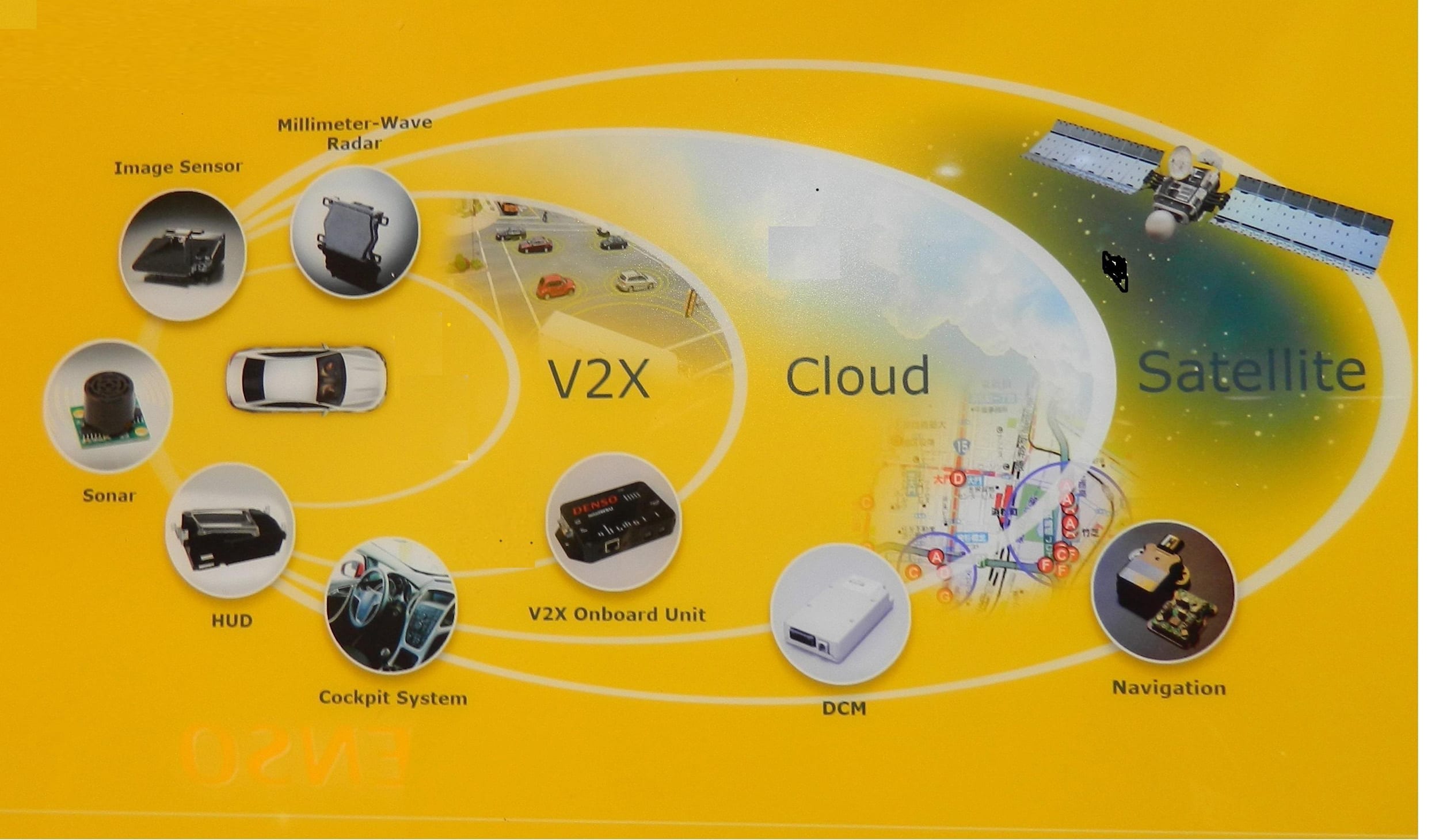
Denso, a major player in a number of markets from home to automotive, displayed at the 2015 North American International Auto Show in Detroit an electronically activated diorama of a city and its traffic. The company also offered show attendees the chance to "ride" in a simulator that demonstrates the safety features of a V2X (vehicle to vehicle and infrastructure) environment.
DSRC and V2X module
To minimize the wrong turns in engineering development, Denso naturally is focusing on those areas in which it has long been a player, explained Pat Bassett, Vice President of R&D for Denso International America. One obviously is V2X using DSRC (dedicated short range communications), the section of the 5.9-GHz band that the U.S. Department of Transportation has set aside for road safety and traffic management.
In addition to the public infrastructure, a "Smart City" and the automotive safety advances anticipated by DOT take an in-car communications module, and Bassett noted that at least one make, Cadillac, has said it expects to begin installations next year. Even if other makes start at the same time, it will be many years before intersections are sufficiently populated with V2X module-equipped cars to predict impending hazards and prevent accidents by warning drivers and/or even taking action automatically.

Bassett admitted this is one of the imponderables, and he conceded that car makers, short of a government mandate for new cars and perhaps a retrofit program for non-equipped vehicles, need to be able to provide a tangible benefit to justify the early cost of installing V2X communication. Some cities, such as Los Angeles, have computer-controlled traffic light systems, which could be upgraded to help cars with V2X travel through them with a minimum number of stops.
Denso has been working since 2003 on V2X modules that communicate with compatible traffic signals, and it is participating in traffic control demonstration projects in Europe and Japan, and close to its North American regional headquarters in Southfield, MI, plus others in California, New York, and Florida.
Home energy management
Denso's vision of a Smart City also includes the home, Bassett said, as the company makes hot water heaters (that use carbon dioxide as the working fluid) and a range of home electronic control systems. For those products outside of its purview, Denso has been working with partners.
As a test in Japan, Bassett noted, the company is collaborating with Toyota and a home builder to test a HEMS (Home Energy Management System) project. It ties a home with electronic control of household temperature, hot water, household lighting and appliances, and door locks, to a plug-in car and a smartphone. So with a paired phone, the motorist on the road has the same control over the household interior (and even the charging of a plug-in car on home charge) as he/she would with the control panel on the wall in his/her home.
Because interior climate control and refrigeration are key parts of Denso's product lineup, Bassett observed that the company also is a participant in a Japanese "Cold Chain." This is a supply-chain improvement initiative to provide energy-efficient cold storage and maximum shelf life for agricultural and other food products, medicines, etc. from point of origin through processing to a Smart City market.
More From SAE Media Group
Automotive Engineering
Can Ads Help in Vehicle-To-Vehicle Rollout?
Automotive Engineering
V2X Communications Face Many Challenges Before Deployment
Automotive Engineering
Xerox Eyes DSRC for Vehicle Infrastructure Support
Automotive Engineering
BMW, Honda and Yamaha Form Connected Motorcycle Consortium
Automotive Engineering
Shanghai’s Human Horizons Unveils a 5G-V2X-Enabled Electric, Luxury SUV
Off-Highway Engineering
DENSO and Toyota Form a Joint Venture for Next-Generation Vehicle Semiconductors
Automotive Engineering
2016 SAE Congress: Fear of the Driverless Car as 2020 Approaches
Automotive Engineering
As V2I Evolves, Costs, Maintenance Concerns Emerge
Automotive Engineering
SAE Government/Industry 2018: AT&T Reaffirms Mobile 5G Trials, DSRC ‘Still Alive’
Off-Highway Engineering
Peloton Develops a Level 4 Automated Platooning System, but Keeps the Driver in Charge
Automotive Engineering
Automotive Cybersecurity Needs Serious Work
Automotive Engineering
Sensor Fusion Expanding in Step with Advancing Vehicle Sophistication
Autonomous Vehicle Engineering
Prepping Cities for Vehicle Autonomy

Off-Highway Engineering
MOBI Rolls out the First Blockchain-Enabled Vehicle Identity (VID) Mobility Standard
Autonomous Vehicle Engineering
Predicting the Road to Efficiency
Off-Highway Engineering
WCX 2019: IAMTS Association Will Establish Standardization and Testing for Connected Vehicles
Off-Highway Engineering
Europe’s Blockchain-Based Smart E-Mobility Challenge Will Conclude This May in Germany
Automotive Engineering
Making Connections: New V2X Tech Brings in Smartphones, Next-Gen ECall
Automotive Engineering
WCX 2025: Study Shows Safety Top Priority of Potential Vehicle-To-Everything Consumers
Off-Highway Engineering
Volvo Trucks, FedEx Demonstrate 3-Truck Platoon on North Carolina Highway
Autonomous Vehicle Engineering
The Navigator: As the World Turns to C-V2X, Europe Picks WiFi
Automotive Engineering
Automotive-Qualified Chipset for V2X
Automotive Engineering
Designing for Downforce
Autonomous Vehicle Engineering
V2X Signals Are Looking Up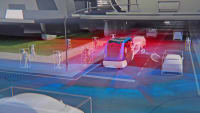
Automotive Engineering
Challenges Galore for Connected Cars
Off-Highway Engineering
Electrify America Wants an Emoji for Electric Vehicles
Off-Highway Engineering
Beep and Bestmile Partner on Self-Driving Fleets in Florida
Off-Highway Engineering
Argus Makes Fleet Protection Cybersecurity Available to Both Automotive and Aircraft Fleets
Top Stories
INSIDERManufacturing & Prototyping
 How Airbus is Using w-DED to 3D Print Larger Titanium Airplane Parts
INSIDERManned Systems
 FAA to Replace Aging Network of Ground-Based Radars
NewsTransportation
 CES 2026: Bosch is Ready to Bring AI to Your (Likely ICE-powered) Vehicle
NewsSoftware
 Accelerating Down the Road to Autonomy
EditorialDesign
 DarkSky One Wants to Make the World a Darker Place
INSIDERMaterials
 Can This Self-Healing Composite Make Airplane and Spacecraft Components Last...
Webcasts
Defense
 How Sift's Unified Observability Platform Accelerates Drone Innovation
Automotive
 E/E Architecture Redefined: Building Smarter, Safer, and Scalable...
Power
 Hydrogen Engines Are Heating Up for Heavy Duty
Electronics & Computers
 Advantages of Smart Power Distribution Unit Design for Automotive...
Unmanned Systems
 Quiet, Please: NVH Improvement Opportunities in the Early Design...
