




Bell and U.S. Army Advance V-280 Valor Development and Aviation Modernization
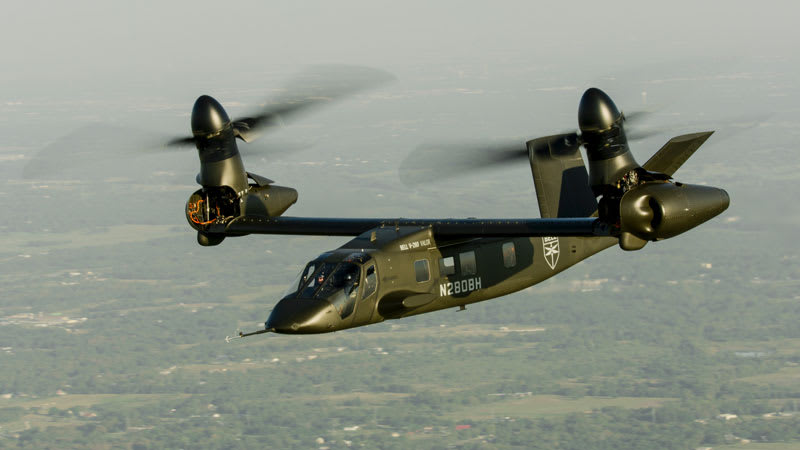
Bell Textron Inc. and the U.S. Army have agreed to terms on the execution of the second phase of the Competitive Demonstration and Risk Reduction (CD&RR) contract that was awarded in March 2020 for the Future Long-Range Assault Aircraft (FLRAA) program. This new contract is an important milestone and testament to the continued momentum for Army modernization. Bell’s flight-proven V-280 Valor design advances from an aircraft with transformational speed and survivability towards a low-risk weapons system ready to support joint combined arms and maneuver operations around the world.
During phase one of the CD&RR, Bell provided detailed iterations on the V-280 design, data to highlight the feasibility of executing the program of record requirements, and executed trade studies using model-based systems engineering. This work will continue under phase two as the Army finalizes requirements for the program of record planned for 2022.
Bell has already safely delivered groundbreaking performance and successfully completed a rapid design, build, and test program with the V-280. Since its first flight in 2017, the V-280 team has executed a rigorous flight test program flying more than 200 hours through over 160 individual test flights that delivered critical data to validate Bell’s digital models and performance.
As the FLRAA competition moves to a program of record, Bell continues to take a holistic approach to transition the V-280 to a weapons system that ensures exceptional performance and is affordable throughout the lifecycle. From the outset, the Bell V-280 Valor was designed for efficiency—using simplified and inherently reliable designs, adhering to Army Modular Open Systems Approach (MOSA) requirements, reducing maintenance costs, and increasing reliability. Bell applied digital design and manufacturing technologies, included maintenance as part of the design process, and used emerging commercial processes to bring a comprehensive view of digital models, processing, and analysis. This methodology has reduced programmatic risk, improved lifecycle maintenance and servicing outcomes, increasing program affordability.
More From SAE Media Group
Aerospace Manufacturing and Machining INSIDER
Bell and Rolls-Royce Collaborate on Advanced Propulsion Systems



Aerospace INSIDER
Quarterhorse Hypersonic Test Aircraft Completes First Flight
Aerospace INSIDER
Airbus Reveals Blended Wing Aircraft Demonstrator
Aerospace INSIDER
Production Ready B-21 Bomber on Track for First Flight This Year

Aerospace INSIDER
Anduril Completes First Semi-Autonomous Flight of CCA Prototype
Aerospace INSIDER
Bombardier to Start Building New Army HADES Prototype Spy Plane
Aerospace INSIDER
Autonomous Black Hawk® Flies Missions Without Pilots on Board
Aerospace INSIDER
WATCH: Air Force Research Lab's First Flight of XQ-67A Drone
Defense INSIDER
Military Evaluates Vertical-Lift Aircraft Designs
Motion Design INSIDER
Tailless Jet Flies Free with Novel Control Technique
Aerospace INSIDER
How the Air Force's B-21 Raider is Advancing Across Test and Production
Aerospace INSIDER
Helsing Unveils New Autonomous Fighter Jet 'CA-1 Europa'


Aerospace INSIDER
Archer Delivers First Midnight eVTOL to US Air Force
Aerospace & Defense Tech Briefs
Attack Reconnaissance Helicopter

Aerospace INSIDER
Archer Achieves First Untethered Flight with Midnight eVTOL
Aerospace INSIDER
Air Force to Buy Archer eVTOL Under New Contracts
Aerospace INSIDER
MQ-1C Completes First Air-Launched Effect Flight Demonstration

Tech Briefs
RISING STAR AWARDS 2025 WINNERS ANNOUNCED
Tech Briefs
RISING STAR AWARD RULES
Aerospace INSIDER
Hermeus Quarterhorse Joins Hypersonic High Cadence Testing Program
Top Stories
INSIDERDefense
 New Raytheon and Lockheed Martin Agreements Expand Missile Defense Production
NewsAutomotive
 Ford Announces 48-Volt Architecture for Future Electric Truck
INSIDERManufacturing & Prototyping
 Active Strake System Cuts Cruise Drag, Boosts Flight Efficiency
ArticlesTransportation
 Accelerating Down the Road to Autonomy
INSIDERMaterials
 How Airbus is Using w-DED to 3D Print Larger Titanium Airplane Parts
Road ReadyTransportation

Webcasts
Electronics & Computers
 Cooling a New Generation of Aerospace and Defense Embedded...
Power
 Battery Abuse Testing: Pushing to Failure
Connectivity
 A FREE Two-Day Event Dedicated to Connected Mobility
Automotive
 Quiet, Please: NVH Improvement Opportunities in the Early Design Cycle
Transportation
 Advantages of Smart Power Distribution Unit Design for Automotive &...
Aerospace
 Sesame Solar's Nanogrid Tech Promises Major Gains in Drone Endurance