




Joby, L3Harris to Develop Autonomous Hybrid VTOL for Defense Applications

Joby Aviation and L3Harris Technologies have announced a new partnership to explore the development of a new aircraft class for defense applications. The gas turbine hybrid vertical take-off and landing (VTOL) aircraft is being designed for low-altitude missions and offers the versatility of being optionally piloted, enabling both crewed and fully autonomous operations.
The collaboration leverages Joby’s existing commercial aircraft development program and leading manufacturing capabilities, combined with L3Harris’ proven expertise on platform missionization including sensors, effectors, communication and collaborative autonomy. Flight testing is expected to start this fall with the companies planning to perform operational demonstrations during government exercises in 2026.
“The next-generation of vertical lift technology enables long-range, crewed-uncrewed teaming for a range of missions,” said Jon Rambeau, President, Integrated Mission Systems, L3Harris. “We share a vision with Joby to deliver urgently-required innovation by missionizing VTOL aircraft for defense needs.”
JoeBen Bevirt, founder and CEO, Joby Aviation, added: “We have worked closely with the Department of Defense over the past decade to give them a front row seat to the development of our dual-purpose technologies, and we’re now ready to demonstrate and deploy it. Our country depends on companies like ours moving at pace, and we have the team, the technology and the platform to do just that.”
Joby is actively developing a gas turbine hybrid powertrain for its current S4 aircraft platform and has demonstrated aircraft-level autonomy following its acquisition of the autonomy division of Xwing in June 2024. It has previously demonstrated under government contract that its platform can be hybridized to deliver longer-ranges, showcasing an industry-first 561 mile hydrogen-electric hybrid flight in June 2024.
More From SAE Media Group

Aerospace INSIDER
Archer Delivers First Midnight eVTOL to US Air Force
Aerospace INSIDER
DoD's First Electric Aircraft Charging Station is a BETA Supercharger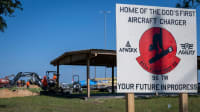
Aerospace INSIDER
Air Force Receives First eVTOL Six Months Ahead of Schedule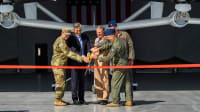
Aerospace INSIDER
Airbus Preparing to Fly New Prototype eVTOL This Year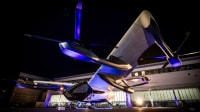
Aerospace INSIDER
Joby Aviation Announces Acoustic Data from NASA Testing
Aerospace INSIDER
MQ-1C Completes First Air-Launched Effect Flight Demonstration
Aerospace INSIDER
Quarterhorse Hypersonic Test Aircraft Completes First Flight
Aerospace INSIDER
Anduril Completes First Semi-Autonomous Flight of CCA Prototype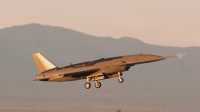
Aerospace INSIDER
Navy Completes 73-Hour Nonstop Flight of Solar-Powered UAS
Aerospace & Defense Tech Briefs
Rising Star Awards: Women in Engineering Aerospace Winner - Heather Cummings
Aerospace INSIDER
Air Force Pilots Perform Remote Flights with Joby eVTOL
Aerospace INSIDER
Archer Aviation Completes Midnight eVTOL Transition Flight Milestone
Aerospace INSIDER
VSR700 Unmanned Helicopter Performs Autonomous Flight Testing with DGA
Aerospace INSIDER
Archer Achieves First Untethered Flight with Midnight eVTOL
Autonomous Vehicle Engineering
The Electric, Autonomous Revolution Lifts Off

Aerospace INSIDER
Helsing AI Agent Completes Saab Gripen E Test Flight



Aerospace INSIDER
Sikorsky is Designing a New Hybrid Electric Tilt Wing VTOL Demonstrator
Aerospace INSIDER
WATCH: Air Force Research Lab's First Flight of XQ-67A Drone
Aerospace INSIDER
Air Force to Buy Archer eVTOL Under New Contracts
Aerospace INSIDER
F-35 Completes First Flight with Technology Refresh 3 Upgrades
Aerospace INSIDER
German Air Force Starts Flight Testing New Heron ISR Drone
Aerospace INSIDER
Safran's ENGINeUS 100 Electric Motor Earns EASA Certification
Aerospace INSIDER
Eve Air Mobility's eVTOL Prototype Completes First Flight
Aerospace INSIDER
NASA, GE Complete Historic Hybrid-Electric Propulsion Tests
Aerospace INSIDER
Airbus Achieves Autonomous In-Flight Control of Drone From Tanker
Top Stories
NewsSensors/Data Acquisition
 Microvision Aquires Luminar, Plans Relationship Restoration, Multi-industry Push
INSIDERRF & Microwave Electronics
 A Next Generation Helmet System for Navy Pilots
INSIDERWeapons Systems
 New Raytheon and Lockheed Martin Agreements Expand Missile Defense Production
NewsAutomotive
 Ford Announces 48-Volt Architecture for Future Electric Truck
INSIDERAerospace
 Active Strake System Cuts Cruise Drag, Boosts Flight Efficiency
ArticlesTransportation

Webcasts
Aerospace
 Cooling a New Generation of Aerospace and Defense Embedded...
Energy
 Battery Abuse Testing: Pushing to Failure
Power
 A FREE Two-Day Event Dedicated to Connected Mobility
Automotive
 Quiet, Please: NVH Improvement Opportunities in the Early Design Cycle
Electronics & Computers
 Advantages of Smart Power Distribution Unit Design for Automotive &...
Unmanned Systems
 Sesame Solar's Nanogrid Tech Promises Major Gains in Drone Endurance