Navy Completes 73-Hour Nonstop Flight of Solar-Powered UAS
The U.S. Navy, in partnership with Skydweller Aero, recently achieved continuous solar-powered uncrewed flight during a nonstop three-day test from Stennis, Mississippi.
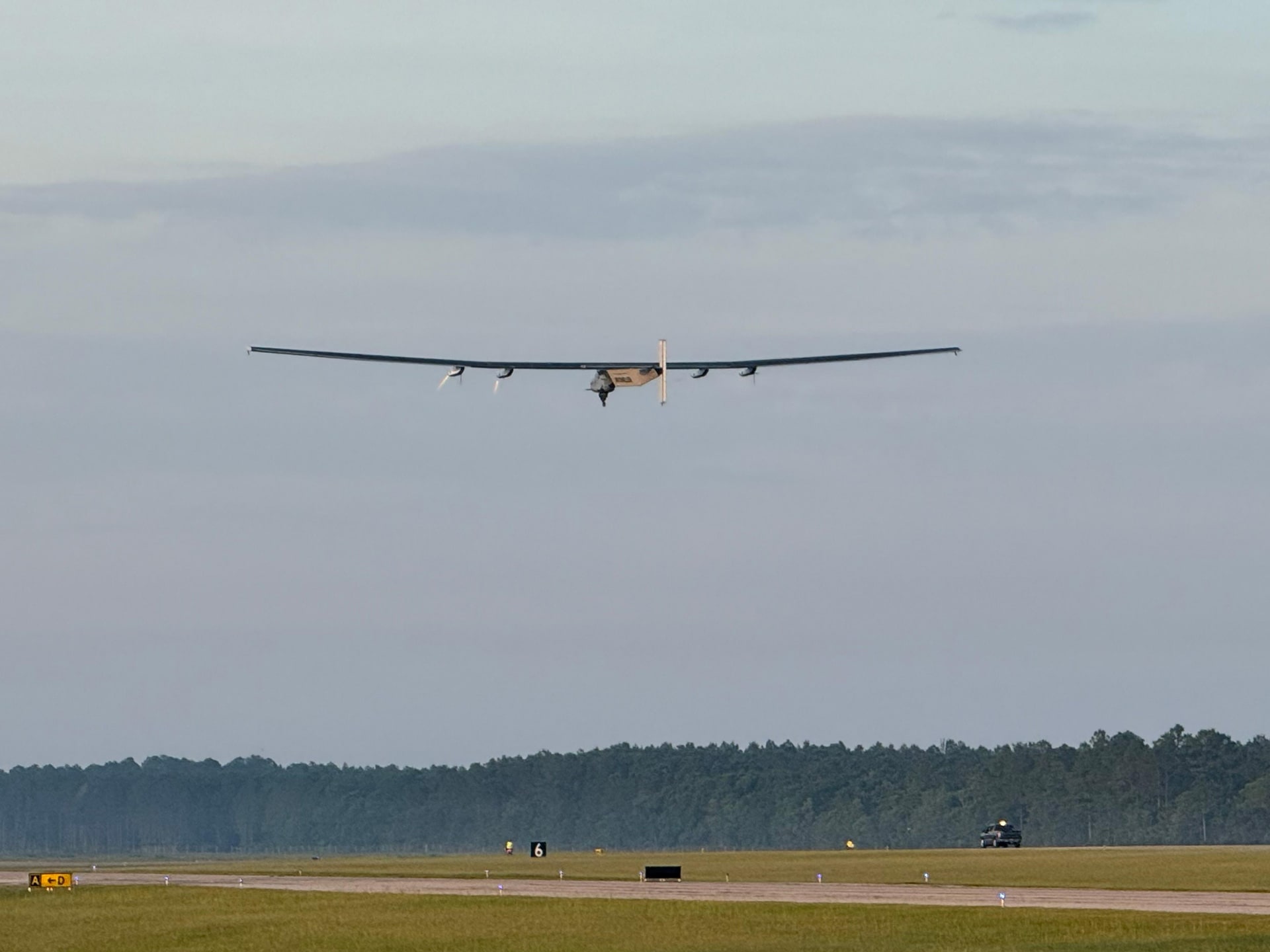
Led by the Naval Air Warfare Center Aircraft Division (NAWCAD), the test of Skydweller UAS marks a significant advancement in both long-endurance solar-powered UAS technology and its potential to enhance maritime intelligence, surveillance, and reconnaissance (ISR).
“This demonstration is a prime example of how NAWCAD partners with industry to deliver what the fleet needs,” said NAWCAD Commander Rear Adm. Todd Evans. “It also reflects the technical depth of our workforce and our ability to translate ideas into capability.”
The 73-hour flight proved Skydweller’s ability to maintain continuous solar-powered operation and demonstrated the feasibility of achieving a positive energy balance to power the aircraft during extended flights. It also validated the system’s communication links, autonomous real-time decision making and ability to adapt to turbulent weather.
“Integrating Skydweller into the Navy’s ISR architecture creates a layered and resilient network that maximizes the capabilities of all our assets,” says NAWCAD’s Special Purpose UAS lead Bill Macchione. “This collaborative approach ensures we have the right platform for the right mission, optimizing our resources and enhancing our overall maritime domain awareness.”

Skydweller’s strength lies in its ability to provide continuous, wide-area surveillance over extended periods, enabling more advanced systems to focus on missions that require such specialized capabilities as rapid response and advanced sensor packages.
The solar-powered aircraft used by the Navy for the test flight is the Solar Impulse 2, which the company describes as the "first solar-powered aircraft to circumnavigate the globe." The aircraft has a 72-meter wingspan (236 feet), — the size of a Boeing 747 — can carry up to 800 pounds of payload and is capable of staying aloft for "30-90 days or longer," according to Skydweller Aero.
The aircraft is powered by solar cells and a backup battery system that is leveraged in overnight operations. According to Skydweller, the aircraft also has a maximum operational altitude of 45,000 feet and a maximum speed of 100 knots (115 mph).
NAWCAD began experimentation with Skydweller’s solar-powered UAS capabilities in 2020 to address U.S. Southern Command (SOUTHCOM) operational challenges, including drug trafficking and border security. This technology provides continuous surveillance over vast areas, enabling the U.S. and its allies to enhance maritime security and disrupt illicit activities. NAWCAD will conduct further testing with Skydweller later this summer in the SOUTHCOM area of responsibility.
More From SAE Media Group
Aerospace INSIDER
Bombardier to Start Building New Army HADES Prototype Spy Plane
Aerospace & Defense Tech Briefs
MQ-25 Vehicle Management Computer Upgrade
Aerospace INSIDER
Archer Delivers First Midnight eVTOL to US Air Force
Aerospace & Defense Tech Briefs
Remotely Piloted Air Systems
Aerospace & Defense Tech Briefs
Enabling Off-the-Shelf Autonomous Naval Warfare

Aerospace INSIDER
GA-ASI Announces Gray Eagle 25M for Multi-Domain Operations
Aerospace & Defense Tech Briefs
Unmanned Demonstrator Aircraft for Maritime Surveillance
Defense INSIDER
AgilePod Flies on U.S. Air Force MQ-9 Reaper
Tech Briefs
Flimmer: The Flying, Swimming Drone
Aerospace & Defense Tech Briefs
Boeing, Liquid Robotics Team on Solutions for Maritime Surveillance
Aerospace INSIDER
Unmanned "Urban Beat Cop" Surveillance System Protects Soldiers
Aerospace & Defense Tech Briefs
PHASA-35 Stratospheric Flight
Aerospace & Defense Tech Briefs
Fully Autonomous Unmanned Vehicles

Defense INSIDER
Tiny UAS Could Be Warfighters’ Eyes in the Sky

Defense INSIDER
MQ-25, H-1 Test Next-Gen Satellite Communications
Aerospace & Defense Tech Briefs
High-Altitude Pseudo Satellites: New Battle for Inner Space, Part I
Aerospace & Defense Tech Briefs
Autonomous Collaborative Platform
Aerospace & Defense Tech Briefs
Rugged Network File Servers
Aerospace & Defense Tech Briefs
Autonomous Helicopters

Tech Briefs
AUSA 2019: Eyes in the Sky
Aerospace & Defense Tech Briefs
Textron Systems, Textron Aviation Defense Demonstrate Simulated Manned-Unmanned Teaming Capability
Aerospace & Defense Tech Briefs
Insitu ScanEagle SUAS Boosts Coast Guard Mission Effectiveness
Top Stories
NewsAutomotive
 Microvision Aquires Luminar, Plans Relationship Restoration, Multi-industry Push
INSIDERDesign
 A Next Generation Helmet System for Navy Pilots
INSIDERWeapons Systems
 New Raytheon and Lockheed Martin Agreements Expand Missile Defense Production
NewsPower
 Ford Announces 48-Volt Architecture for Future Electric Truck
INSIDERAerospace
 Active Strake System Cuts Cruise Drag, Boosts Flight Efficiency
ArticlesTransportation

Webcasts
Aerospace
 Cooling a New Generation of Aerospace and Defense Embedded...
Test & Measurement
 Battery Abuse Testing: Pushing to Failure
Internet of Things
 A FREE Two-Day Event Dedicated to Connected Mobility
Transportation
 Quiet, Please: NVH Improvement Opportunities in the Early Design Cycle
Electronics & Computers
 Advantages of Smart Power Distribution Unit Design for Automotive &...
Aerospace
 Sesame Solar's Nanogrid Tech Promises Major Gains in Drone Endurance
Similar Stories
INSIDERAerospace
 Bombardier to Start Building New Army HADES Prototype Spy Plane
INSIDERAerospace
 Unmanned "Urban Beat Cop" Surveillance System Protects Soldiers
INSIDERAerospace
 Aerospace Vehicle Survivability Facility Helps Reduce Aircraft Losses
INSIDERDefense
 Navy, Marine Corps Test New Laser System for Precision Aircraft Painting
INSIDERDefense
 Tiny UAS Could Be Warfighters’ Eyes in the Sky