




Multispectral Airborne Reconnaissance System Completes First Flight
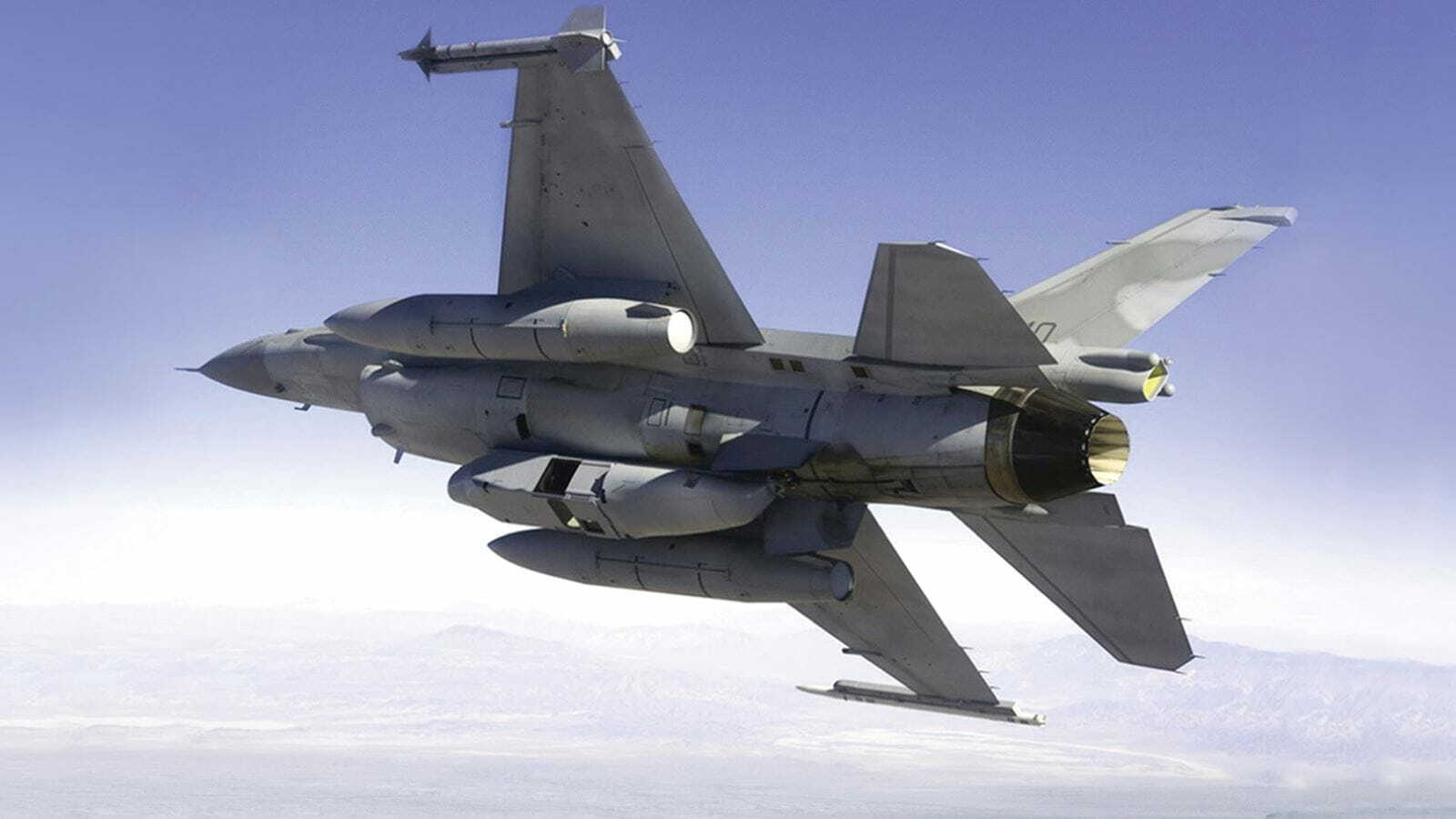
Collins Aerospace has successfully completed the first flight test of its newest Fast-Jet reconnaissance pod, the MS-110 Multispectral Airborne Reconnaissance system, on an F-16 for an undisclosed international customer. The test flight demonstrated aircraft integration, flight worthiness, and full-system performance within the demanding confines of tactical jet flight envelopes.
The advanced MS-110 greatly enhances airborne reconnaissance mission capabilities by providing a longer range and wider area of surveillance in contested and peacetime scenarios against peer and near-peer adversaries. The system’s advanced imagery and multispectral capabilities detect targets with a higher degree of confidence, even through poor weather/atmospheric conditions, and may be rapidly disseminated via high-bandwidth datalink and Collins’ ground intelligence-sharing architecture.
“Accurate and reliable intelligence that can be shared at a national and coalition level is critical to mission success in the Joint All Domain Command and Control (JADC2) battlespace,” said Lora Magliocco, director and general manager, Airborne ISR Solutions for Collins Aerospace. “Successfully completing this trial demonstrates the readiness of the MS-110 systems to support customers around the globe.”
Collins Aerospace reconnaissance systems have been fielded and are operational on tactical fast jet platforms such as the F-15 and F-16, as well as special mission ISR business jets. The system is also compatible with MALE UAVs such as the MQ-9. The MS-110 sensor evolved from the highly successful DB-110 system and leverages Collins Aerospace’s multi-spectral imaging (MSI) expertise from SYERS-2C flown on the U-2.
Collins Aerospace, a Raytheon Technologies business, specializes in technologically advanced and intelligent solutions for the global aerospace and defense industry.
More From SAE Media Group
Aerospace & Defense Tech Briefs
Unmanned Aircraft System Offers Superior Surveillance Imagery
Aerospace & Defense Tech Briefs
Remotely Piloted Air Systems
Aerospace INSIDER
Navy Completes 73-Hour Nonstop Flight of Solar-Powered UAS
Aerospace & Defense Tech Briefs
Autonomous Collaborative Platform
Aerospace INSIDER
GA-ASI Announces Gray Eagle 25M for Multi-Domain Operations
Aerospace & Defense Tech Briefs
Multispectral Airborne Reconnaissance System

Aerospace & Defense Tech Briefs
Mobile Counter Unmanned Aircraft System

Aerospace INSIDER
Bombardier to Start Building New Army HADES Prototype Spy Plane
Defense INSIDER
AgilePod Flies on U.S. Air Force MQ-9 Reaper
Aerospace & Defense Tech Briefs
Textron Systems, Textron Aviation Defense Demonstrate Simulated Manned-Unmanned Teaming Capability
Aerospace & Defense Tech Briefs
Robotic Helicopter
Aerospace & Defense Tech Briefs
Approach Radar Upgrade
Aerospace INSIDER
US Air Force Targets First Flight of B-21 Raider This Year
Aerospace & Defense Tech Briefs
Unmanned Hover Plane
Aerospace INSIDER
Radar and Weapons Upgrades for Netherlands Air Force MQ-9A Reapers
Aerospace & Defense Tech Briefs
MQ-25 Vehicle Management Computer Upgrade
Aerospace INSIDER
Honeywell Launches New System to Counter Drone Swarms
Defense INSIDER
High-Tech UAV Performs Recon, Defends Brigade
Aerospace INSIDER
Unmanned "Urban Beat Cop" Surveillance System Protects Soldiers
Aerospace INSIDER
Boeing to Develop Two New E-7 Variants for US Air Force
Motion Design INSIDER
Tailless Jet Flies Free with Novel Control Technique
Aerospace & Defense Tech Briefs
Flight Computer
Aerospace & Defense Tech Briefs
A29N Super Tucano in NATO Configuration
Aerospace & Defense Tech Briefs
Nano-UAV Systems
Aerospace Manufacturing and Machining INSIDER
GA-ASI Installs First V-Tail from GKN Aerospace onto MQ-9B RPA
Aerospace & Defense Tech Briefs
High-Speed Data Cables for Fighter Aircraft
Aerospace & Defense Tech Briefs
Avionics Upgrade for U.S. Forest Service: Sherpa Aircraft
Aerospace & Defense Tech Briefs
Electronic Warfare Weapon
Top Stories
INSIDERManufacturing & Prototyping
 How Airbus is Using w-DED to 3D Print Larger Titanium Airplane Parts
INSIDERManned Systems
 FAA to Replace Aging Network of Ground-Based Radars
NewsTransportation
 CES 2026: Bosch is Ready to Bring AI to Your (Likely ICE-powered) Vehicle
NewsSoftware
 Accelerating Down the Road to Autonomy
EditorialDesign
 DarkSky One Wants to Make the World a Darker Place
INSIDERMaterials
 Can This Self-Healing Composite Make Airplane and Spacecraft Components Last...
Webcasts
Defense
 How Sift's Unified Observability Platform Accelerates Drone Innovation
Automotive
 E/E Architecture Redefined: Building Smarter, Safer, and Scalable...
Power
 Hydrogen Engines Are Heating Up for Heavy Duty
Electronics & Computers
 Advantages of Smart Power Distribution Unit Design for Automotive...
Unmanned Systems
 Quiet, Please: NVH Improvement Opportunities in the Early Design...
