




Missile Warning Satellite Completes Thermal Vacuum Testing

The world’s most advanced missile defense satellite recently and successfully came out of almost two months of harsh simulated space environmental testing. The U.S. Space Force’s fifth Space Based Infrared System Geosynchronous Earth Orbit satellite (SBIRS GEO-5) successfully completed Thermal Vacuum (TVAC) testing at Lockheed Martin’s Sunnyvale, California satellite manufacturing facility.
Completing TVAC was a significant milestone for the first military space satellite to be built on one of Lockheed Martin’s modernized LM 2100™ satellite buses. During TVAC testing, the satellite – with its sophisticated electronics performing full operations – faced waves of heat and cold in a depressurized atmosphere similar to the drastic environmental changes experienced in space.
SBIRS GEO-5 will join the Space Force’s constellation of missile warning satellites equipped with powerful scanning and staring infrared surveillance sensors that protect our nation 24-7. These sensors collect data that allow the U.S. military to detect missile launches, support ballistic missile defense, expand technical intelligence gathering and bolster situational awareness on the battlefield.
SBIRS GEO-5 is the first of two new SBIRS missile defense satellites and the fourth satellite built on Lockheed Martin’s new, modernized LM 2100 satellite bus. A major investment by Lockheed Martin, the LM 2100 purposefully focuses on increasing production speed, reducing costs, adding resiliency and building in more mission flexibility.
LM 2100 is currently slated to be the baseline bus of SBIRS GEO-5, and SBIRS GEO-6, expected to be launched in 2021 and 2022 respectively; three next Next Generation Overhead Persistent Infrared System (Next Gen OPIR) Block 0 GEO satellites expecting to launch starting in 2025; and the future GPS III Follow On (GPS IIIF) satellites, which are expected to launch starting in 2026.
More From SAE Media Group
Aerospace & Defense Tech Briefs
Air Caster Technology

Defense INSIDER
Next-Generation Polar is Indispensable in Highly Contested Space
Aerospace INSIDER
Three Companies to Build New Multi-Orbit Logistics Prototype Spacecraft
Aerospace INSIDER
Boeing to Develop New Space Force Nuclear Communications Satellites

Aerospace INSIDER
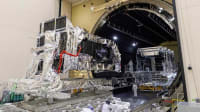
Oscillating Heat Pipes Tested for Use in Space
Aerospace INSIDER
Ursa Major Performs First Successful Hotfire of Hypersonic Draper Engine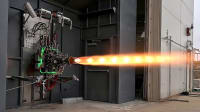
Aerospace INSIDER
Characterizing the Performance of Variable Emissivity Materials in Space
Aerospace INSIDER
Moonlighter Satellite to Host First On-Orbit Cybersecurity Challenge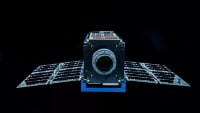
Aerospace & Defense Tech Briefs
A New Clean Room for Missile and Satellite Propulsion Components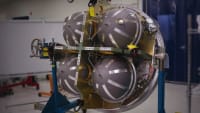



NASA Spinoff
Separation Device Launches New Science Payloads
Aerospace Manufacturing and Machining INSIDER
Ball Aerospace Starts Final Assembly of Space Force's Next Generation Operational Weather Satellite
Aerospace INSIDER
Aitech’s New Palm-Sized Satellite Enables Space-Based AI Processing
Aerospace & Defense Tech Briefs
Stratolaunch All-Composite Aircraft Achieves First Flight
Aerospace Manufacturing and Machining INSIDER
Northrop Grumman to Demonstrate Robotic Manufacturing in Space


Aerospace & Defense Tech Briefs
Vulcan Rocket Completes First National Security Launch for Space Force
Aerospace & Defense Tech Briefs
In-Orbit Commercial Spacecraft Undocking
Aerospace INSIDER
Testing the Viability of Autonomous Laser Welding in Space
Aerospace & Defense Tech Briefs
How the US Space Force is Leveraging Commercial Antennas for Defense Applications

Aerospace & Defense Tech Briefs
Pushing the Boundaries of Rapid Production of Spacecraft: Flight Results from NearSpace Launch’s TROOP and ThinSat Platforms
Aerospace & Defense Tech Briefs
Lockheed Martin Ships AEHF Satellite in Advance of ULA Rocket Launch
NASA Spinoff
Ion Thrusters Keep Satellites Going and Going
Top Stories
INSIDERDefense
 New Raytheon and Lockheed Martin Agreements Expand Missile Defense Production
NewsAutomotive
 Ford Announces 48-Volt Architecture for Future Electric Truck
INSIDERManufacturing & Prototyping
 Active Strake System Cuts Cruise Drag, Boosts Flight Efficiency
ArticlesTransportation
 Accelerating Down the Road to Autonomy
INSIDERMaterials
 How Airbus is Using w-DED to 3D Print Larger Titanium Airplane Parts
Road ReadyTransportation

Webcasts
Electronics & Computers
 Cooling a New Generation of Aerospace and Defense Embedded...
Power
 Battery Abuse Testing: Pushing to Failure
Connectivity
 A FREE Two-Day Event Dedicated to Connected Mobility
Automotive
 Quiet, Please: NVH Improvement Opportunities in the Early Design Cycle
Transportation
 Advantages of Smart Power Distribution Unit Design for Automotive &...
Aerospace
 Sesame Solar's Nanogrid Tech Promises Major Gains in Drone Endurance