




Europe's Aerospace Industry Looking Confident
Apart from Airbus’s highly visible presence in defense and commercial aircraft, Europe also has successful capabilities in helicopters, business jets, and aero engines, and in all these areas their global market share is growing.
Talk of further consolidation within Europe’s dynamic aerospace sector has been on the lips of industry watchers for several years, but although the major European-based global players have not progressed toward further mergers, the continent’s biggest aerospace company, the former EADS, has achieved a very significant business restructuring, sweeping all its diverse companies into one giant, three-division entity, and adopting the new corporate identity of the Airbus Group.
At one stage it looked as if a proposed merger between EADS and BAE Systems might create the world’s largest combined aerospace and defense company, but a German political veto put an end to this plan, largely because of sensitivity over the defense aspects of such a deal.
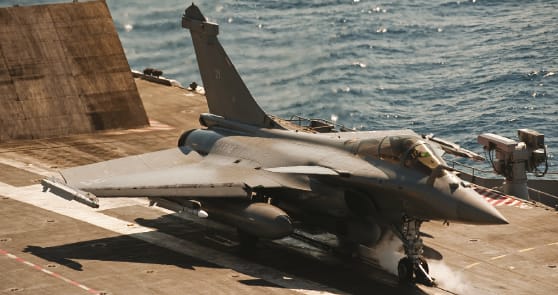
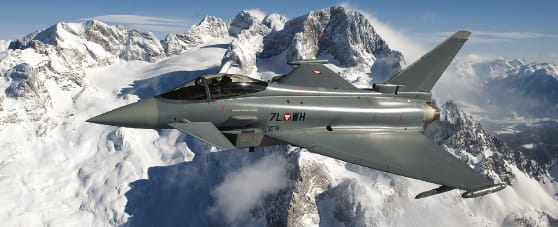
Legacy air defense programs, such as the Dassault Rafale, SAAB Gripen, and Eurofighter Typhoon, are today still providing plenty of production work, and upgraded versions are on the way, but beyond 2020 these programs are dependent on winning more export orders to avoid serious implications for existing assembly plants.
There are today relatively few new European military air programs, but one of the largest, the Airbus A400M transport, should generate new export sales and will extend production out well into the next decade, but other market sectors, such as jet trainers and surveillance aircraft, are proving very slow to mature into large-scale production.
The need to take a long-term strategic view on aerospace is recognized at the political and technical European Union level. Investment in highly innovative technologies and manufacturing methods is underway in an effort to retain a broad-based leadership role and to stay competitive with upcoming developments and production capacity in the BRIC countries (Brazil, Russia, India, and China). Heavy investment by European companies in overseas assembly plants has seen Airbus setting up factories in the U.S. (civil aircraft and helicopters) and Brazil (helicopters); Rolls-Royce expanding R&D facilities as well as production in the U.S. and Singapore; BAE Systems becoming well established in the U.S. and Australia; and Italy’s Finmeccanica Group expanding in the U.S.
A New Airbus Is Born
The restructuring of EADS into the new Airbus Group is far more than just a commercial re-branding operation. After decades of transatlantic criticism that Airbus is too political, and regarded by European leaders as a high-profile status symbol that must be subsidized—a claim always denied in Europe—the changes within the new Airbus finally create the accountable and transparent company structure that brings it into line with other global corporations.
Of course, financial assistance will still be willingly given by European governments to help invest in new programs and longer-term research and development, as is the case in the U.S. and elsewhere, but in business terms Airbus is now seen as a highly profitable independent enterprise that has broken free of its state controls.
In re-paying government loans through the generation of profits from its civil airliners, it has produced an extremely good deal for European taxpayers. For example, the best-selling A320 family was originally forecast to break even if 200 were sold. Today, the sales total for these single-aisle jetliners is a staggering 10,200, with a backlog of 4200 aircraft yet to be delivered. European governments that have supported Airbus financially collect a royalty on every one sold, so while it will be some time before they see a return from sales of the giant but slow-selling A380, the A320 has become a commercial success on a grand scale.
Because the delivery timescales have now become so extended, Airbus has recently announced that it is raising the A320 production rate to 46 a month in 2016. Final assembly plants in Germany, France, and China will be joined by a new Airbus factory in Mobile, AL, next year. Just six years ago production was cut because of the financial crisis and falling demand, but since 2010 the demand has returned and monthly flow has gradually increased from 36 to the current rate of 42. By 2018 it could reach a monthly total output of 50 aircraft.
Since the decision to go ahead with the A320neo, with a potential 15% reduction in operating costs, sales have surged, and this has created a real challenge, as well as welcome news, for everyone across the global supply chain. Airbus Group CEO Tom Enders has played a key role in steering the new Airbus through a complex, multinational transition, and he has insisted on developing a close partnership with his supply chain in what he describes as an “extended enterprise.” He firmly believes that taking the suppliers into a closer, rather than confrontational, relationship is an important strategy if production costs are to be kept down.
The latest civil Airbus, the A350 family, is making rapid progress toward certification and first deliveries by the end of this year. Four aircraft are now in the test flight phase, with over 1100 hours achieved by the first two. One of the development aircraft is being fully fitted out with passenger seats and cabin systems and will soon embark on long endurance test and evaluation flying.
Further cost reductions are expected from reduced training requirements due to a common flight deck design and flying qualities shared with all the other Airbus designs, the A320, A330, and A380. The latter remains the largest commercial airliner in production, with a passenger capacity from around 450 up to 700 in a high-density configuration. The A330 is still in great demand and is being offered with improved payload, and a version is optimized for high-density regional routes, aimed at China and the Asian market.
A military tanker/transport version of the A330 is proving to be a popular choice for many air forces seeking to update their air refueling and military transport fleets. This aircraft is large enough to be able to carry up to 265 troops and their equipment in the cabin, while at the same time it carries enough fuel to replenish receiver aircraft from two underwing refueling pods. A USAF-style refueling boom can also be carried on the rear fuselage centerline, or a third hose and drogue unit.
Business Jets
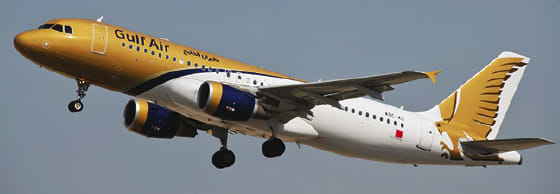
Europe’s leading supplier in this market is Dassault Aviation, with its family of twin and tri-jet Falcon aircraft. All feature very high-end specifications, in terms of performance, advanced flight systems, and passenger appeal, and this reflects the company’s commitment to heavy investment in R&D and a strong technological heritage inherited from advanced combat jets.
The latest Falcon jet, the 5X, is all new, and will emerge to join the Dassault bizjet family in 2015. It will feature a similar fly-by-wire flight control system to the tri-jet Falcon 7X but will have a larger cabin and “the most advanced flight deck in civil aviation,” with numerous head-up and head-down displays, additional integrated enhanced vision sensors, and features to permit safe operation at night and in poor visibility when using runways in restricted locations, such as in mountain valleys.
Dassault has continued to upgrade all its family of jets to keep them highly competitive and has worked closely with other aerospace companies in the past on designs for a supersonic business jet, but the lack of a fuel-efficient and quiet engine that can cruise at a supersonic speed over extended ranges has so far defeated all attempts at bringing a viable bizjet-size SST product to market.
European Helicopters
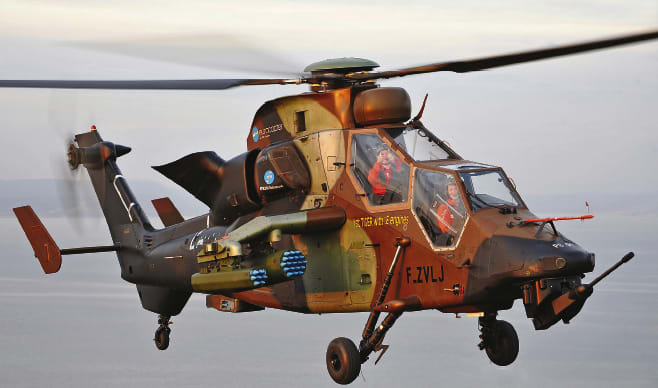
The reorganization of EADS saw the strong Eurocopter brand morphed into Airbus Helicopters. Apart from the name change, this rotary wing business has continued as before, with a world-leading market share in military and civilian markets. It has not developed any heavy-lift military products to challenge the Boeing CH-47 Chinook, but in all other size categories of helicopter the company has models that offer the latest standards in avionics and flight safety.
The NH-90 is the latest military helicopter and is in large-scale production for European and export customers. It is the most important of the new programs. Slightly larger than the Sikorsky S-60/70 Blackhawk and Seahawk, it has a fuselage that can accommodate a sophisticated anti-submarine/anti-surface naval equipment fit, and there is also a utility army version with a large rear cabin ramp.

Other medium helicopters in the Super Puma family are popular worldwide for search and rescue, combat SAR, special missions, and oil and exploration support operations. Smaller helicopters in the family provide paramedic support and police support capabilities, as well as generalpurpose civil and military utility roles.
Powered Up

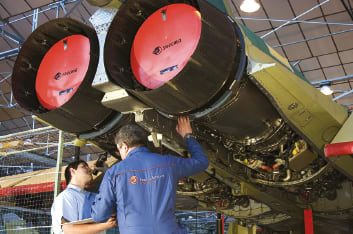
Rolls-Royce has around 50% share of the world’s big fan market with its Trent series, which covers thrust ranges from over 50,000 lb up to 110,000 lb. Trents power all the largest current widebody jets apart from the Boeing 777-300ER, and the latest Trent XWB is due to enter service later this year on the A350.
Development work is underway on enhanced Trent derivatives that might have application on a revised A330 and possibly the A380. Snecma, through its CFM partnership with GE, has well over half the engine market on the A320 family and is sole powerplant on the Boeing 737 classic. The CFM Leap engine is destined for the 737 MAX and A320neo.
Although it has lost out powering the latest 737s and A320s, Rolls-Royce is determined to re-join this market at some time in the future, possibly via a new Boeing airliner sized between the 737 MAX and the 787.
In the meantime, CFM is moving forward with development of a prototype new-generation open rotor engine. If successful, a suitable powerplant can be matured in advance of the follow-on 150 seat civil programs that will eventually replace the 737 MAX and A320neo in the late 2020s.
More From SAE Media Group
Aerospace & Defense Tech Briefs
Commercial Programs Are Flying High
Aerospace & Defense Tech Briefs
Fanjet Evolution — the Next Steps
Aerospace & Defense Tech Briefs
Let the Good Times Continue to Roll
Aerospace & Defense Tech Briefs
Powering On
Aerospace & Defense Tech Briefs
Industry Invited to Participate in AeroTech Aerospace and Defense Technical Program
Aerospace & Defense Tech Briefs
Regional and Bizjets Refined and Redefined
Aerospace & Defense Tech Briefs
Ceramic Matrix Composites in Aircraft Engines Projected to Double over Five Years, Stratview Research Predicts
Aerospace & Defense Tech Briefs
Fighting for Life in Military Markets
Aerospace & Defense Tech Briefs
Flight Testing Microvanes and Riblets
Aerospace INSIDER
How Aerospace Manufacturers are Adjusting to Ongoing Tariff Changes
Aerospace & Defense Tech Briefs
FAA, SAE International Focus on Engine Fire Protection System Standards for Aerospace
Aerospace & Defense Tech Briefs
Touch and Go
Aerospace & Defense Tech Briefs
Early Growing Pains Have Not Stopped Pratt & Whitney’s GTF Engine Orders
Aerospace & Defense Tech Briefs
Maintainers Design a $400 Maintenance Fixture to save the U.S. Air Force $500k per Year
Aerospace & Defense Tech Briefs
Quality Management Experts Provide Guidance on AS9100 Standard, Equipment Calibration
Aerospace Manufacturing and Machining INSIDER
New Reverse Bleed System for LEAP-1A Engines is Ready to Fly
Aerospace INSIDER
Eurofighter Typhoons to Receive Touchscreen Cockpit Display Upgrades
Aerospace & Defense Tech Briefs
Unmanned Aerial Vehicle
Aerospace & Defense Tech Briefs
Foreign Counter-Unmanned Aerial Systems: Developments in the International Arms Markets
Aerospace & Defense Tech Briefs
Designing quieter aircraft via acoustic simulation
Aerospace & Defense Tech Briefs
F/A-18 Infrared Search and Rescue System
Aerospace & Defense Tech Briefs
Multi-Role Close Air Support Weapon
Aerospace & Defense Tech Briefs
China to Require 7,400 New Aircraft Valued at $1T Through 2037
Aerospace & Defense Tech Briefs
Pratt & Whitney Receives $437M for Continued Adaptive Engine Development
Aerospace & Defense Tech Briefs
New Boeing, Safran Joint Venture Dedicated to Developing Aircraft Auxiliary Power Units
Aerospace & Defense Tech Briefs
Electronic Warfare Weapon
Aerospace & Defense Tech Briefs
Avionics Heat Up, in a Good Way
Aerospace & Defense Tech Briefs
Hybrid-electric distributed propulsion explored
Aerospace & Defense Tech Briefs
Aeroacoustic Simulation Delivers Breakthroughs in Aircraft Noise Reduction
Aerospace Manufacturing and Machining INSIDER
Airbus Announces Expansion of Aircraft Manufacturing in the U.S.
Top Stories
INSIDERManufacturing & Prototyping
 How Airbus is Using w-DED to 3D Print Larger Titanium Airplane Parts
INSIDERManned Systems
 FAA to Replace Aging Network of Ground-Based Radars
NewsTransportation
 CES 2026: Bosch is Ready to Bring AI to Your (Likely ICE-powered) Vehicle
NewsSoftware
 Accelerating Down the Road to Autonomy
EditorialDesign
 DarkSky One Wants to Make the World a Darker Place
INSIDERMaterials
 Can This Self-Healing Composite Make Airplane and Spacecraft Components Last...
Webcasts
Defense
 How Sift's Unified Observability Platform Accelerates Drone Innovation
Automotive
 E/E Architecture Redefined: Building Smarter, Safer, and Scalable...
Power
 Hydrogen Engines Are Heating Up for Heavy Duty
Electronics & Computers
 Advantages of Smart Power Distribution Unit Design for Automotive...
Unmanned Systems
 Quiet, Please: NVH Improvement Opportunities in the Early Design...
