




System Enables Unmanned Aircraft to Detect Another in Flight
Queensland University of Technology Unmanned Aircraft System (UAS) researchers have made what's believed to be a world-first breakthrough for small unmanned aircraft (UA), developing an onboard system that has enabled a UA to detect another aircraft using vision while in flight.
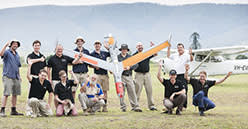
During the flight, the onboard system provided real-time warnings back to the ground control station, resulting in a successful manual collision-avoidance maneuver -- a critical point for allowing UAs to fly in commercial airspace. The technology was based on world-first vision-based sense-and-avoid technology developed and tested at QUT.
The sense-and-avoid technology being developed could ultimately have much broader application in general aviation as a detect-and-avoid aid to the human pilot. The final technical hurdle to UA operating in civil airspace is their ability to land safely in an emergency, and the research is expected to make significant strides towards overcoming that hurdle as well.
More From SAE Media Group
Aerospace INSIDER
NASA Brings Air Mobility Vision to Stratospheric Heights
Aerospace INSIDER
EASA Ready to Adopt Final Regulations for eVTOL Operations
Aerospace INSIDER
NASA UAV Flies Alone in Public Airspace
Aerospace INSIDER
Air Traffic Lab Answers Questions About Future Flying
Aerospace INSIDER
Crashing Into Safe Autonomous Flight
Aerospace & Defense Tech Briefs
Low Cost Air Traffic Control for Drones
Aerospace INSIDER
Reliable Robotics to Provide Aircraft Automation Study for US Air Force

Aerospace INSIDER
Autonomy Architecture Prevents Aviation Accidents
Aerospace & Defense Tech Briefs
Does Your UAV Program Need a Transponder?
Aerospace INSIDER
NASA Software Sets Stage for Future Flights

Aerospace INSIDER
FAA to Replace Aging Network of Ground-Based Radars
Aerospace INSIDER
Drone Traffic Management System Wins NASA Invention of the Year
Tech Briefs
Preventing Gridlock on the Ground
Tech Briefs
AI Pilot Can Navigate Crowded Airspace
Aerospace & Defense Tech Briefs
Remotely Piloted Aircraft
Tech Briefs
FAA and Drone Control
Aerospace INSIDER
NASA Teams with Uber on Safety of Future Urban Airspace
NASA Spinoff
AirMap Guides Drones toward Widespread Use
Aerospace & Defense Tech Briefs
Air-Ground Communications System Aims to Make Flying Safer
Aerospace & Defense Tech Briefs
Rising Star Awards: Women in Engineering Aerospace Winner - Heather Cummings
Aerospace INSIDER
Technology Companies Work to Combat Pilot Fatigue
Aerospace INSIDER
MQ-1C Completes First Air-Launched Effect Flight Demonstration
NASA Spinoff
An Electronic Traffic Monitor for Airports
Aerospace INSIDER
Making Flight Safer With the “Internet of Airplanes”
Top Stories
INSIDERDefense
 New Raytheon and Lockheed Martin Agreements Expand Missile Defense Production
NewsAutomotive
 Ford Announces 48-Volt Architecture for Future Electric Truck
INSIDERManufacturing & Prototyping
 Active Strake System Cuts Cruise Drag, Boosts Flight Efficiency
ArticlesTransportation
 Accelerating Down the Road to Autonomy
INSIDERMaterials
 How Airbus is Using w-DED to 3D Print Larger Titanium Airplane Parts
Road ReadyTransportation
Webcasts
Electronics & Computers
 Cooling a New Generation of Aerospace and Defense Embedded...
Power
 Battery Abuse Testing: Pushing to Failure
Connectivity
 A FREE Two-Day Event Dedicated to Connected Mobility
Automotive
 Quiet, Please: NVH Improvement Opportunities in the Early Design Cycle
Transportation
 Advantages of Smart Power Distribution Unit Design for Automotive &...
Aerospace
 Sesame Solar's Nanogrid Tech Promises Major Gains in Drone Endurance