




Air Traffic Lab Answers Questions About Future Flying
The holiday season is upon us and that means crowded airports and delayed flights. Researchers at NASA's Langley Research Center are working to change that. They are conducting studies to help reshape the future of American air travel in a brand-new Air Traffic Operations Laboratory (ATOL). They are studying the Next Generation Air Transportation System, a new national airspace technology being implemented by the Federal Aviation Administration.
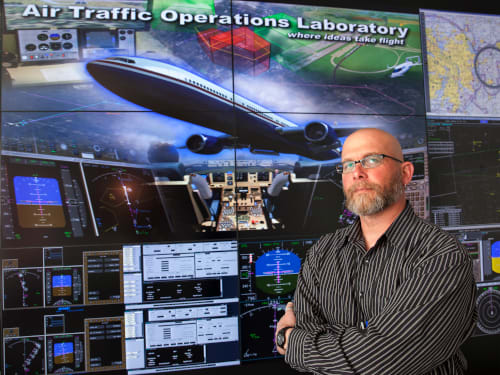
Over the next decade or so, the FAA will transition the country's air traffic control network from a limited ground-based system of radar sites, to an expanded space-based system of satellites, helping to move the ever-increasing volume of American air traffic in and out of the nation's airports more quickly and safely.
NASA’s role is to use both its new lab space and the Airspace and Traffic Operations Simulation software (ATOS) to test NextGen algorithms, operational concepts, and flight deck displays. They're also evaluating the integration of vehicles such as unmanned aerial systems (UAS) into the National Airspace System.
More From SAE Media Group
Aerospace INSIDER
NASA Tool Helps Airlines Minimize Weather Delays
Aerospace INSIDER
FAA to Replace Aging Network of Ground-Based Radars
Tech Briefs
Preventing Gridlock on the Ground
Aerospace & Defense Tech Briefs
Does Your UAV Program Need a Transponder?


Aerospace & Defense Tech Briefs
Quantifying Autonomous Soaring on a Surveillance and Communications Relay Mission
Aerospace INSIDER
EASA Ready to Adopt Final Regulations for eVTOL Operations

Aerospace INSIDER
NASA Brings Air Mobility Vision to Stratospheric Heights
Aerospace & Defense Tech Briefs
Improving Low-Altitude UAS Navigation
Aerospace & Defense Tech Briefs
Low Cost Air Traffic Control for Drones

NASA Spinoff
AirMap Guides Drones toward Widespread Use
Aerospace & Defense Tech Briefs
FLYHT and Spectralux Avionics Integrate Systems to Deliver FANS-Over-Iridium Satellite Communications to Airlines
Aerospace & Defense Tech Briefs
Mission Control System
NASA Spinoff
Flying in the Fast Lane with Air Traffic Software
Aerospace INSIDER
NASA UAV Flies Alone in Public Airspace
Aerospace INSIDER
NASA System Would Enable Unmanned Aircraft to Fly in US Airspace
Aerospace INSIDER
NASA Software Sets Stage for Future Flights
Aerospace INSIDER
XQ-67A's First Flight Shows 'Genus' Approach to Aircraft Design
Aerospace & Defense Tech Briefs
Australian Air Surveillance Radar Upgrade
Aerospace INSIDER
Reliable Robotics to Provide Aircraft Automation Study for US Air Force
NASA Spinoff
An Electronic Traffic Monitor for Airports
NASA Spinoff
A Better Backup Plan for the Unthinkable
Aerospace & Defense Tech Briefs
Small UAV Satcom System
Aerospace & Defense Tech Briefs
More Airports Test RF as Counter Measure for UAS in Restricted Airspace
Tech Briefs
NASA Prepares Flight Tests of Unmanned Aircraft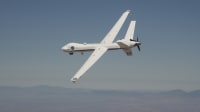

Aerospace & Defense Tech Briefs
Remotely Piloted Aircraft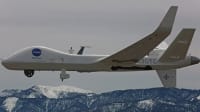
Top Stories
NewsSensors/Data Acquisition
 Microvision Aquires Luminar, Plans Relationship Restoration, Multi-industry Push
INSIDERRF & Microwave Electronics
 A Next Generation Helmet System for Navy Pilots
INSIDERWeapons Systems
 New Raytheon and Lockheed Martin Agreements Expand Missile Defense Production
NewsAutomotive
 Ford Announces 48-Volt Architecture for Future Electric Truck
INSIDERAerospace
 Active Strake System Cuts Cruise Drag, Boosts Flight Efficiency
ArticlesTransportation

Webcasts
Aerospace
 Cooling a New Generation of Aerospace and Defense Embedded...
Energy
 Battery Abuse Testing: Pushing to Failure
Power
 A FREE Two-Day Event Dedicated to Connected Mobility
Automotive
 Quiet, Please: NVH Improvement Opportunities in the Early Design Cycle
Electronics & Computers
 Advantages of Smart Power Distribution Unit Design for Automotive &...
Unmanned Systems
 Sesame Solar's Nanogrid Tech Promises Major Gains in Drone Endurance