




NASA System Would Enable Unmanned Aircraft to Fly in US Airspace
NASA, working with government and industry partners, is testing a system that would make it possible for unmanned aircraft to fly routine operations in United States airspace. The tests engage the core air traffic infrastructure and supporting software components through a live and virtual environment to demonstrate how an autonomous aircraft interacts with air traffic controllers and other air traffic.
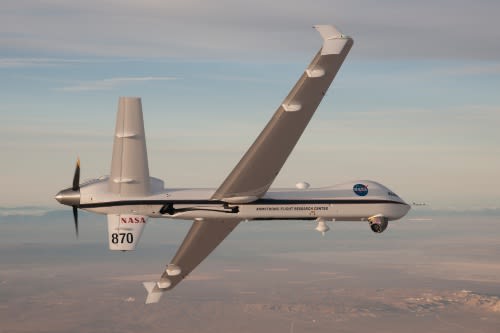
This series of tests is made up of two phases. The first is focused on validation of sensor, trajectory, and other simulation models using live data. Some of the tests will be flown with an Ikhana aircraft, based at Armstrong Flight Research Center that has been equipped with an updated sense-and-avoid system. Other tests will involve an S-3B plane from NASA’s Glenn Research Center serving as a high-speed piloted surrogate aircraft.
Both tests will use other aircraft following scripted flight paths to intrude on the flight path the autonomous craft is flying, prompting it to either issue an alert or maneuver out of the other aircraft’s path. These flights will also conduct the first full test of an automatic collision avoidance capability on autonomous aircraft.
More From SAE Media Group
Aerospace & Defense Tech Briefs
Remotely Piloted Aircraft
Motion Design INSIDER
AI-Powered Vision System Helps Drones Navigate Safely
NASA Spinoff
Flying in the Fast Lane with Air Traffic Software

Aerospace & Defense Tech Briefs
Drone Control System

Aerospace INSIDER
NASA UAV Flies Alone in Public Airspace
Tech Briefs
NASA Prepares Flight Tests of Unmanned Aircraft
Aerospace INSIDER
"Fused Reality" Combines Simulation and Flying to Train Pilots
Aerospace & Defense Tech Briefs
General Atomics Moves Toward Global RPA Flight Certification for MQ-9B SkyGuardian
Aerospace INSIDER
NASA Tests Could Lead to FAA Integration of UAVs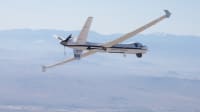

Tech Briefs
Algorithms Improve Quadrotor Drone Performance
Tech Briefs
AIRVUE: Prelude to Self-Flying Aircraft
NASA Spinoff
NASA Helps Drones Take Flight
Tech Briefs
Preventing Gridlock on the Ground
NASA Spinoff
Eagle Eyes in Treacherous Skies
Aerospace & Defense Tech Briefs
Abaco’s FORCE2 Flight Computer Enables National and International Ground Control Station Certification
Aerospace & Defense Tech Briefs
Uncrewed Solar Aircraft Passes Key Ground Tests
Podcasts
A.I. in the Air
NASA Spinoff
Swarming Technology Lets Drones Work as a Team
Aerospace & Defense Tech Briefs
VISTA X-62
Aerospace INSIDER
Air Traffic Lab Answers Questions About Future Flying

Aerospace & Defense Tech Briefs
Remotely Piloted Air Systems
NASA Spinoff
From Shark Searches to Space Tours
Top Stories
NewsSensors/Data Acquisition
 Microvision Aquires Luminar, Plans Relationship Restoration, Multi-industry Push
INSIDERRF & Microwave Electronics
 A Next Generation Helmet System for Navy Pilots
INSIDERWeapons Systems
 New Raytheon and Lockheed Martin Agreements Expand Missile Defense Production
NewsAutomotive
 Ford Announces 48-Volt Architecture for Future Electric Truck
INSIDERAerospace
 Active Strake System Cuts Cruise Drag, Boosts Flight Efficiency
ArticlesTransportation

Webcasts
Aerospace
 Cooling a New Generation of Aerospace and Defense Embedded...
Energy
 Battery Abuse Testing: Pushing to Failure
Power
 A FREE Two-Day Event Dedicated to Connected Mobility
Automotive
 Quiet, Please: NVH Improvement Opportunities in the Early Design Cycle
Electronics & Computers
 Advantages of Smart Power Distribution Unit Design for Automotive &...
Unmanned Systems
 Sesame Solar's Nanogrid Tech Promises Major Gains in Drone Endurance