




NASA Tool Helps Airlines Minimize Weather Delays
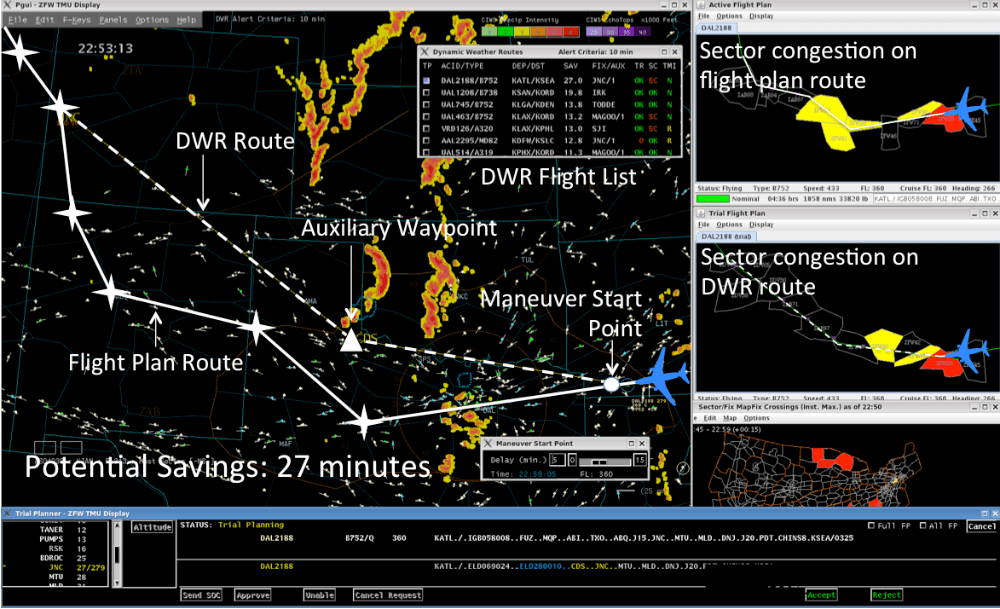
When the DWR tool finds an opportunity for an airliner to fly more efficiently to its destination, the computer rings an alert to an airline flight dispatcher. American Airlines has been evaluating DWR since 2012. Feedback from the airline indicates an estimated savings of 3,355 flying minutes for 538 American Airlines flights from July 2012 through September 2014, or about 6.2 minutes per flight on average.
Much of the work on DWR, and other air traffic management tools, takes place at the North Texas Research Station (NTX), a joint NASA/FAA laboratory located near the Dallas/Fort Worth International Airport, where NASA works with the FAA to develop and implement advanced concepts and technologies required for the Next Generation Air Transportation System (NextGen).
More From SAE Media Group
Tech Briefs
Preventing Gridlock on the Ground
Aerospace INSIDER
Air Traffic Lab Answers Questions About Future Flying

Aerospace & Defense Tech Briefs
FLYHT and Spectralux Avionics Integrate Systems to Deliver FANS-Over-Iridium Satellite Communications to Airlines

NASA Spinoff
Flying in the Fast Lane with Air Traffic Software
NASA Spinoff
An Electronic Traffic Monitor for Airports
Aerospace INSIDER
EASA Ready to Adopt Final Regulations for eVTOL Operations
Aerospace INSIDER
New Displays Could Lower Risk of Small Aircraft Midair Collisions

Aerospace INSIDER
FAA to Replace Aging Network of Ground-Based Radars
Aerospace INSIDER
Making Flight Safer With the “Internet of Airplanes”
Aerospace & Defense Tech Briefs
Curtiss-Wright Black Boxes Receive European Approval
Aerospace INSIDER
Reliable Robotics to Provide Aircraft Automation Study for US Air Force
Aerospace & Defense Tech Briefs
Collins Aerospace Provides Avionics for C-130H Modernization Program
Aerospace INSIDER
NASA Brings Airport Communications into the Digital Age
Tech Briefs
Equivalent Visual Operations
Aerospace INSIDER
NASA System Would Enable Unmanned Aircraft to Fly in US Airspace
Aerospace INSIDER
Archer Achieves First Untethered Flight with Midnight eVTOL
Aerospace INSIDER
Delta Air Lines, JetZero to Design Commercial Blended Wing Body Airliner
Aerospace INSIDER
System Makes Airport Surface Traffic More Efficient
Tech Briefs
Integrating UAS into Next-Generation Systems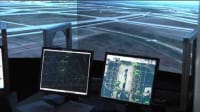
Aerospace INSIDER
Air Traffic Management Tool Wins NASA Software of the Year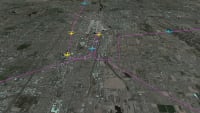
Aerospace & Defense Tech Briefs
Aireon to Launch Free, Real-Time Emergency Aircraft Location Service
Aerospace INSIDER
NASA and FAA Demonstrate Wireless Communication with Aircraft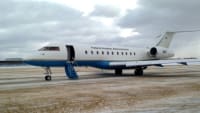
Tech Briefs
Air Traffic Management (ATM) System
Aerospace & Defense Tech Briefs
Saab Developing New Methods for Optimizing Flight Efficiency
NASA Spinoff
Swarming Technology Lets Drones Work as a Team
Tech Briefs
Spot and Runway Departure Advisor (SARDA)
Top Stories
NewsSensors/Data Acquisition
 Microvision Aquires Luminar, Plans Relationship Restoration, Multi-industry Push
INSIDERRF & Microwave Electronics
 A Next Generation Helmet System for Navy Pilots
INSIDERWeapons Systems
 New Raytheon and Lockheed Martin Agreements Expand Missile Defense Production
NewsAutomotive
 Ford Announces 48-Volt Architecture for Future Electric Truck
INSIDERAerospace
 Active Strake System Cuts Cruise Drag, Boosts Flight Efficiency
ArticlesTransportation

Webcasts
Aerospace
 Cooling a New Generation of Aerospace and Defense Embedded...
Energy
 Battery Abuse Testing: Pushing to Failure
Power
 A FREE Two-Day Event Dedicated to Connected Mobility
Automotive
 Quiet, Please: NVH Improvement Opportunities in the Early Design Cycle
Electronics & Computers
 Advantages of Smart Power Distribution Unit Design for Automotive &...
Unmanned Systems
 Sesame Solar's Nanogrid Tech Promises Major Gains in Drone Endurance